• Login / Join
  • About
  • •
  • Contact
  • •
  • Advertising
bustler logo
bustler logo
  • News
  • Competitions
  • Events
  • Bustler is powered by Archinect
  • Sign up for Bustler's Email Newsletters

  • Follow these Bustler feeds:

  • Search

    Search in

  • Submit

    What are you submitting?

    News Pitch
    Competition
    Event
  • Login / Join
  • News|Competitions|Events
  • Search
    | Submit
    | Follow
  • Search in

    What are you submitting?

    News Pitch
    Competition
    Event

    Follow these Bustler feeds:

  • About|Contact|Advertising
  • Login / Join

Al.Mualla Cemetery Mural / A Matter of Life and Death

By Bustler Editors|

Wednesday, May 9, 2012
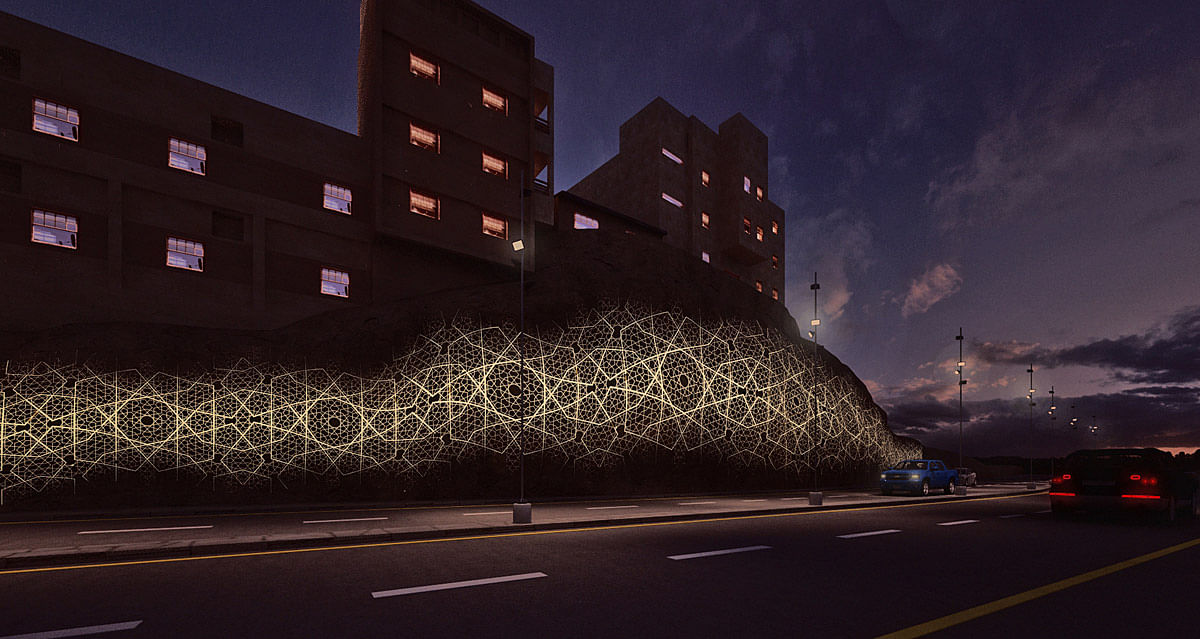
Main perspective, night

Germany-based Egyptian architect Ahmed Al.Badawy has shared with us images of the fascinating project "Al.Mualla Cemetery Mural / A Matter of Life and Death" which won the First Prize at the First Islamic Competition for Ornamenting Makkah Al.Mukarramah (Mecca, Saudi Arabia). Next to Al.Badawy, the design team also included Ahmed Enab and Yasser Mehanna.

Project Description from the Designers:

While reviewing the various suggested sites of this competition - to choose one to work on. The one that caught much of our attention was Al-Mualla mural. This site holds some great features; besides its simple urban context. The first feature was its inspiring rock formation, naturally ascending to one clear visual climax, and then gently descending to blend in with the plane of the ground. But most important, was its proximity to the holy cemetery of Al-Mualla. This second feature gave us a good opportunity to express our point of view about one the most intimidating concepts known to mankind; death.
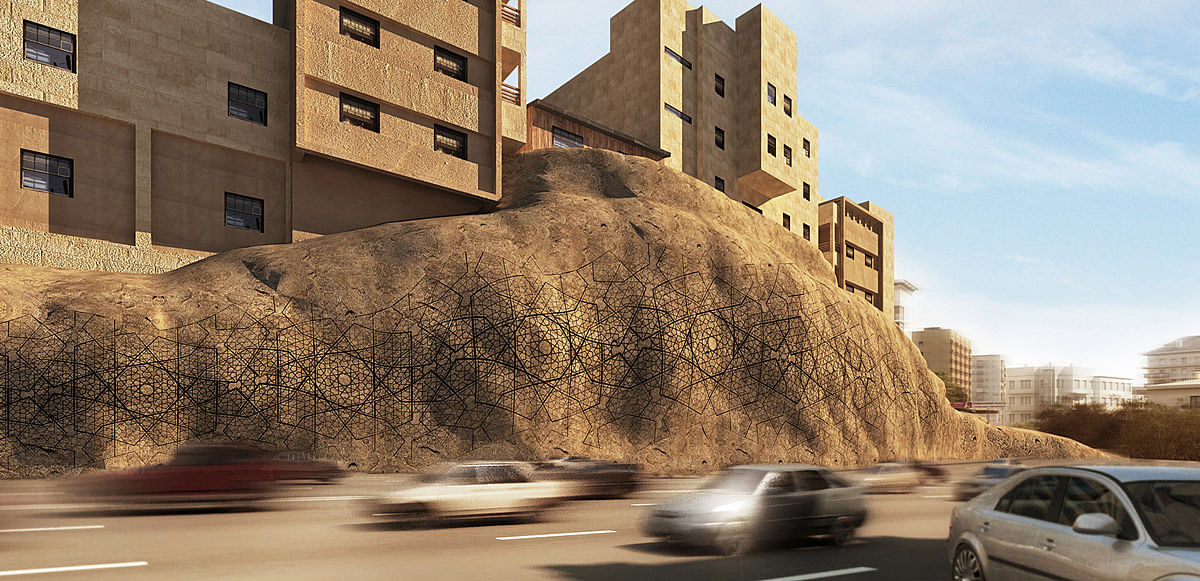
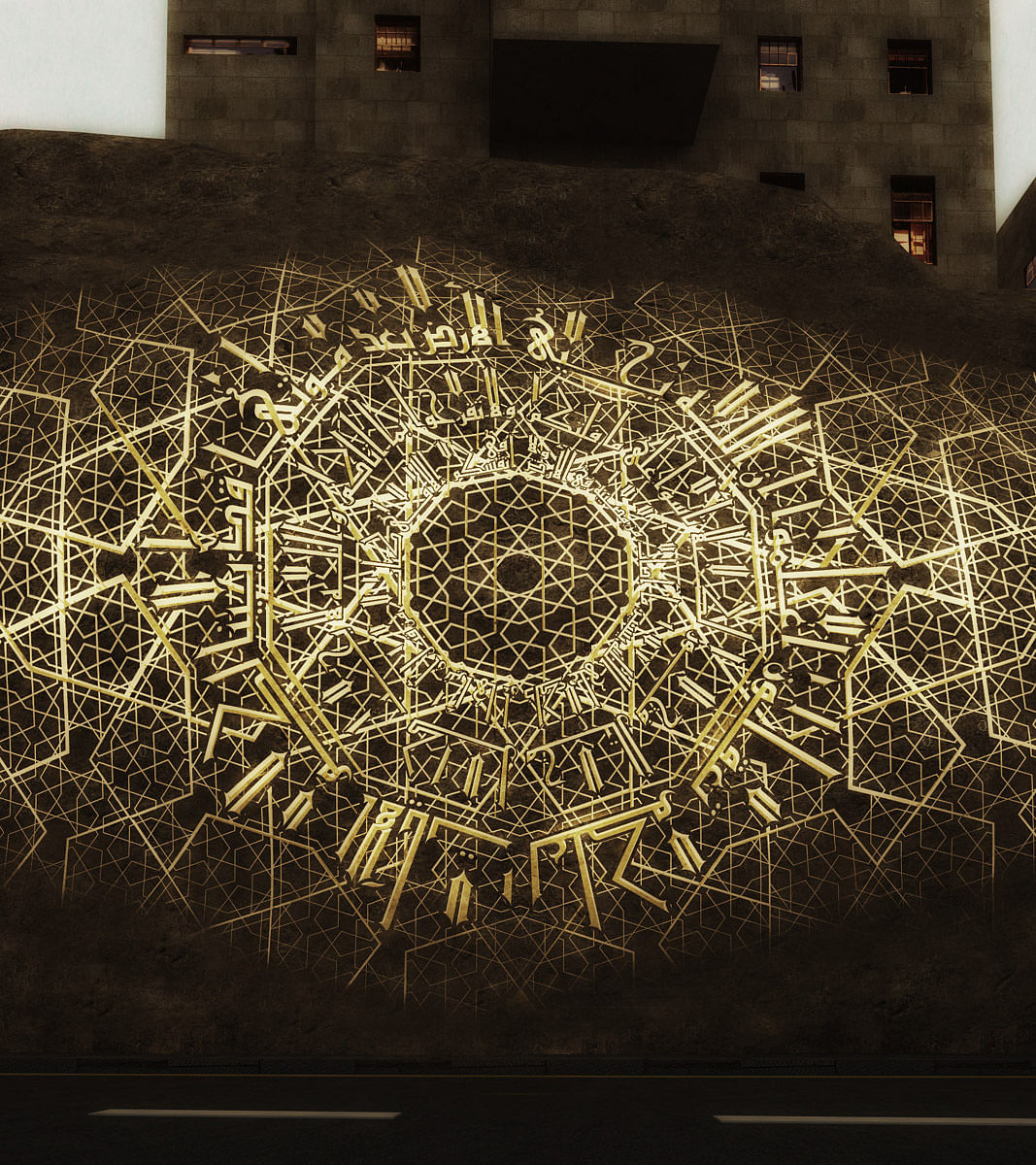
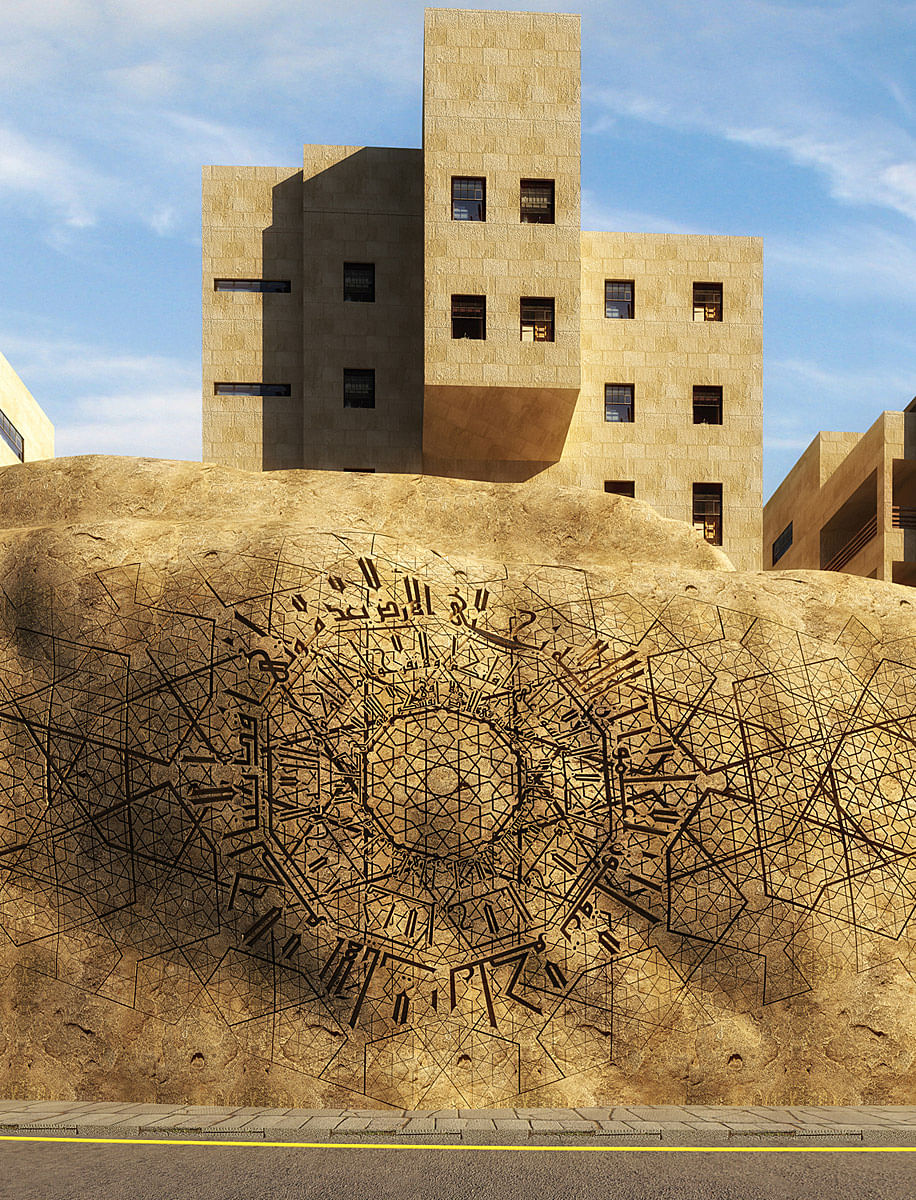
Main perspective, daylight

‬In the case of Al-Mualla, an interpretation of the concept of physical death will be naive. Because, this holy cemetery holds in its earth the remains of some of the greatest people who ever walked this earth, and who were defenders of humanistic values that humanity strives for now. This holy cemetery is crowned by the remains of our blessed mother Khadija. And this holy cemetery, literally, holds the remains of the founders of the first Muslim society.
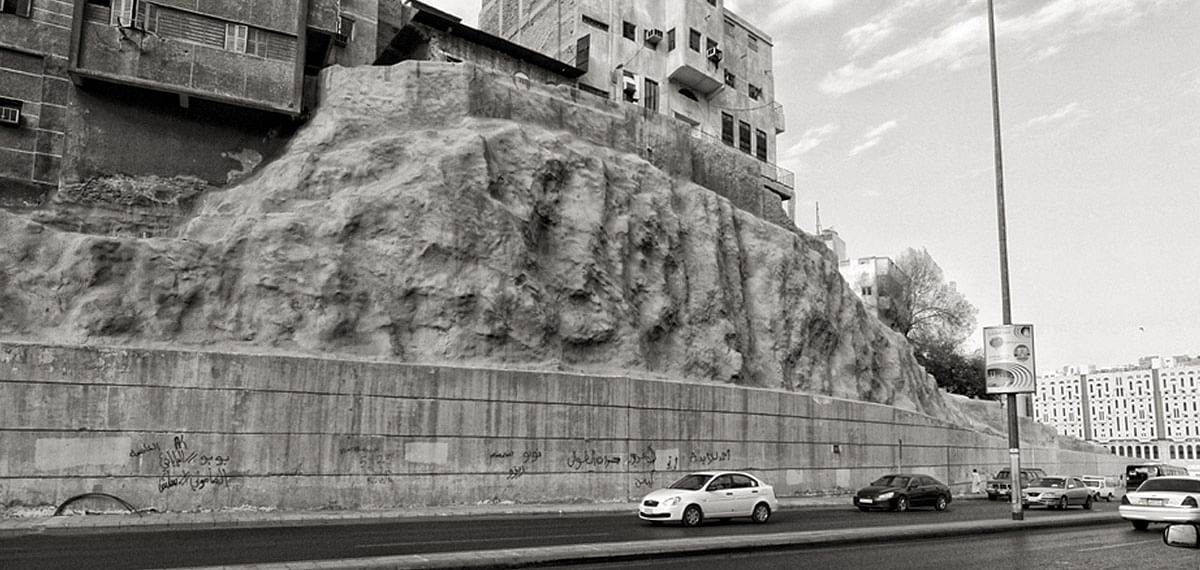
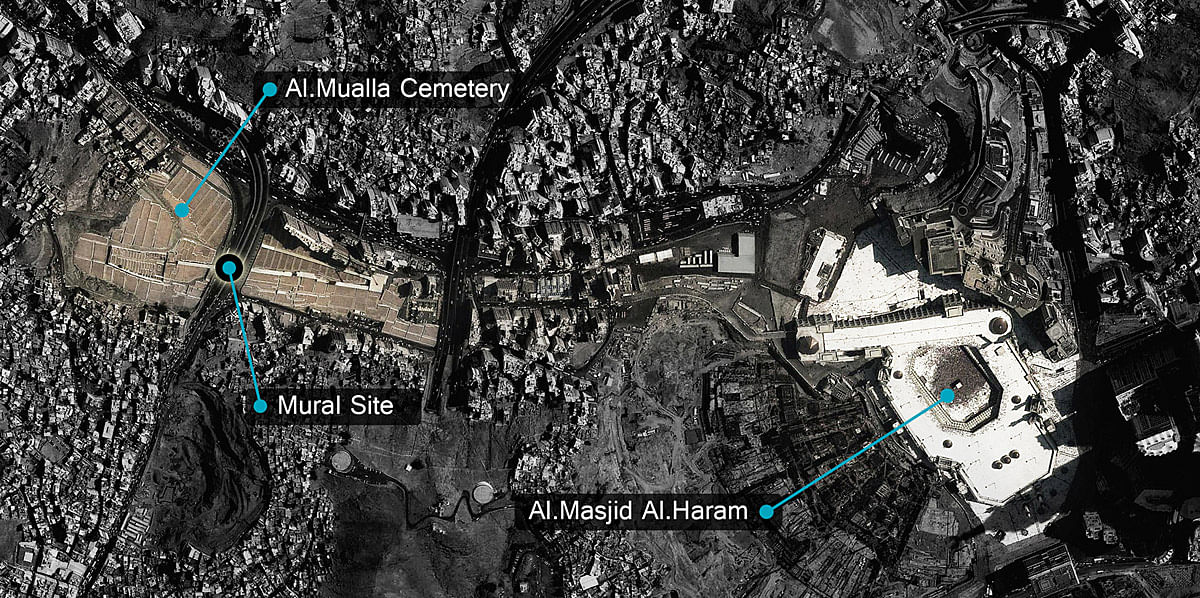
The site

So,‭ ‬given this site,‭ ‬we are dealing with a much more dangerous type of death‭; ‬death of values and principles,‭ ‬death of a cultural movement.‭ ‬A death that’s been going around for a hundred years or so.‮ ‭

‬Indeed this proposed design doesn’t try to capture an interpretation of death.‭ ‬On the contrary it tries to capture an interpretation of the inevitable life after death.‭

Location

And what better interpretation can one find than that of the‭ ‬Holy Quran‭…

"Know that god gives life to the earth after its death! Indeed we have made clear the signs for you, if you but understand" (Holy Quran 057-017)

We’ve done nothing but try to give the meaning of this verse a visual form. And to be fair, half of the job was already done for us by the magnificent natural rock formation with its apparent lifelessness, which we chose to represent death. All we had to do next is crack it, and show some life springing out of it…and so, there was light and green.

Main perspective, panorama

Girih Tiles

Before stepping into the details of our design process we would like to introduce you to Girih tiles. Though there and mathematical theories where discovered in the 1960’s, and though unknown to the modern world until 2007, Girih tiles where developed and used by Muslims 800 years ago…

Girih tiles are a set of five tiles, which were used in the creation of tiling patterns for decoration of buildings in Islamic architecture.

They were used throughout most of the Islamic architectural styles.

The shapes of the tiles are:

  1. A regular decagon.
  2. An elongated (irregular convex) hexagon.
  3. A bow tie (non-convex hexagon).
  4. A rhombus.
  5. A regular pentagon.

In 2007, peter j. Lu of Harvard University published a paper suggesting that Girih tiling possessed properties consistent with self-similar fractal quasi crystalline tiling. This finding was supported by examination of the topkapi scroll.

For these reasons we chose Girih tiles as a representative genuinely of the Islamic thought, and as a main element in our design proposal.
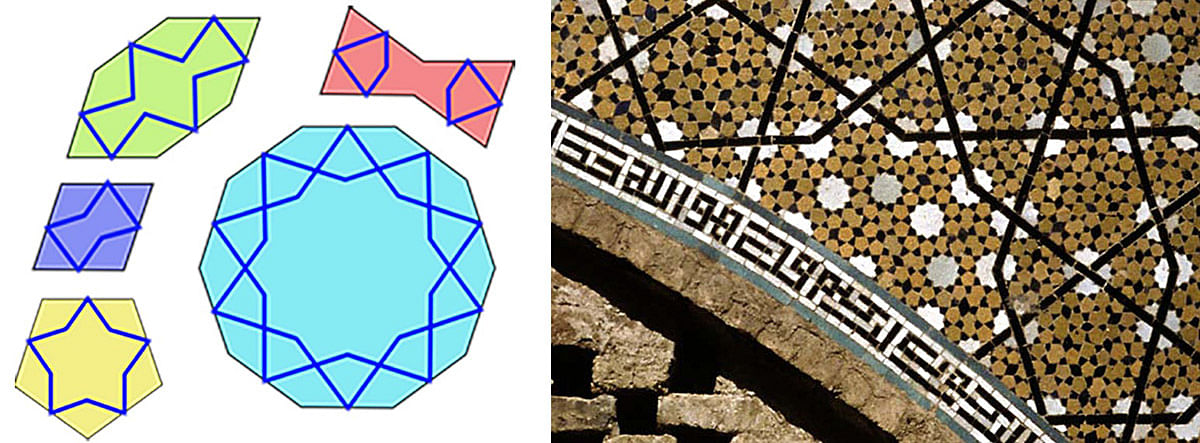
Girih Tiles

Design and Scripting Process

Construction Method

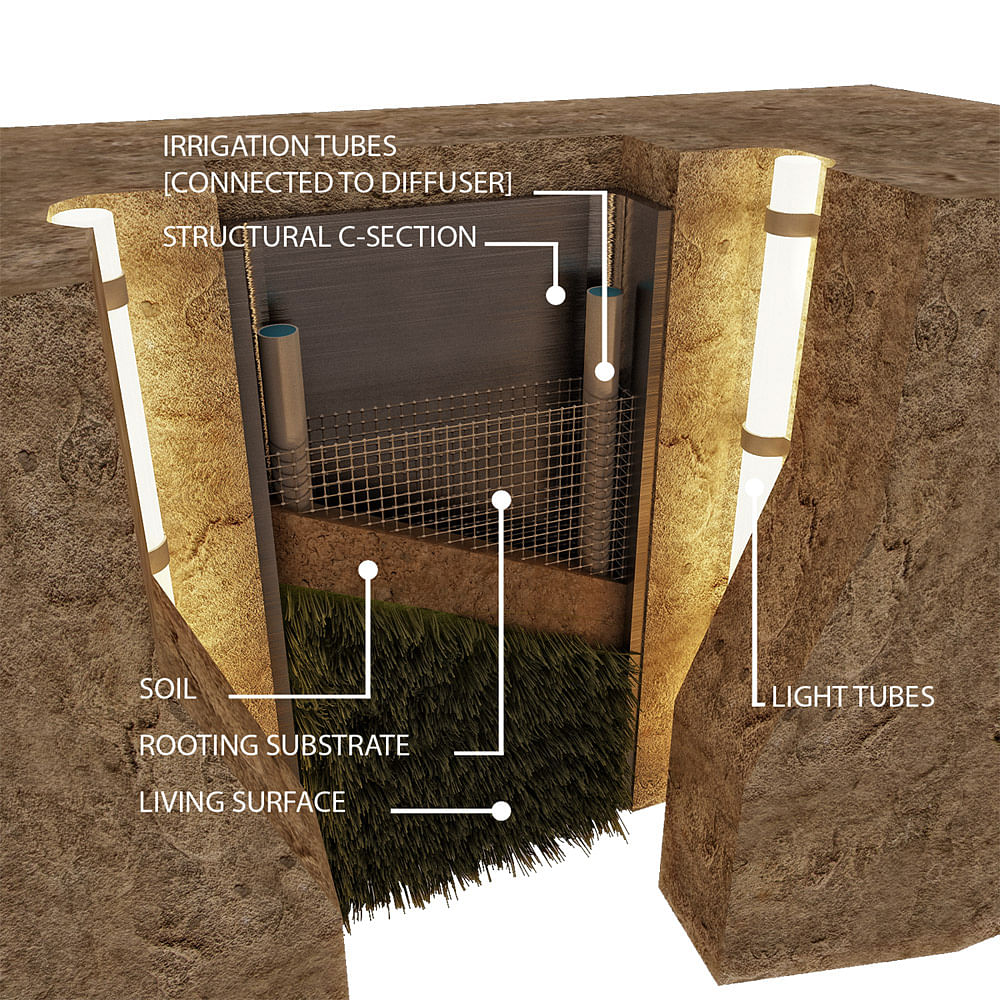
Proposed constructional procedure:

  1. The pattern is cut via an in situ CNC machine; the machine is provided with a detailed prototype of the rock formation and the pattern.
  2. Groves for light fixtures are made; manually or by a CNC machine.
  3. Structural membranes are installed to hold the vertical plantation system.
  4. Infrastructure for lighting and plantation systems are installed.
  5. Finally, lighting fixtures and plantation systems are installed and tested in place.

The image below shows the main components of the proposed constructional system.
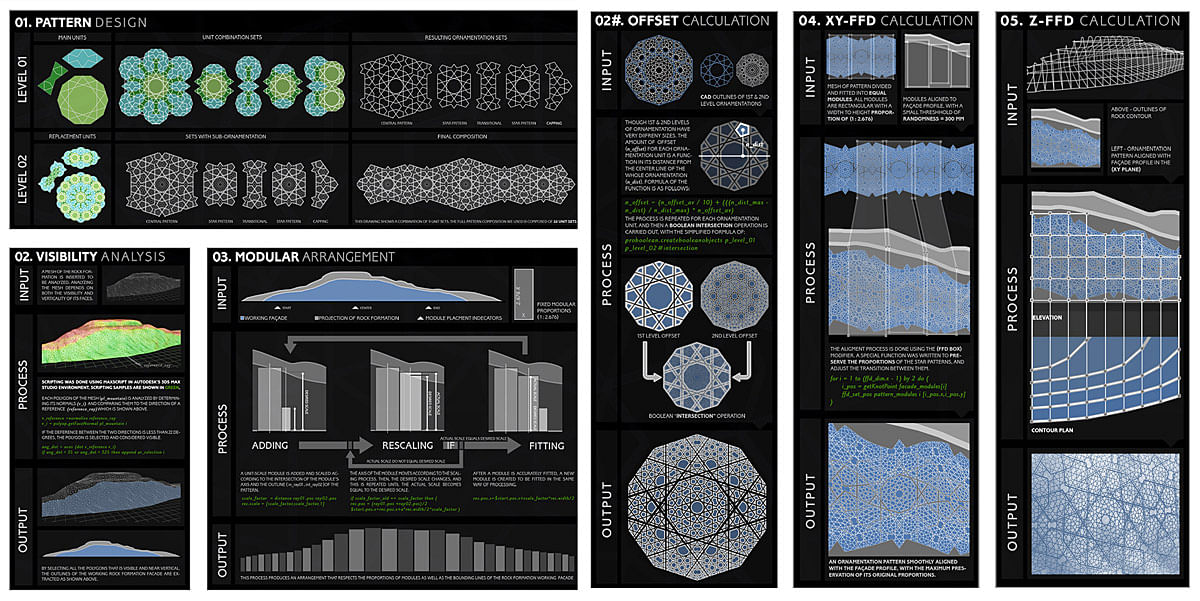
Design and Scripting Process
Script

CNC stone cutting

CNC (computer numerical control) cutters have been used in large scale projects such as Princess Diana’s memorial fountain. The usual procedure was to cut the stone in a workshop then install it after that in the desired site.  But here we propose that the cutting is to be done in situ.
This will sharply reduce the construction cost and time, and will provide more accuracy and simplicity through the entire construction process.

Close daylight shot
Close daylight shot

Vertical plantation

Vertical plantation here will be used in a small scale, so the known methods and systems will be simplified and made more delicate to handle the small living surface.

Close daylight shot
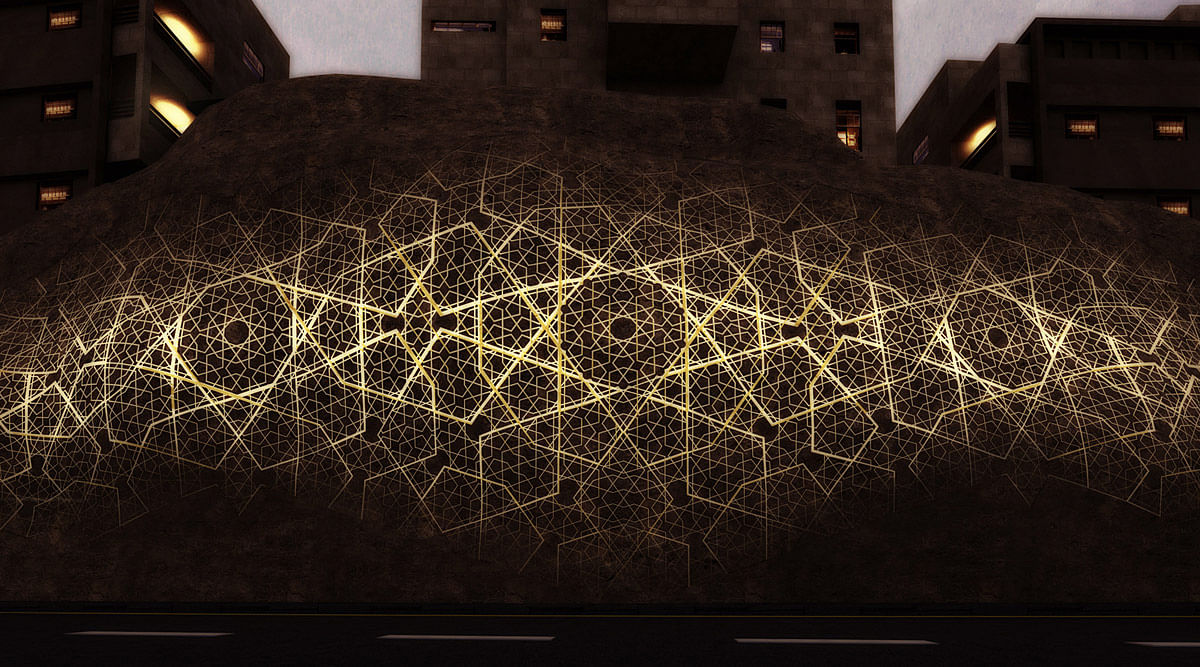
Close night shot
Close night shot
Construction detail

All images courtesy of Ahmed Albadawy, Ahmed Enab and Yasser Mehanna.

Related

stone ● scripture ● saudi arabia ● ornamental ● mural ● middle east ● mecca ● cemetery

Share

  • Follow

    0 Comments

  • Comment as :

Al.Mualla Cemetery Mural / A Matter of Life and Death

Best in urban planning recognized at AIA Regional & Urban Design Award 2026

Sponsored Post by Buildner

Re:Form - New Life for Old Spaces / Edition #3 advance registration deadline is approaching!

New architecture and design competitions: IDEAS Awards, UIA-HYP CUP International Student Competition, Vancouver Tall Challenge, and Memorial to the Sixth Extinction

Best small projects chosen at AIA Small Project Award 2026

10 standout sustainable projects honored at AIA COTE Top Ten Award 2026

Best residential architecture of 2026 honored at AIA Housing Award

Best new interiors of 2026 chosen at AIA Interior Architecture Awards

Best global architecture honored at RIBA International Awards 2026

Sign up for Bustler's Email Newsletters

World’s most beautiful airports of 2026 chosen by Prix Versailles

New architecture and design competitions: Brick in Architecture Awards, Study Architecture Student Showcase, N.Y.C. Groceries, and New York High Falls Riverfront Market

SmithGroup’s ‘pioneering’ Philip Merrill Environmental Center wins AIA Twenty-five Year Award

Sponsored Post by Buildner

Museum of Emotions / Edition #8 FINAL registration deadline is in 5 DAYS!

Here are the winners of the 2026 AIA Architecture Awards

40 emerging architects and designers under 40 from Europe honored

Northwestern University selects 12-firm longlist to design new engineering building

Next page » Loading

Al.Mualla Cemetery Mural / A Matter of Life and Death

By Bustler Editors|

Wednesday, May 9, 2012

Share

Main perspective, night

Related

stone ● scripture ● saudi arabia ● ornamental ● mural ● middle east ● mecca ● cemetery

Germany-based Egyptian architect Ahmed Al.Badawy has shared with us images of the fascinating project "Al.Mualla Cemetery Mural / A Matter of Life and Death" which won the First Prize at the First Islamic Competition for Ornamenting Makkah Al.Mukarramah (Mecca, Saudi Arabia). Next to Al.Badawy, the design team also included Ahmed Enab and Yasser Mehanna.

Project Description from the Designers:

While reviewing the various suggested sites of this competition - to choose one to work on. The one that caught much of our attention was Al-Mualla mural. This site holds some great features; besides its simple urban context. The first feature was its inspiring rock formation, naturally ascending to one clear visual climax, and then gently descending to blend in with the plane of the ground. But most important, was its proximity to the holy cemetery of Al-Mualla. This second feature gave us a good opportunity to express our point of view about one the most intimidating concepts known to mankind; death.

Main perspective, daylight

‬In the case of Al-Mualla, an interpretation of the concept of physical death will be naive. Because, this holy cemetery holds in its earth the remains of some of the greatest people who ever walked this earth, and who were defenders of humanistic values that humanity strives for now. This holy cemetery is crowned by the remains of our blessed mother Khadija. And this holy cemetery, literally, holds the remains of the founders of the first Muslim society.

The site

So,‭ ‬given this site,‭ ‬we are dealing with a much more dangerous type of death‭; ‬death of values and principles,‭ ‬death of a cultural movement.‭ ‬A death that’s been going around for a hundred years or so.‮ ‭

‬Indeed this proposed design doesn’t try to capture an interpretation of death.‭ ‬On the contrary it tries to capture an interpretation of the inevitable life after death.‭

Location

And what better interpretation can one find than that of the‭ ‬Holy Quran‭…

"Know that god gives life to the earth after its death! Indeed we have made clear the signs for you, if you but understand" (Holy Quran 057-017)

We’ve done nothing but try to give the meaning of this verse a visual form. And to be fair, half of the job was already done for us by the magnificent natural rock formation with its apparent lifelessness, which we chose to represent death. All we had to do next is crack it, and show some life springing out of it…and so, there was light and green.

Main perspective, panorama

Girih Tiles

Before stepping into the details of our design process we would like to introduce you to Girih tiles. Though there and mathematical theories where discovered in the 1960’s, and though unknown to the modern world until 2007, Girih tiles where developed and used by Muslims 800 years ago…

Girih tiles are a set of five tiles, which were used in the creation of tiling patterns for decoration of buildings in Islamic architecture.

They were used throughout most of the Islamic architectural styles.

The shapes of the tiles are:

  1. A regular decagon.
  2. An elongated (irregular convex) hexagon.
  3. A bow tie (non-convex hexagon).
  4. A rhombus.
  5. A regular pentagon.

In 2007, peter j. Lu of Harvard University published a paper suggesting that Girih tiling possessed properties consistent with self-similar fractal quasi crystalline tiling. This finding was supported by examination of the topkapi scroll.

For these reasons we chose Girih tiles as a representative genuinely of the Islamic thought, and as a main element in our design proposal.

Girih Tiles

Design and Scripting Process

Construction Method

Proposed constructional procedure:

  1. The pattern is cut via an in situ CNC machine; the machine is provided with a detailed prototype of the rock formation and the pattern.
  2. Groves for light fixtures are made; manually or by a CNC machine.
  3. Structural membranes are installed to hold the vertical plantation system.
  4. Infrastructure for lighting and plantation systems are installed.
  5. Finally, lighting fixtures and plantation systems are installed and tested in place.

The image below shows the main components of the proposed constructional system.

Design and Scripting Process
Script

CNC stone cutting

CNC (computer numerical control) cutters have been used in large scale projects such as Princess Diana’s memorial fountain. The usual procedure was to cut the stone in a workshop then install it after that in the desired site.  But here we propose that the cutting is to be done in situ.
This will sharply reduce the construction cost and time, and will provide more accuracy and simplicity through the entire construction process.
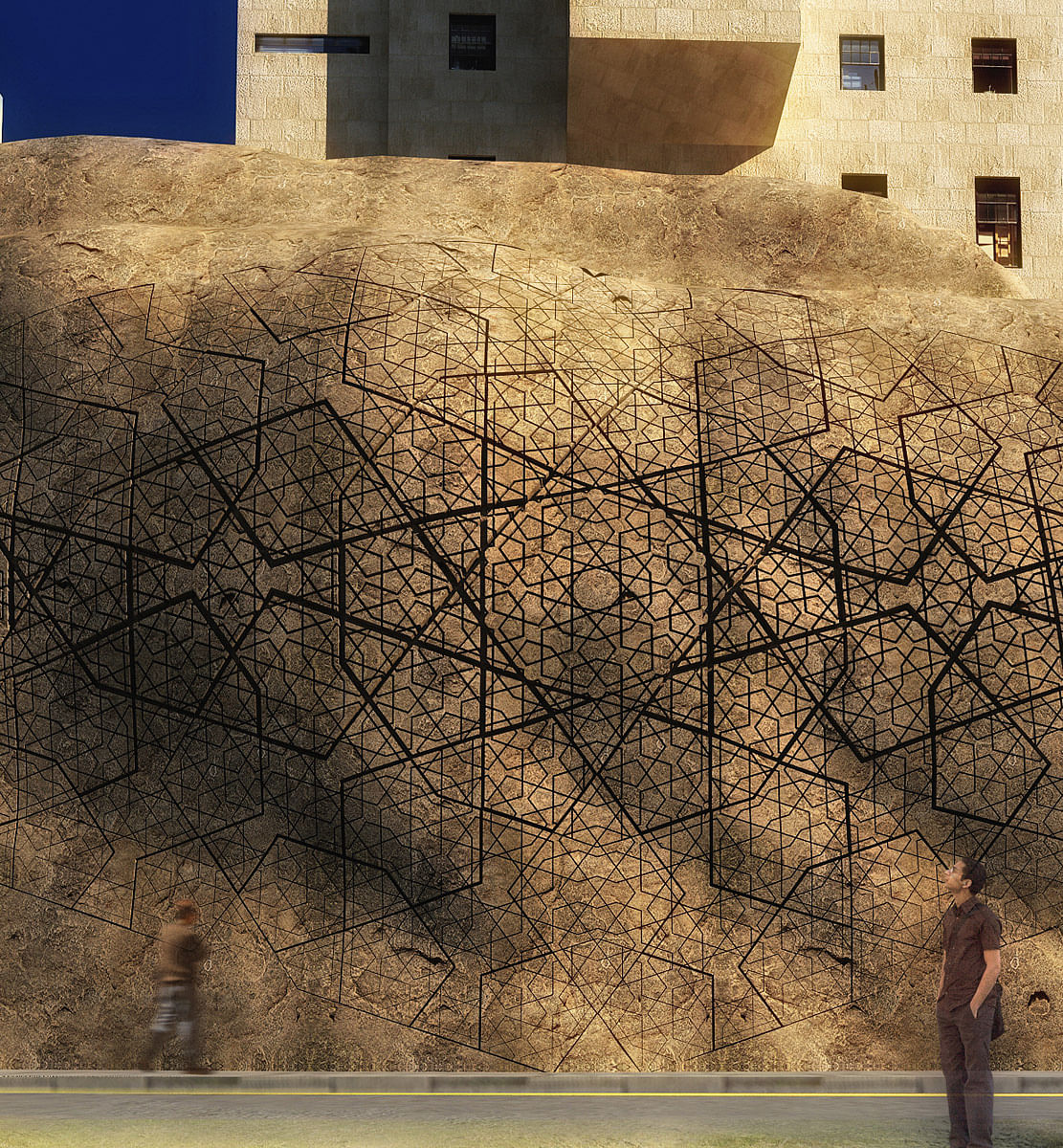
Close daylight shot
Close daylight shot

Vertical plantation

Vertical plantation here will be used in a small scale, so the known methods and systems will be simplified and made more delicate to handle the small living surface.
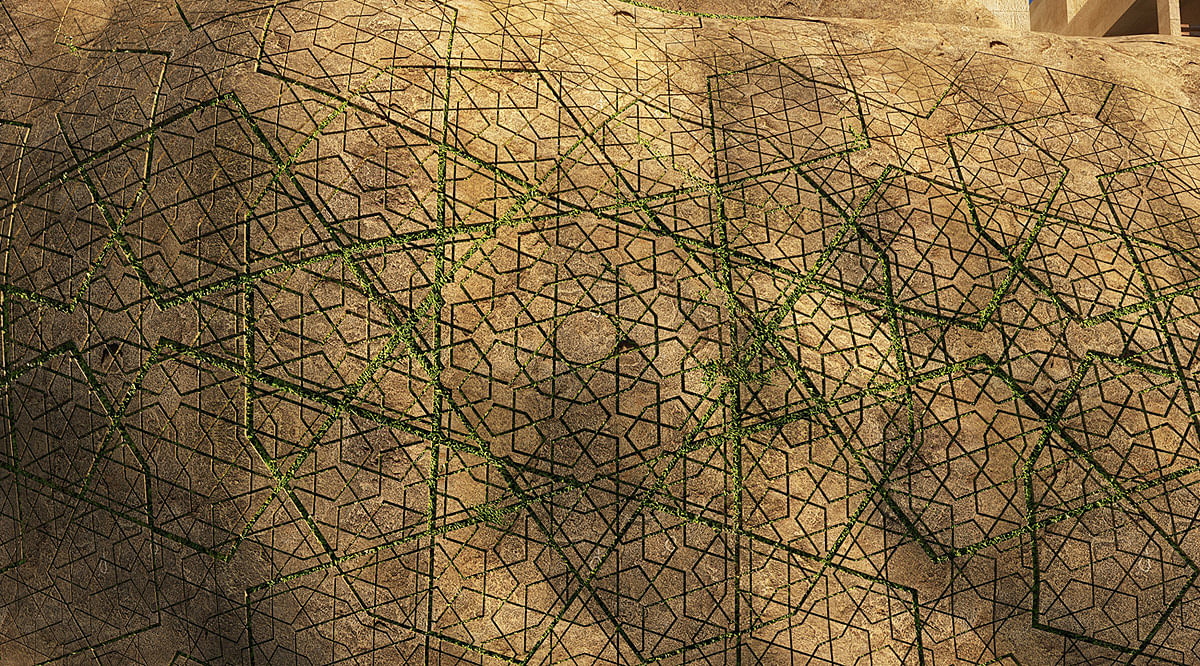
Close daylight shot
Close night shot
Close night shot
Construction detail

All images courtesy of Ahmed Albadawy, Ahmed Enab and Yasser Mehanna.

Share

  • Follow

    0 Comments

  • Comment as :

Archinect JobsArchinect Jobs

The Archinect Job Board attracts the world's top architectural design talents.

VIEW ALL JOBS POST A JOB

Project Manager - Residential

DAHLIN Architecture | Planning | Interiors

Project Manager - Residential

Bellevue, WA, US

Architect

Joe Serrins Studio

Architect

New York, NY, US

Architectural Designer

7th Street Burger

Architectural Designer

New York, NY, US

Intermediate Designer

Rafael Viñoly Architects

Intermediate Designer

New York, NY, US

Project Manager

Populous

Project Manager

San Francisco, CA, US

Architect

OBRA Architects

Architect

New York, NY, US

Intermediate Architect

GF55 Architects

Intermediate Architect

New York, NY, US

Project Manager/Designer

BOTO Design Architects

Project Manager/Designer

Santa Monica, CA, US

Job Captain - Residential

DAHLIN Architecture | Planning | Interiors

Job Captain - Residential

Pleasanton, CA, US

Architectural team Memeber

Meraki Architects, LLC

Architectural team Memeber

Middleburg Heights, OH, US

Next page » Loading