• Login / Join
  • About
  • •
  • Contact
  • •
  • Advertising
bustler logo
bustler logo
  • News
  • Competitions
  • Events
  • Bustler is powered by Archinect
  • Sign up for Bustler's Email Newsletters

  • Follow these Bustler feeds:

  • Search

    Search in

  • Submit

    What are you submitting?

    News Pitch
    Competition
    Event
  • Login / Join
  • News|Competitions|Events
  • Search
    | Submit
    | Follow
  • Search in

    What are you submitting?

    News Pitch
    Competition
    Event

    Follow these Bustler feeds:

  • About|Contact|Advertising
  • Login / Join

Audi Urban Future Award 2012 Goes to Höweler + Yoon Architecture

By Bustler Editors|

Tuesday, Oct 23, 2012
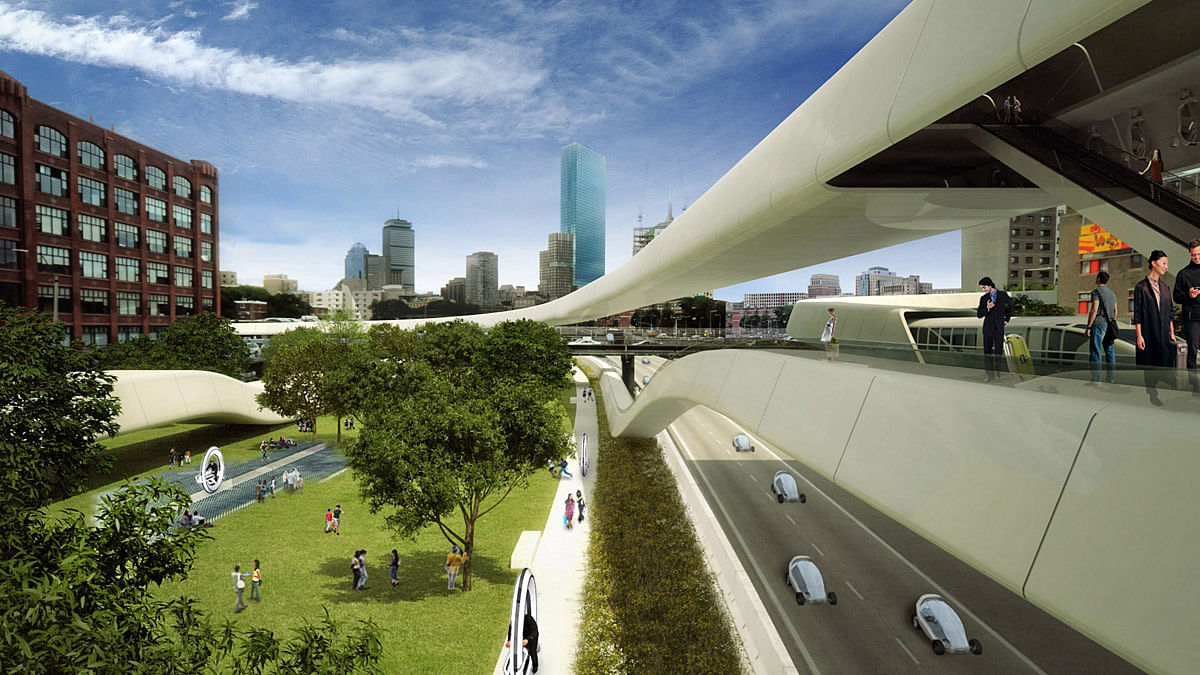
Vision Höweler+Yoon Architecture © Höweler+Yoon Architecture

Eric Höweler and J. Meejin Yoon of Boston firm Höweler + Yoon Architecture are the winners of the Audi Urban Future Award 2012. The team won with the project "Shareway," a proposal calling for the reinvention of the Boston-Washington, D.C., metropolitan region called Boswash.

The Audi Urban Future Award 2012 is an international architecture competition that focuses on specific mobility scenarios in the five metropolitan regions Boston/Washington, Istanbul, Mumbai, Pearl River Delta, and São Paulo. Höweler+Yoon Architecture is one of the five architectural offices that were selected to develop a vision on future urban mobility for the competition. Other particapting firms were Superpool (Istanbul), CRIT (Mumbai), Node Architecture & Urbanism (Pearl River Delta), and Urban-Think Tank (São Paulo).

Audi Urban Future Award 2012: Höweler + Yoon's vision for the future of mobility in Boston/Washington 2030 from THE AUDI URBAN FUTURE INITIATIVE on Vimeo.

Project Description from Höweler+Yoon Architecture:

Boswash, the megalopolis spanning from Boston to Washington D.C., which is home to fiftythree million people and one-third of the country's gross domestic product, has passed from exception to norm. Yet, Boswash was imaginable only retroactively: a continentally scaled afterthought built in strands of interstates, self-similar subdivisions, and networks of infrastructure. This megacity region – defined by sprawling networks of suburbs, exurbs, and high-density urban corridors – boomed from six to fifty million inhabitants decades before its existence was collectively registered. Connected, divided, and inscribed with the infrastructures of mobility, communication, and economics, this territory of leftovers strung along the interstate highway I-95, was discovered by geographers and urban theorists in the accumulated accidents of each individual city’s modernization.
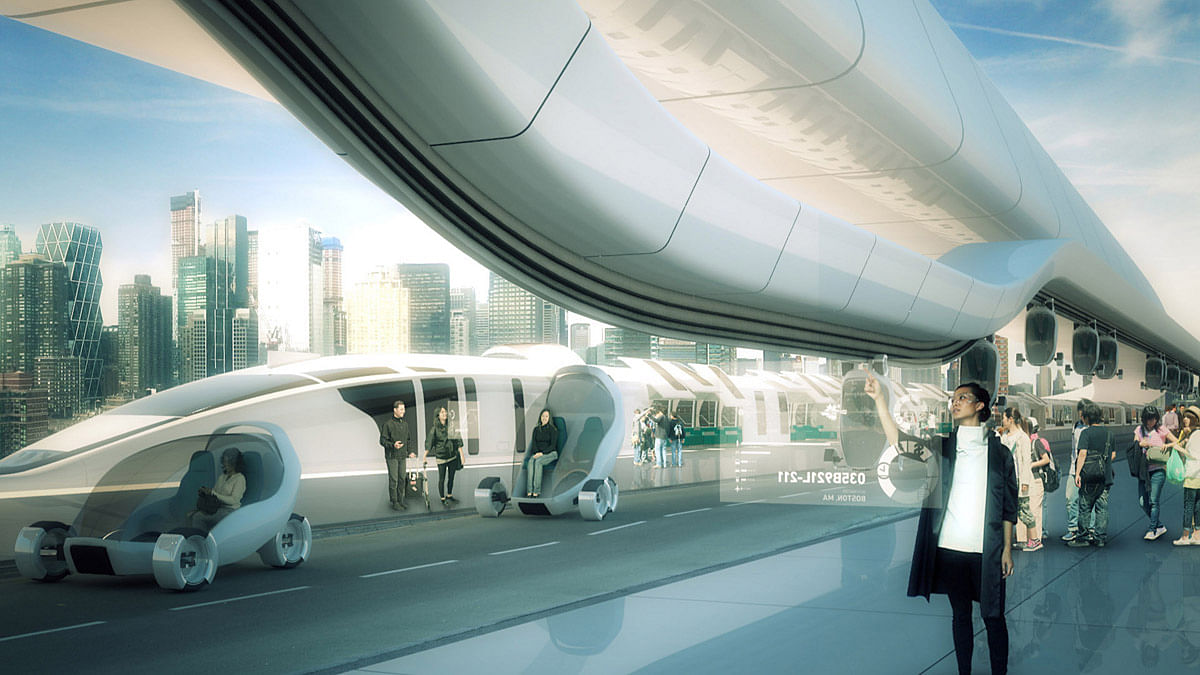
Vision Höweler+Yoon Architecture © Höweler+Yoon Architecture

Constructed from outdated dreams and now-defunct infrastructures, Boswash is the residue left behind when traditional notions of the city no longer hold sway. Thus, its inhabitants’ individual cognitive maps might still align with much older spatial boundaries, defining the edges of Boswash’s various urban enclaves, voting districts, and state boundaries. In lived experience, however, these relatively clear spatial edges give way to dense matrices of unseen geographies, locales described less through politically negotiated borders and more through the edges of economic zones, climatological regions, communication infrastructures, and territories of mobility and transportation.
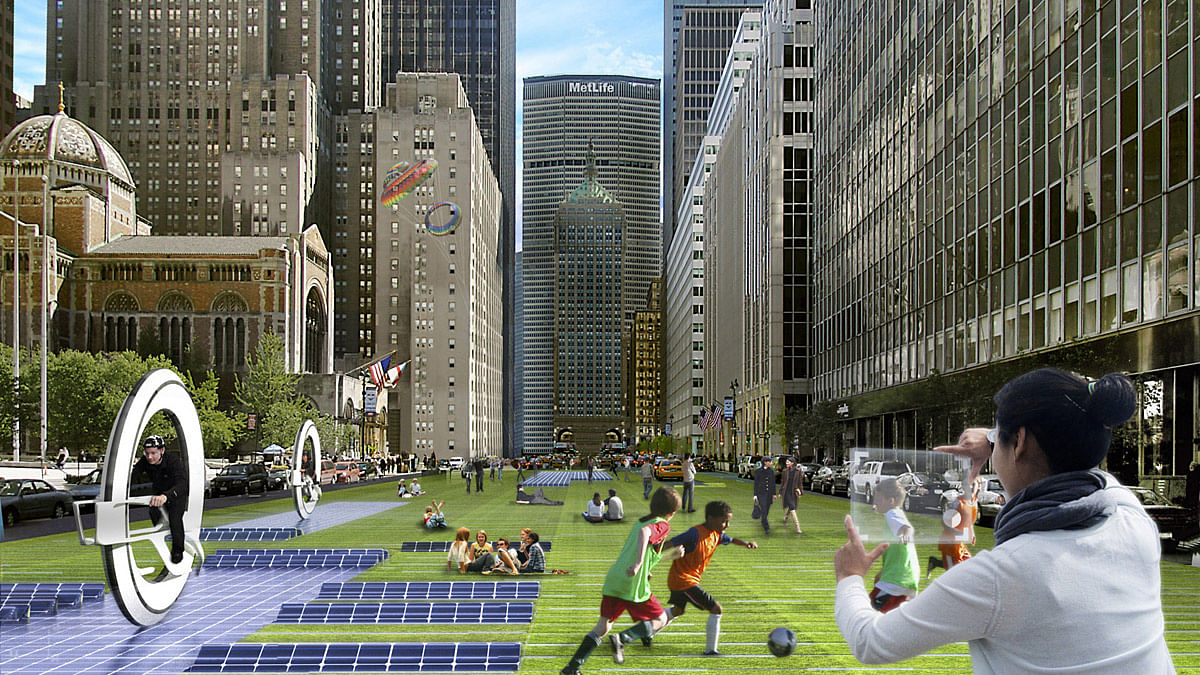
Vision Höweler+Yoon Architecture © Höweler+Yoon Architecture

As infrastructure across the country has been failing, the housing developments it spawned have been foreclosed and the continent appears to have been structured in models of mobility we can no longer afford in financial, environmental, and social terms; the notions of progress that supported the continual sprawling American expansion no longer ring true. The postwar incarnation of the American Dream might be equally outdated. Its promise of the single-family home, with a front lawn and two-car garage, coupled with automobility, precipitated the postwar American suburb and its corresponding cultures (pool parties, Tupperware, and barbecues), architectural manifestations (ranchburgers, drive-throughs, and big-box stores), and neuroses (housewife blues, road rage, eating disorders). Boswash’s contemporary infrastructural coincidences and unsuspecting publics might have already begun to transform the products and manifestations (both cultural and spatial) of that American Dream.
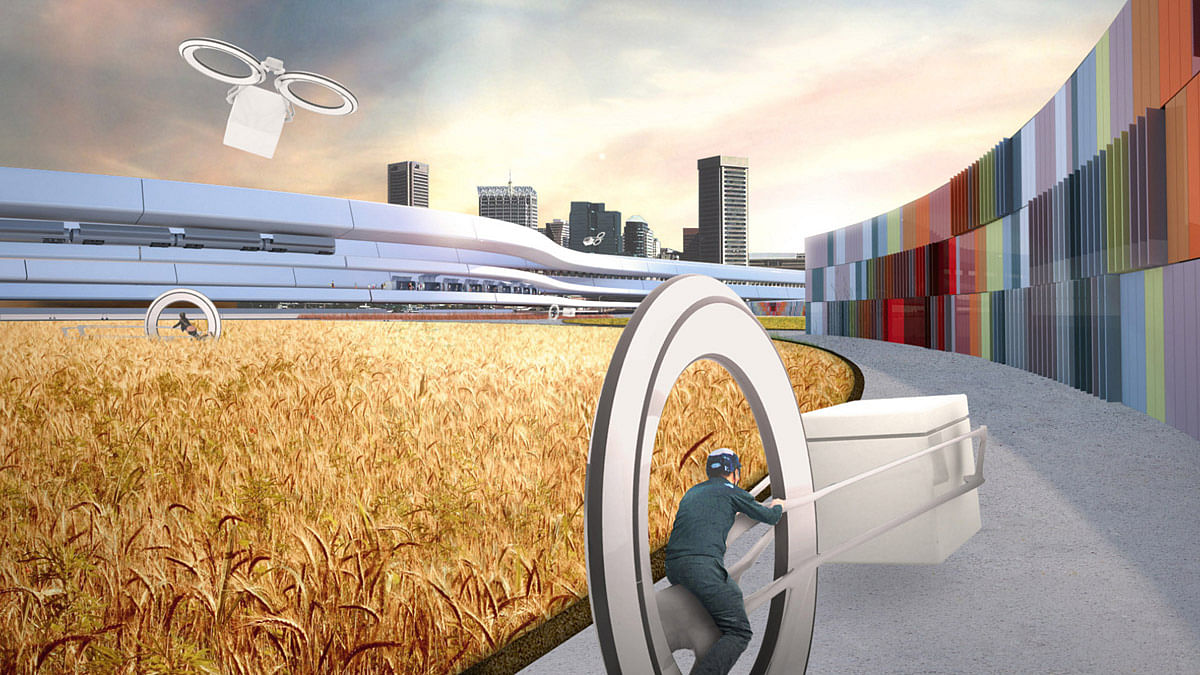
Vision Höweler+Yoon Architecture © Höweler+Yoon Architecture

Within the infrastructural leftovers of this now outdated dream lies the possibility of conceiving of Boswash not as the inevitable outcome of perfect engineering but as a highly orchestrated and deliberately produced platform from which we might imagine alternate paths, different trajectories, or new cultural dreams. To imagine an alternate life for the road and its itinerant urban effects is also to imagine its alternate augmentation in the form of new American Dreams. New iterations of occupational invention could be staged as strategies for augmenting infrastructures that engage local stakeholders in generating new possibilities for the future of personal mobility.
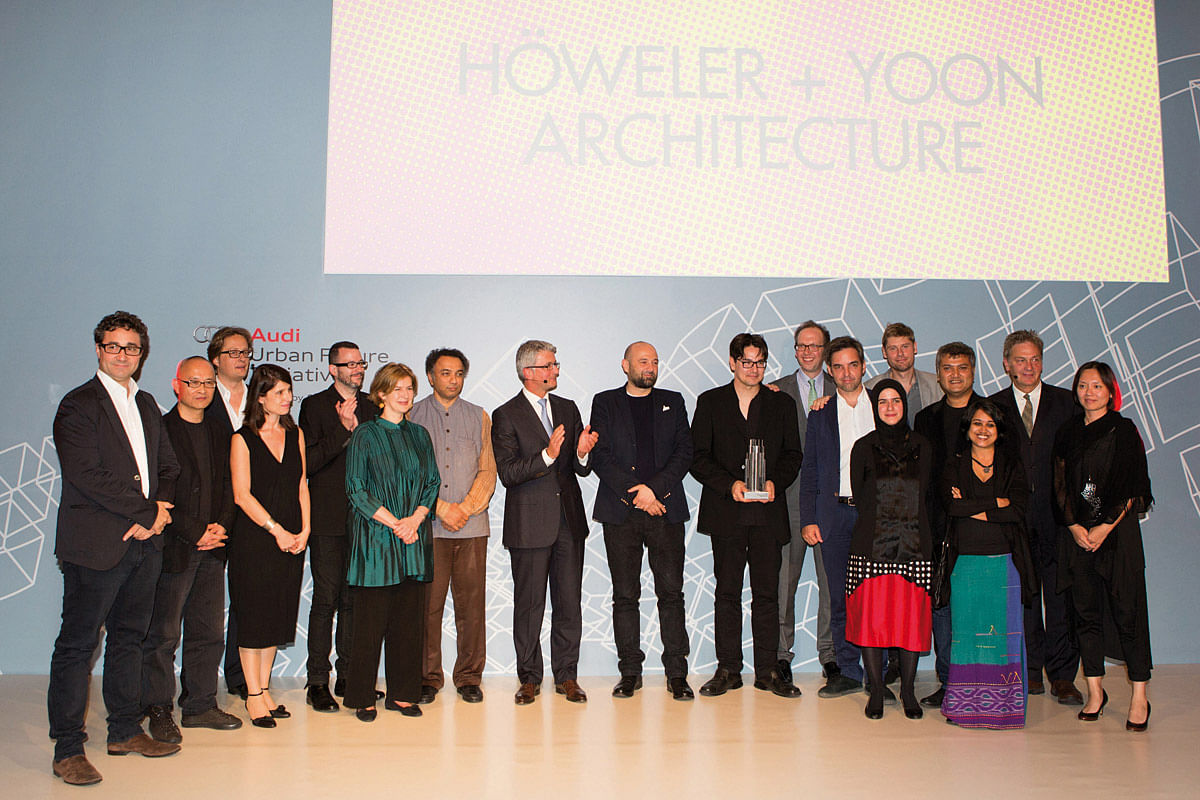
Participants of the Audi Urban Future Award 2012 © Audi Urban Future Initiative

To treat the I-95 corridor as a platform for divergent forms of invention is ultimately to project the existence of Boswash not from the apparent monotony of the drive, but through the leveraging of I-95 as a platform for dissensus, or moments of difference accumulating around the distributed effects of infrastructural fallout. Where the drive today is numbed with the unrelenting expanse of undifferentiated urban material, the corridor might be reimagined as a platform for staging other infrastructural narratives and moments of political, social, and spatial difference, and with them, new possible incarnations of the American Dream.
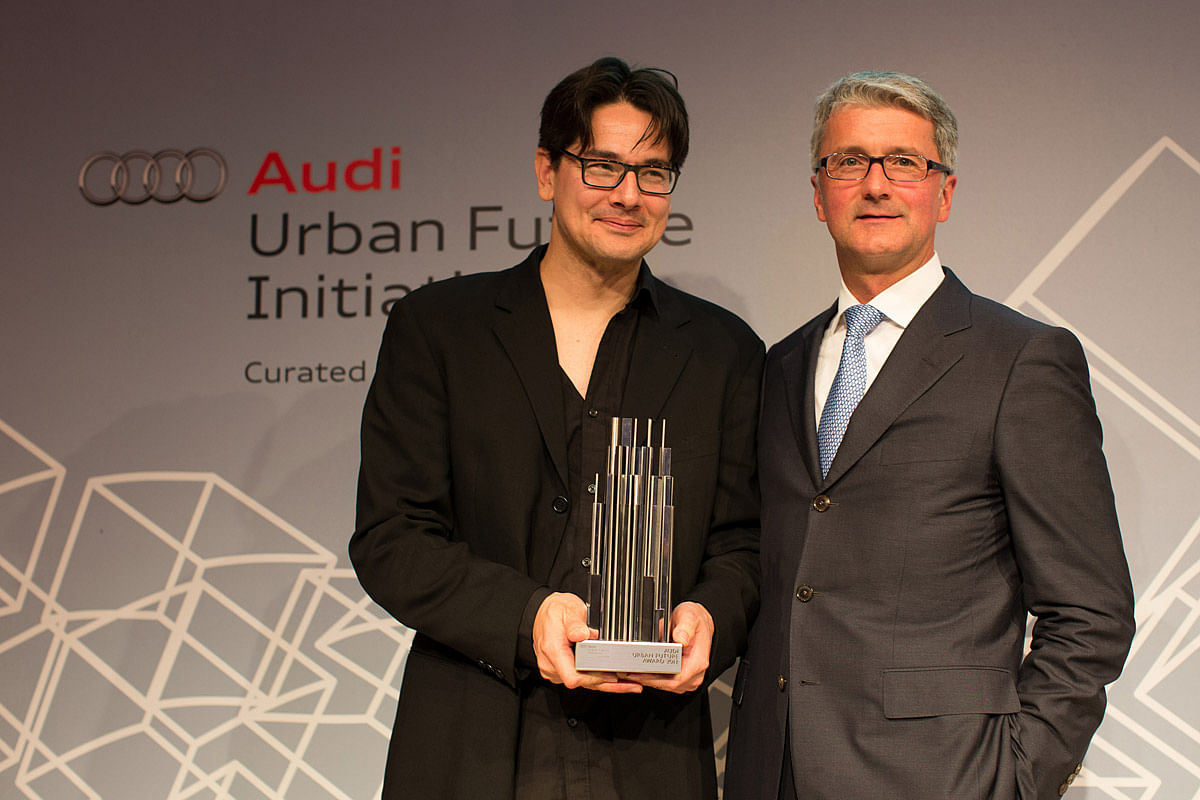
The Audi Urban Future Award 2012 is presented to Eric Höweler of Höweler+Yoon Architecture © Audi Urban Future Initiative

Watch also the presentations of the four other future urban scenarios below.

Audi Urban Future Award 2012: Superpool's vision for the future of mobility in Istanbul 2030 from THE AUDI URBAN FUTURE INITIATIVE on Vimeo.

Audi Urban Future Award 2012: CRIT's vision for the future of mobility in Mumbai 2030 from THE AUDI URBAN FUTURE INITIATIVE on Vimeo.

Audi Urban Future Award 2012: NODE's vision for the future of mobility in the Pearl River Delta 2030 from THE AUDI URBAN FUTURE INITIATIVE on Vimeo.

Audi Urban Future Award 2012: Urban Think Tank's vision for the future of mobility in São Paulo 2030 from THE AUDI URBAN FUTURE INITIATIVE on Vimeo.

Related

vision ● mobility ● istanbul ● höweler + yoon architecture ● future ● boston ● award ● audi urban future award ● audi

Share

  • Follow

    0 Comments

  • Comment as :

Audi Urban Future Award 2012 Goes to Höweler + Yoon Architecture

10 standout sustainable projects honored at AIA COTE Top Ten Award 2026

Best residential architecture of 2026 honored at AIA Housing Award

Best new interiors of 2026 chosen at AIA Interior Architecture Awards

Best global architecture honored at RIBA International Awards 2026

World’s most beautiful airports of 2026 chosen by Prix Versailles

New architecture and design competitions: Brick in Architecture Awards, Study Architecture Student Showcase, N.Y.C. Groceries, and New York High Falls Riverfront Market

SmithGroup’s ‘pioneering’ Philip Merrill Environmental Center wins AIA Twenty-five Year Award

Sponsored Post by Buildner

Museum of Emotions / Edition #8 FINAL registration deadline is in 5 DAYS!

Sign up for Bustler's Email Newsletters

Here are the winners of the 2026 AIA Architecture Awards

40 emerging architects and designers under 40 from Europe honored

Northwestern University selects 12-firm longlist to design new engineering building

New architecture and design competitions: Exploring 130 Years of American Design, Christo & Jeanne-Claude Center, 13 White Houses, and La Pyramide

Micro-architecture honored in latest Tiny House Architecture Competition

World’s most beautiful restaurants of 2026 chosen by Prix Versailles

Sponsored Post by Buildner

Design a wine tasting room in Italy! Valli Wine Tasting Room is launched!

Next page » Loading

Audi Urban Future Award 2012 Goes to Höweler + Yoon Architecture

By Bustler Editors|

Tuesday, Oct 23, 2012

Share

Vision Höweler+Yoon Architecture © Höweler+Yoon Architecture

Related

vision ● mobility ● istanbul ● höweler + yoon architecture ● future ● boston ● award ● audi urban future award ● audi

Eric Höweler and J. Meejin Yoon of Boston firm Höweler + Yoon Architecture are the winners of the Audi Urban Future Award 2012. The team won with the project "Shareway," a proposal calling for the reinvention of the Boston-Washington, D.C., metropolitan region called Boswash.

The Audi Urban Future Award 2012 is an international architecture competition that focuses on specific mobility scenarios in the five metropolitan regions Boston/Washington, Istanbul, Mumbai, Pearl River Delta, and São Paulo. Höweler+Yoon Architecture is one of the five architectural offices that were selected to develop a vision on future urban mobility for the competition. Other particapting firms were Superpool (Istanbul), CRIT (Mumbai), Node Architecture & Urbanism (Pearl River Delta), and Urban-Think Tank (São Paulo).

Audi Urban Future Award 2012: Höweler + Yoon's vision for the future of mobility in Boston/Washington 2030 from THE AUDI URBAN FUTURE INITIATIVE on Vimeo.

Project Description from Höweler+Yoon Architecture:

Boswash, the megalopolis spanning from Boston to Washington D.C., which is home to fiftythree million people and one-third of the country's gross domestic product, has passed from exception to norm. Yet, Boswash was imaginable only retroactively: a continentally scaled afterthought built in strands of interstates, self-similar subdivisions, and networks of infrastructure. This megacity region – defined by sprawling networks of suburbs, exurbs, and high-density urban corridors – boomed from six to fifty million inhabitants decades before its existence was collectively registered. Connected, divided, and inscribed with the infrastructures of mobility, communication, and economics, this territory of leftovers strung along the interstate highway I-95, was discovered by geographers and urban theorists in the accumulated accidents of each individual city’s modernization.

Vision Höweler+Yoon Architecture © Höweler+Yoon Architecture

Constructed from outdated dreams and now-defunct infrastructures, Boswash is the residue left behind when traditional notions of the city no longer hold sway. Thus, its inhabitants’ individual cognitive maps might still align with much older spatial boundaries, defining the edges of Boswash’s various urban enclaves, voting districts, and state boundaries. In lived experience, however, these relatively clear spatial edges give way to dense matrices of unseen geographies, locales described less through politically negotiated borders and more through the edges of economic zones, climatological regions, communication infrastructures, and territories of mobility and transportation.

Vision Höweler+Yoon Architecture © Höweler+Yoon Architecture

As infrastructure across the country has been failing, the housing developments it spawned have been foreclosed and the continent appears to have been structured in models of mobility we can no longer afford in financial, environmental, and social terms; the notions of progress that supported the continual sprawling American expansion no longer ring true. The postwar incarnation of the American Dream might be equally outdated. Its promise of the single-family home, with a front lawn and two-car garage, coupled with automobility, precipitated the postwar American suburb and its corresponding cultures (pool parties, Tupperware, and barbecues), architectural manifestations (ranchburgers, drive-throughs, and big-box stores), and neuroses (housewife blues, road rage, eating disorders). Boswash’s contemporary infrastructural coincidences and unsuspecting publics might have already begun to transform the products and manifestations (both cultural and spatial) of that American Dream.

Vision Höweler+Yoon Architecture © Höweler+Yoon Architecture

Within the infrastructural leftovers of this now outdated dream lies the possibility of conceiving of Boswash not as the inevitable outcome of perfect engineering but as a highly orchestrated and deliberately produced platform from which we might imagine alternate paths, different trajectories, or new cultural dreams. To imagine an alternate life for the road and its itinerant urban effects is also to imagine its alternate augmentation in the form of new American Dreams. New iterations of occupational invention could be staged as strategies for augmenting infrastructures that engage local stakeholders in generating new possibilities for the future of personal mobility.

Participants of the Audi Urban Future Award 2012 © Audi Urban Future Initiative

To treat the I-95 corridor as a platform for divergent forms of invention is ultimately to project the existence of Boswash not from the apparent monotony of the drive, but through the leveraging of I-95 as a platform for dissensus, or moments of difference accumulating around the distributed effects of infrastructural fallout. Where the drive today is numbed with the unrelenting expanse of undifferentiated urban material, the corridor might be reimagined as a platform for staging other infrastructural narratives and moments of political, social, and spatial difference, and with them, new possible incarnations of the American Dream.

The Audi Urban Future Award 2012 is presented to Eric Höweler of Höweler+Yoon Architecture © Audi Urban Future Initiative

Watch also the presentations of the four other future urban scenarios below.

Audi Urban Future Award 2012: Superpool's vision for the future of mobility in Istanbul 2030 from THE AUDI URBAN FUTURE INITIATIVE on Vimeo.

Audi Urban Future Award 2012: CRIT's vision for the future of mobility in Mumbai 2030 from THE AUDI URBAN FUTURE INITIATIVE on Vimeo.

Audi Urban Future Award 2012: NODE's vision for the future of mobility in the Pearl River Delta 2030 from THE AUDI URBAN FUTURE INITIATIVE on Vimeo.

Audi Urban Future Award 2012: Urban Think Tank's vision for the future of mobility in São Paulo 2030 from THE AUDI URBAN FUTURE INITIATIVE on Vimeo.

Share

  • Follow

    0 Comments

  • Comment as :

Archinect JobsArchinect Jobs

The Archinect Job Board attracts the world's top architectural design talents.

VIEW ALL JOBS POST A JOB

Senior Associate/ Project Manager

DWY Landscape Architects

Senior Associate/ Project Manager

Sarasota, FL, US

Architecture & Design Manager

7th Street Burger

Architecture & Design Manager

New York, NY, US

Lead Design Architect

The American Housing Corporation

Lead Design Architect

Austin, TX, US

Project Designer / Manager

BuiltIN Studio

Project Designer / Manager

New York, NY, US

Architectural Designer, Residential

Roman and Williams Buildings and Interiors

Architectural Designer, Residential

New York, NY, US

Junior Designer

Shadow Architect, P.C.

Junior Designer

New York, NY, US

BIM Application Specialist

Lake Flato Architects

BIM Application Specialist

San Antonio, TX, US

Architectural team Memeber

Meraki Architects, LLC

Architectural team Memeber

Middleburg Heights, OH, US

Project Manager

Populous

Project Manager

San Francisco, CA, US

Project Architect/ Designer

Nandinee Phookan Architect, P.C.

Project Architect/ Designer

New York, NY, US

Next page » Loading