• Login / Join
  • About
  • •
  • Contact
  • •
  • Advertising
bustler logo
bustler logo
  • News
  • Competitions
  • Events
  • Bustler is powered by Archinect
  • Sign up for Bustler's Email Newsletters

  • Follow these Bustler feeds:

  • Search

    Search in

  • Submit

    What are you submitting?

    News Pitch
    Competition
    Event
  • Login / Join
  • News|Competitions|Events
  • Search
    | Submit
    | Follow
  • Search in

    What are you submitting?

    News Pitch
    Competition
    Event

    Follow these Bustler feeds:

  • About|Contact|Advertising
  • Login / Join

Filling Station(s) winners rev up the gas station typology

By Bustler Editors|

Tuesday, Jun 30, 2015
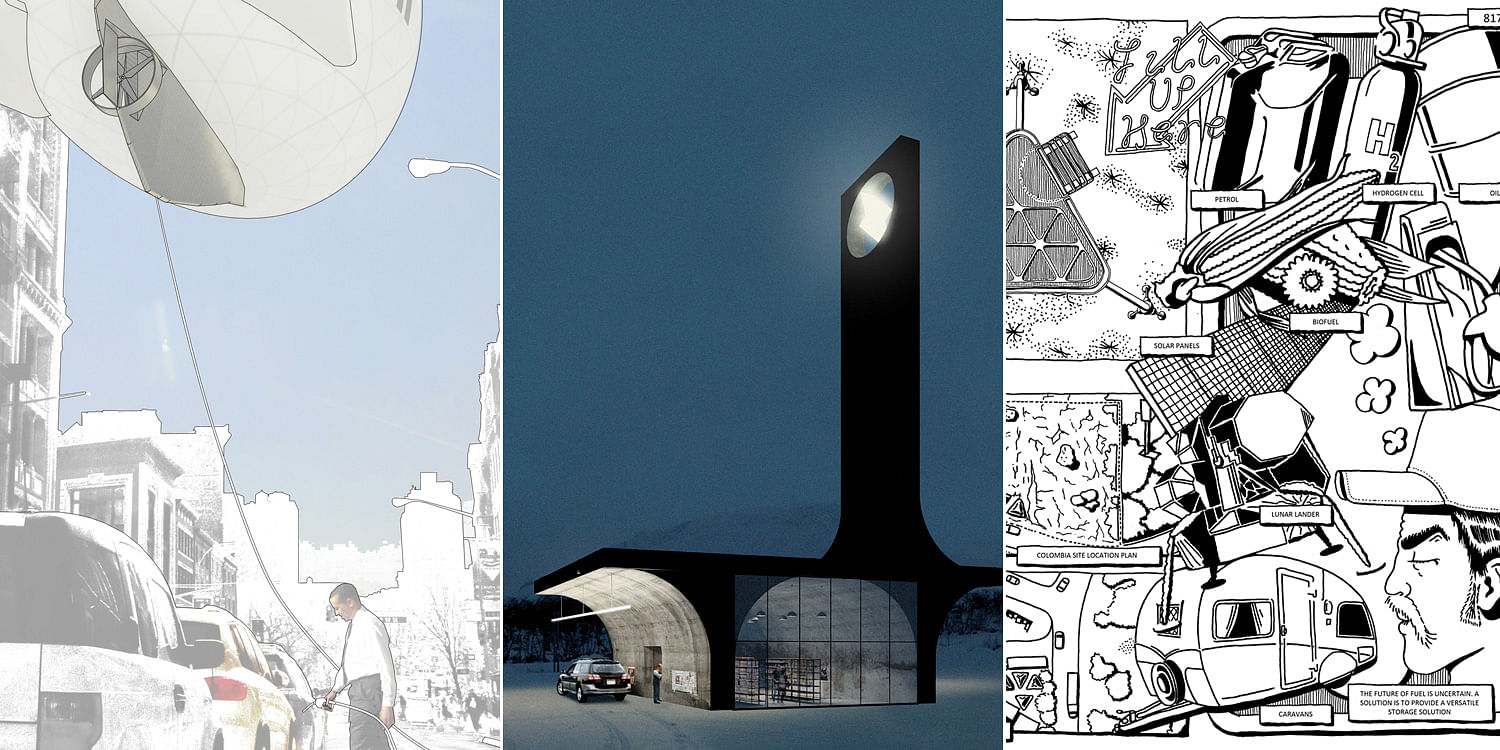
The Filling Station(s) winning entries.

For most commuters who travel by car, a gas station is nothing more than a quick pitstop as they about their day. In their latest installment, Combo Competitions held the Filling Station(s) ideas competition that had participants rethink the gas station typology as such: "Is there an ideal contemporary filling station, and can it be designed to last both functionally and aesthetically?"

Read on for more.

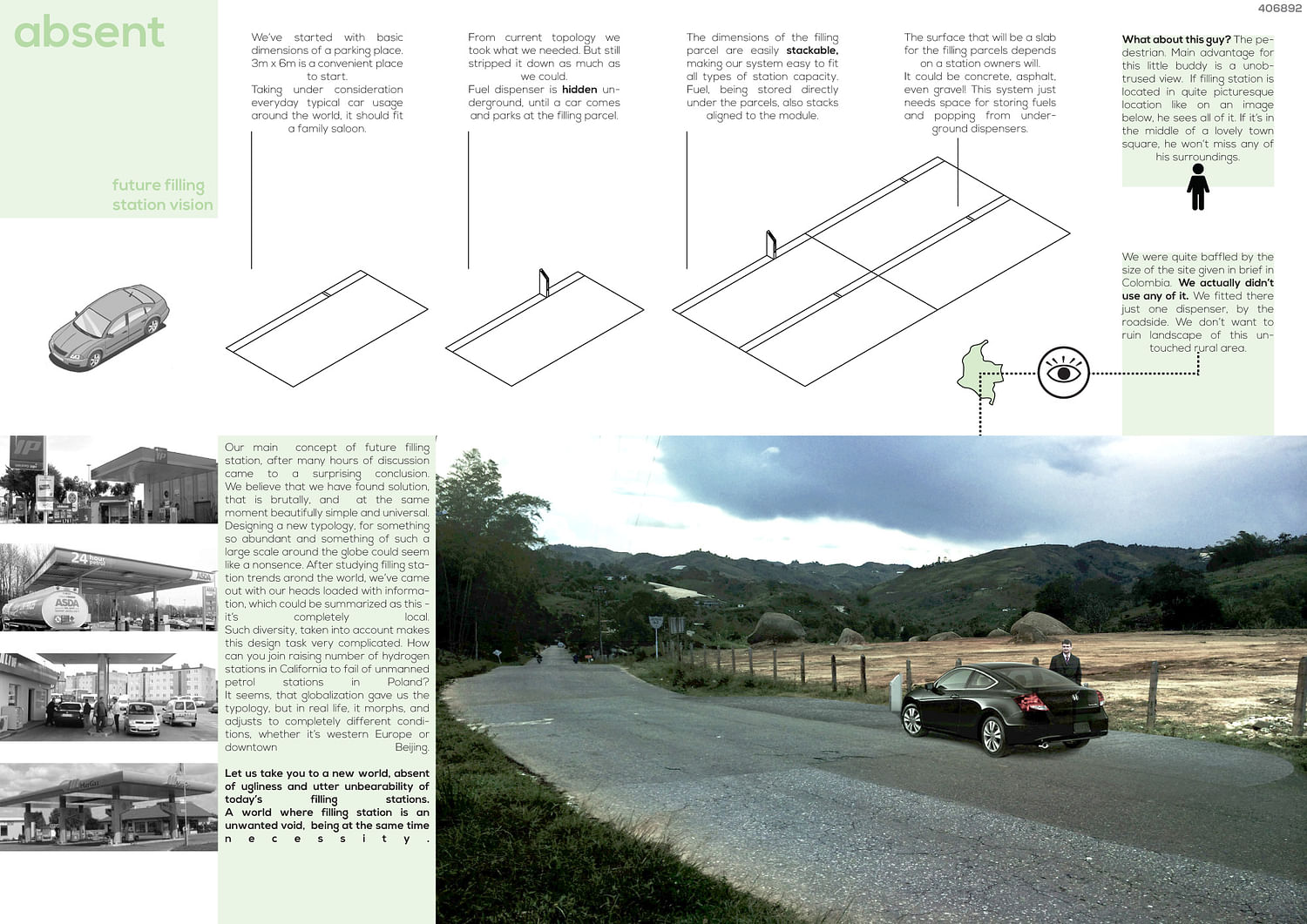
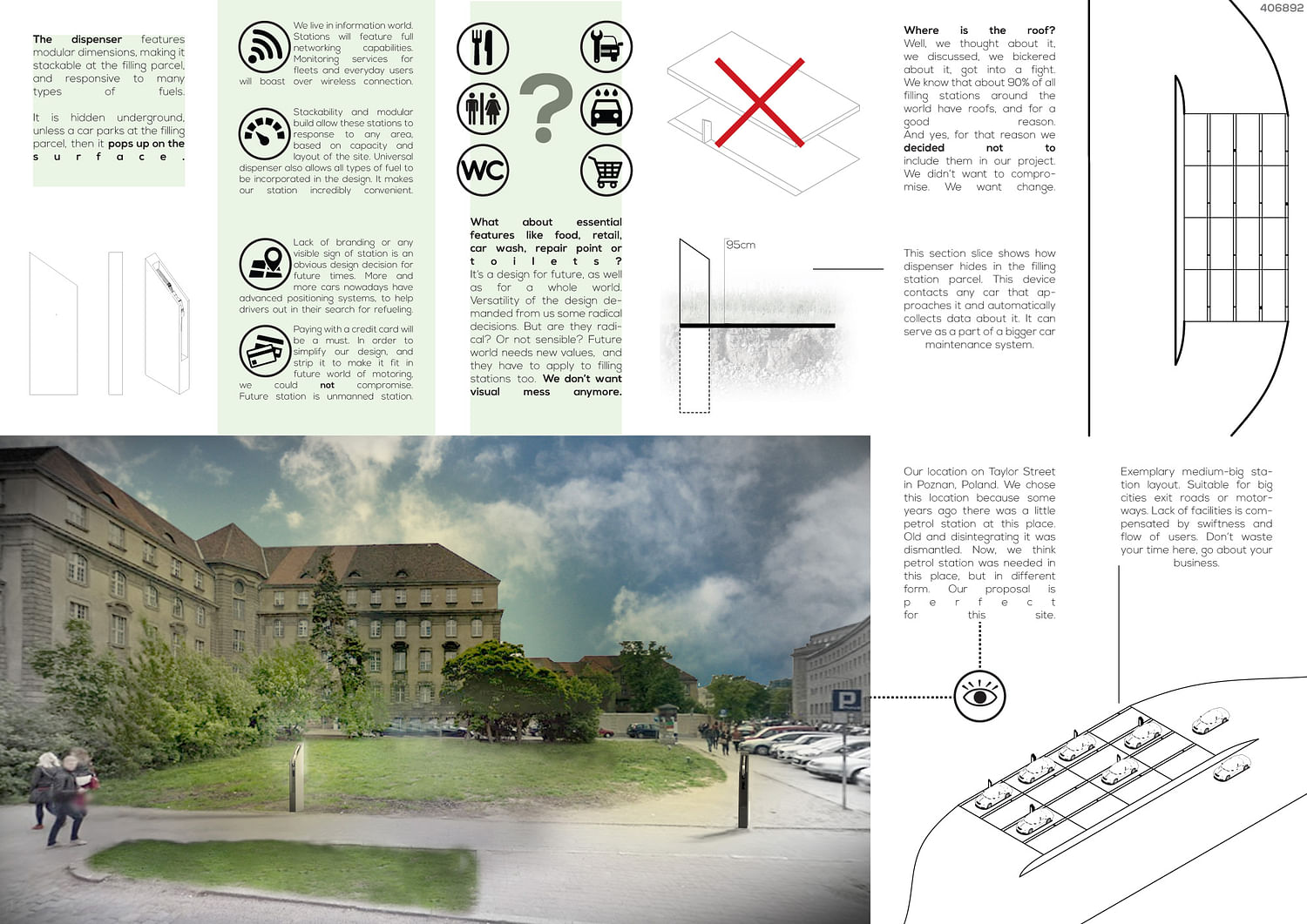
Entrants worldwide designed two separate gas stations for a site in rural Colombia and another one in a location of their choice, including fictional places. The competition resulted in three prize winners and one honorable mention.

If Combo Competitions sounds familiar, they previously held competitions that focused on other typologies like houses of worship, movie cinemas, parking lots built with extra perks, and designs that fuse nature and the built environment.

Take a gander at the winning entries below.

1ST PRIZE: NU OIL
by FELIX YANG and THOMAS NOUSSIS
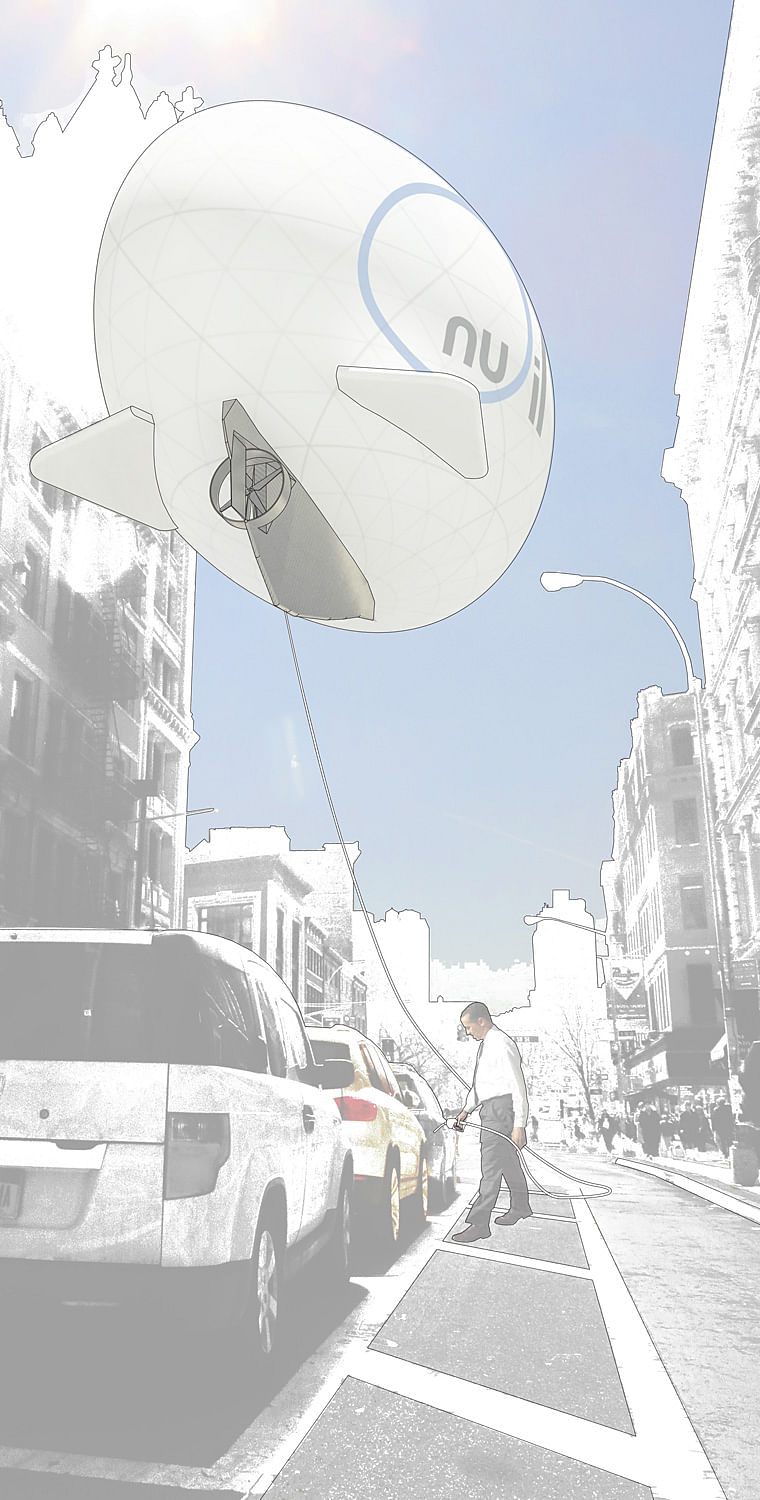
1ST PRIZE: NU OIL by FELIX YANG + THOMAS NOUSSIS

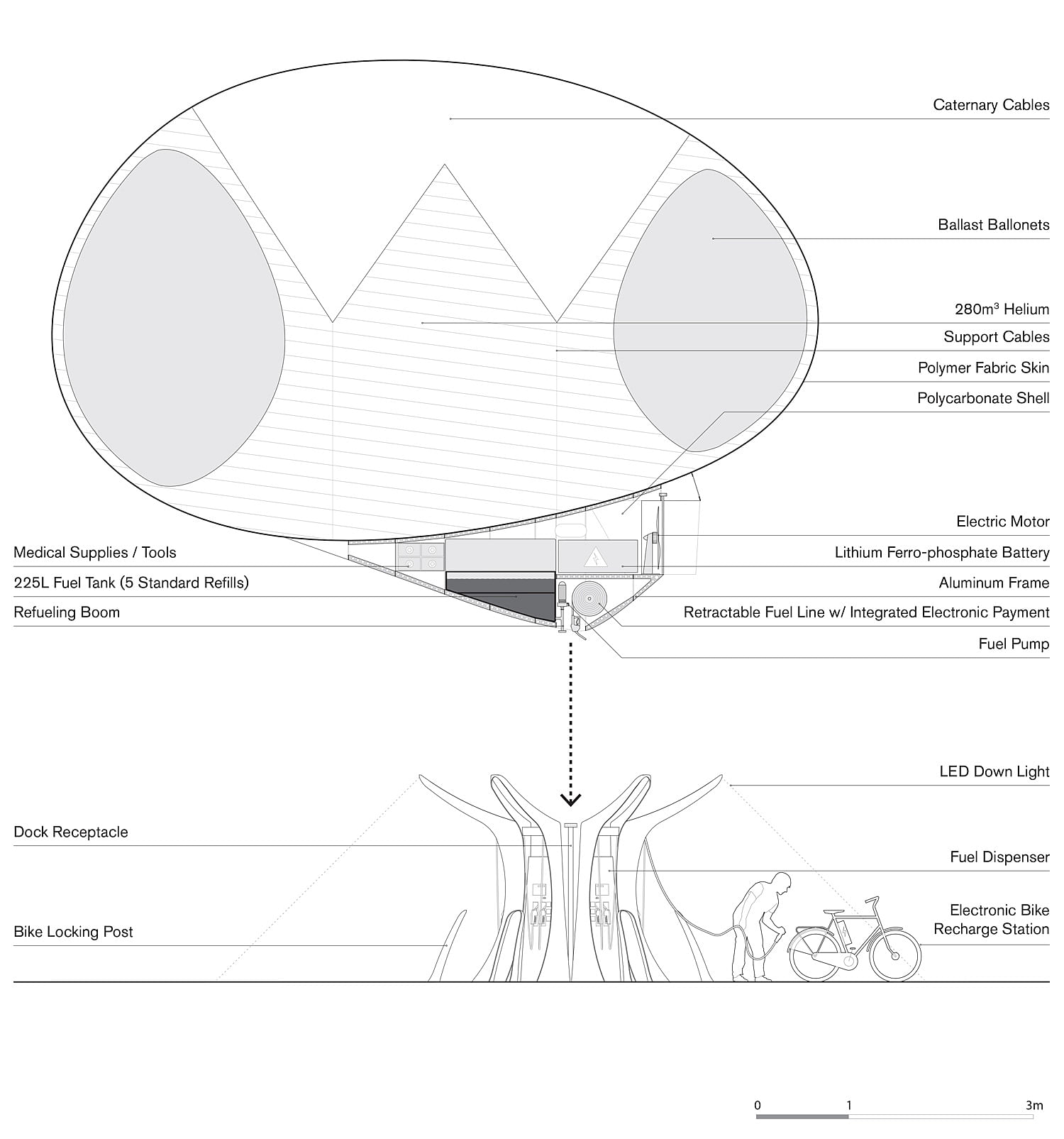
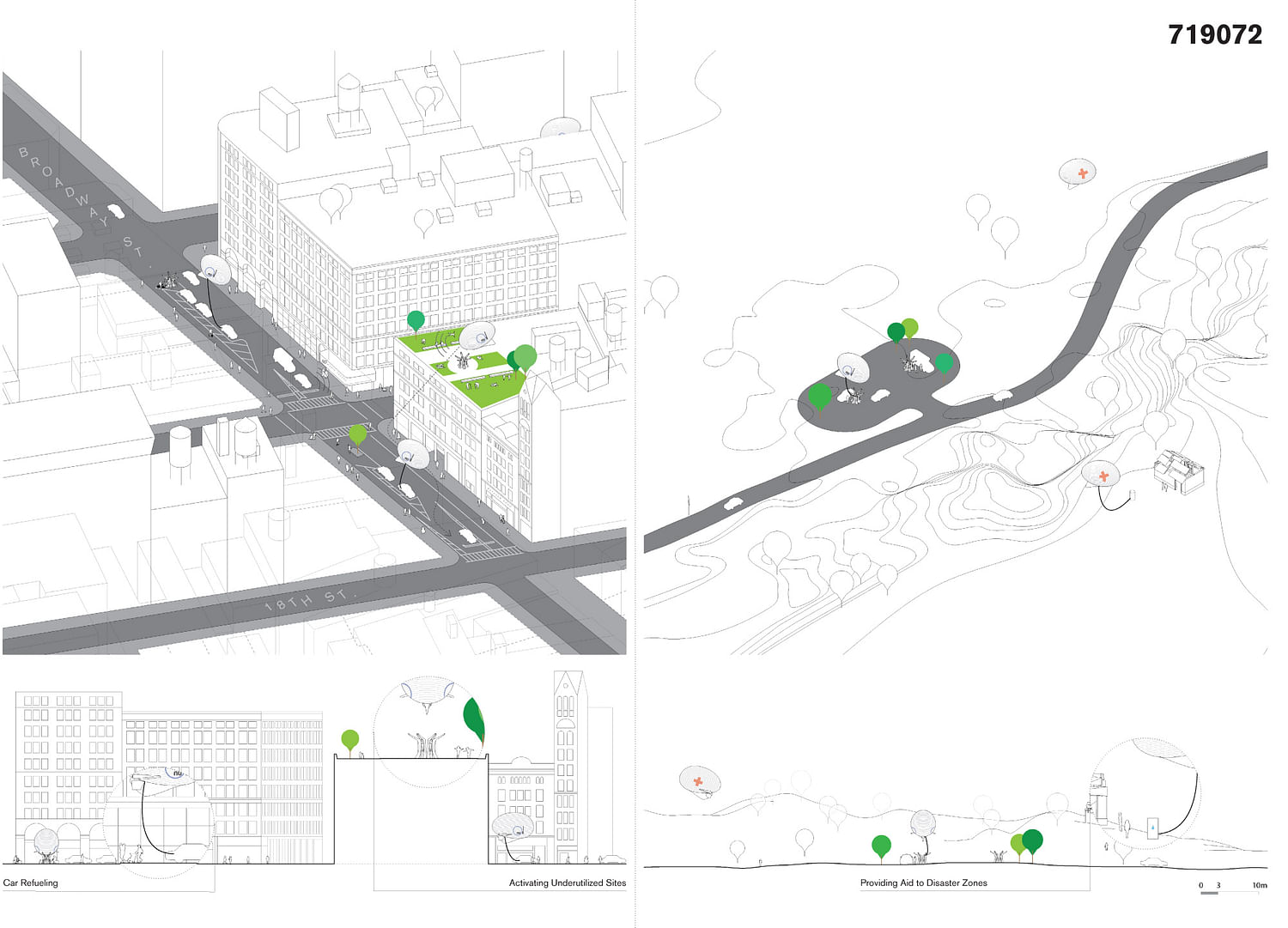
JURY'S COMMENTS: "Nu Oil not only envisions a new architecture for filling stations, but an entirely new method of distribution. By challenging the actual concept of refueling, this proposal at once disappears the typical filling station and adds a 'futuristic' one, full of potentials. Even the ground apparatus – referencing the gas-guzzling filling station typology of the past – supersedes its predecessor in a far more spatially efficient way. Much like Amazon’s delivery drones or Google’s proposed Wi-Fi blimps, this scheme is defined by a growing collective desire to be less connected to physical, built infrastructure and shaped more by the potential imbued in simple, semi-autonomous technologies. The floating vessel idea would eliminate the need for intrusive and expensive infrastructure by bringing fuel directly to the user. Underground oil tanks that leak and pollute, and unsightly power lines that are vulnerable in storms would no longer be needed. This must of course be seen in the light of having giant blimps full of fuel hovering over our cities and rural lands. It takes advantage of current technologies and offers new uses for them. As a floating refueling point, Nu Oil can provide fuel and other sustenance to people in all sorts of dire conditions. This additional feature of disaster and emergency response is precisely the type of bonus feature architecture should always strive to accommodate. The proposal is presented in a simple and straightforward way, clear and informative."

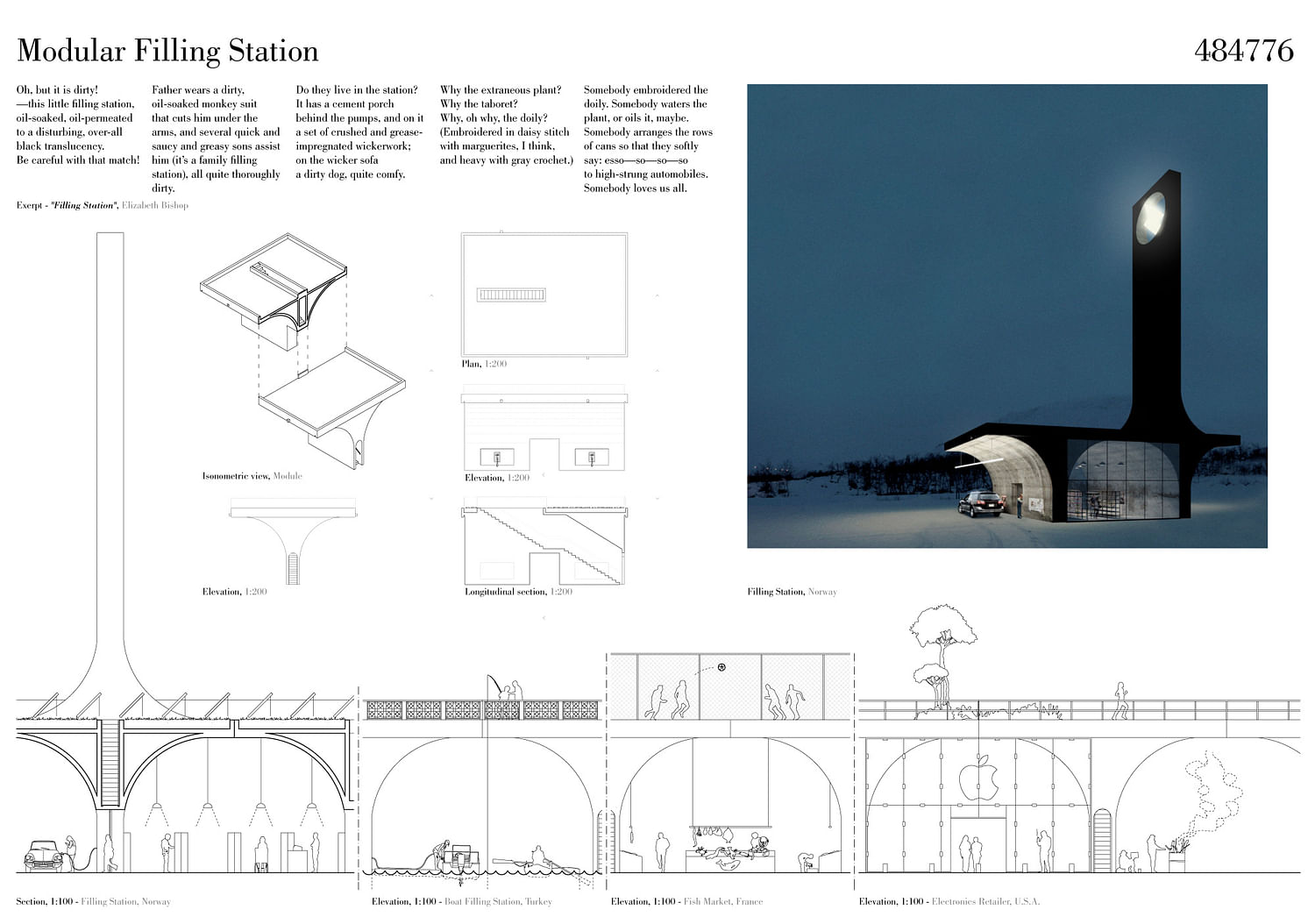
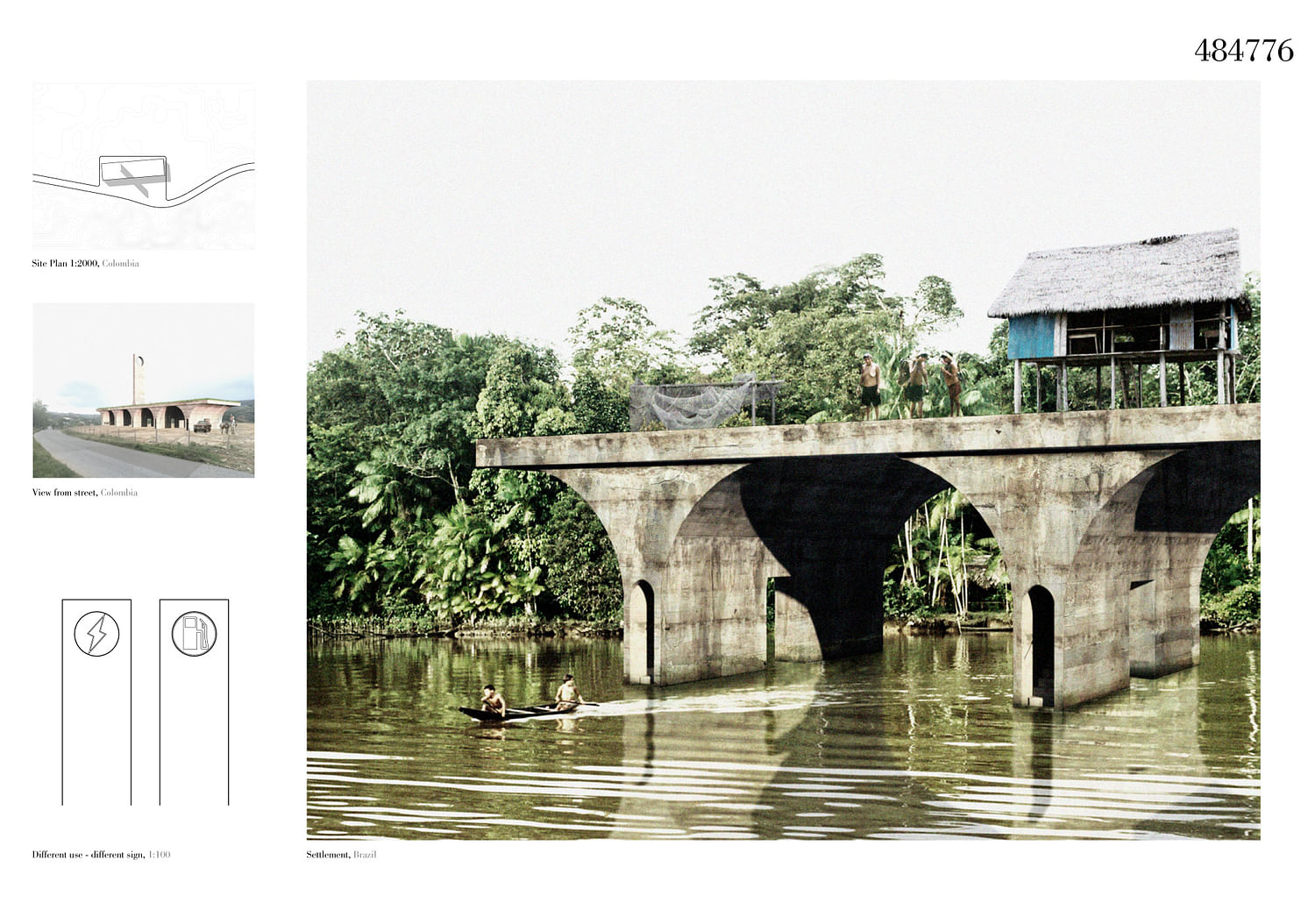
2ND PRIZE: MODULAR FILLING STATION
by MATTIAS DAHLBERG, ROBIN KRASSE, and KARL LAGERQVIST

2ND PRIZE: MODULAR FILLING STATION by MATTIAS DAHLBERG, ROBIN KRASSE, and KARL LAGERQVIST

JURY'S COMMENT: "Modular Filling Stations has a pragmatic approach to the future of filling stations: there are no extravagant ideas, just a straightforward but thoughtful analysis of what a filling station is – and can be, depending on location. Passing over rethinking the actual concept of refueling, the proposal focuses mainly on a universal aesthetics for the typology. It evokes a traditional infrastructure form, linking the past to the future. Part ruin, part construction site, it provides spaces for a multitude of other programs, be it canoes, fishing huts or Apples stores. While the design clearly feels at home on relatively empty sites, an urban example would have been useful to gauge its adaptability to different environments. The concrete modules possess a timeless beauty, as if they have always been present: basic building blocks that seem as capable on their own as they are when being part of a substantial development. Although you could argue that the components are basic enough to be a viable option regardless of local economy, they do require an enormous amount of material to complete a simple task. The presentation effortlessly captures the essence of the design variations, and explains the concept satisfactory without using any descriptive text, save for en excerpt from a poem to set the tone."

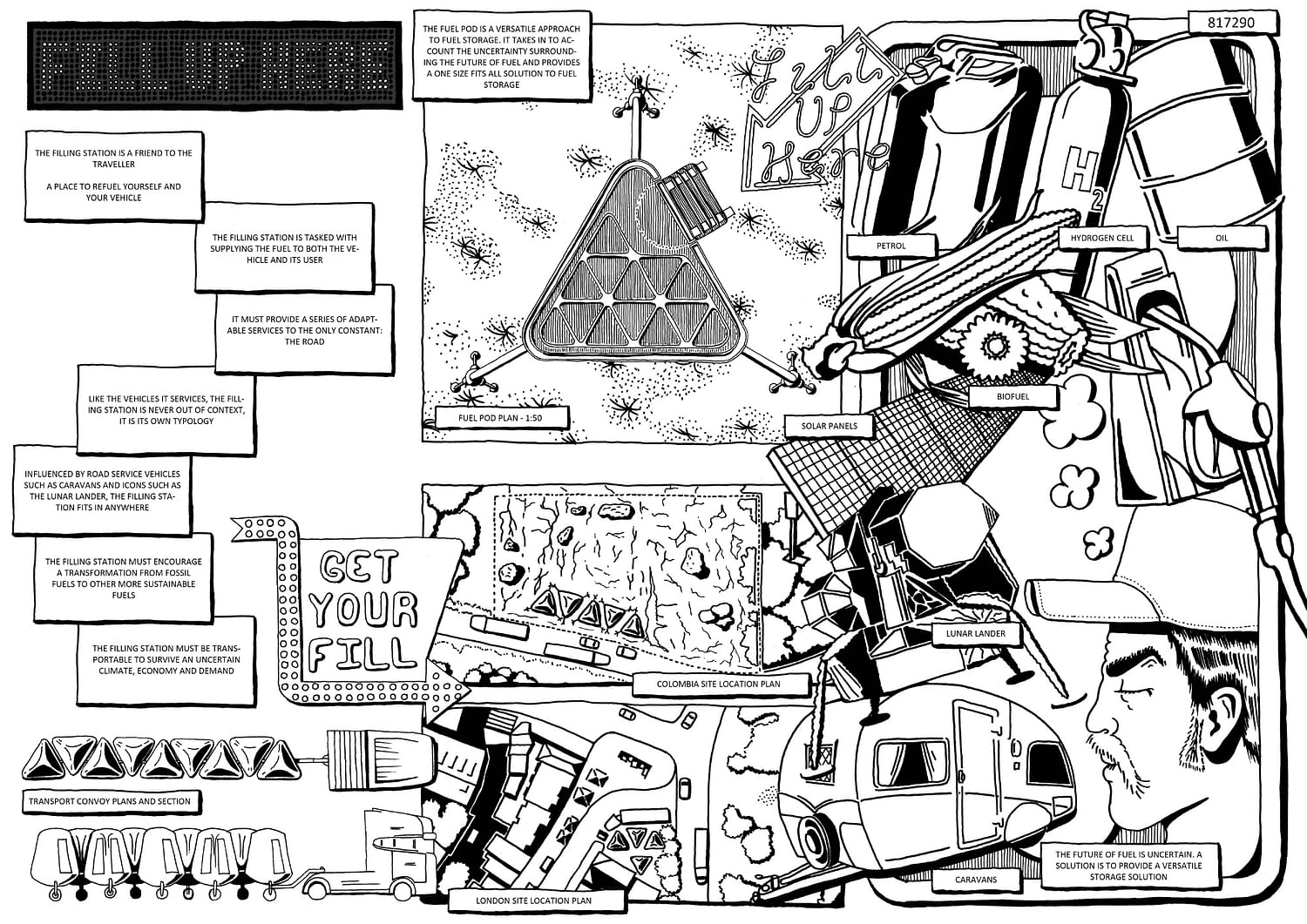
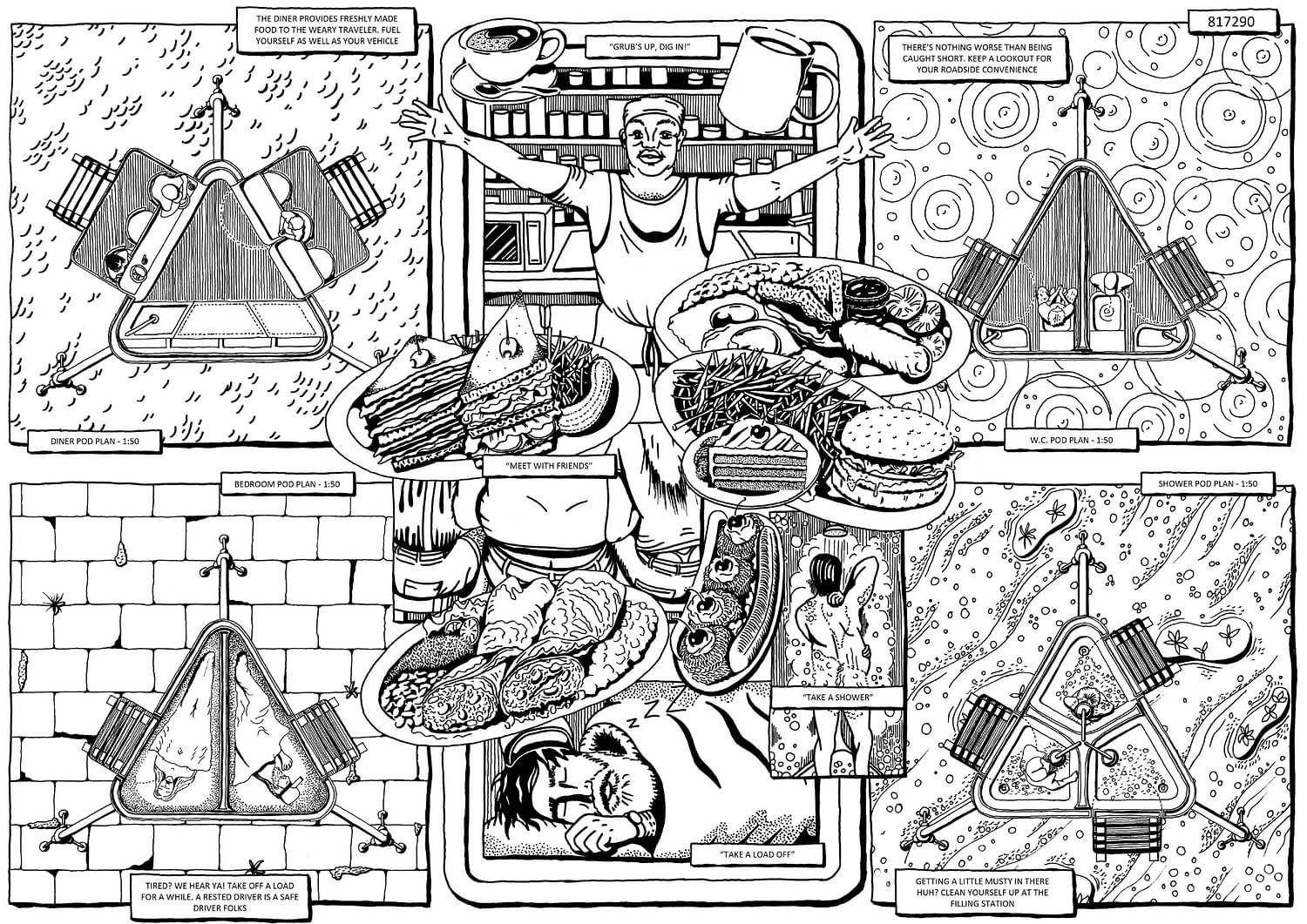
3RD PRIZE: FILL UP HERE
by ALEX COX

3RD PRIZE: FILL UP HERE by ALEX COX

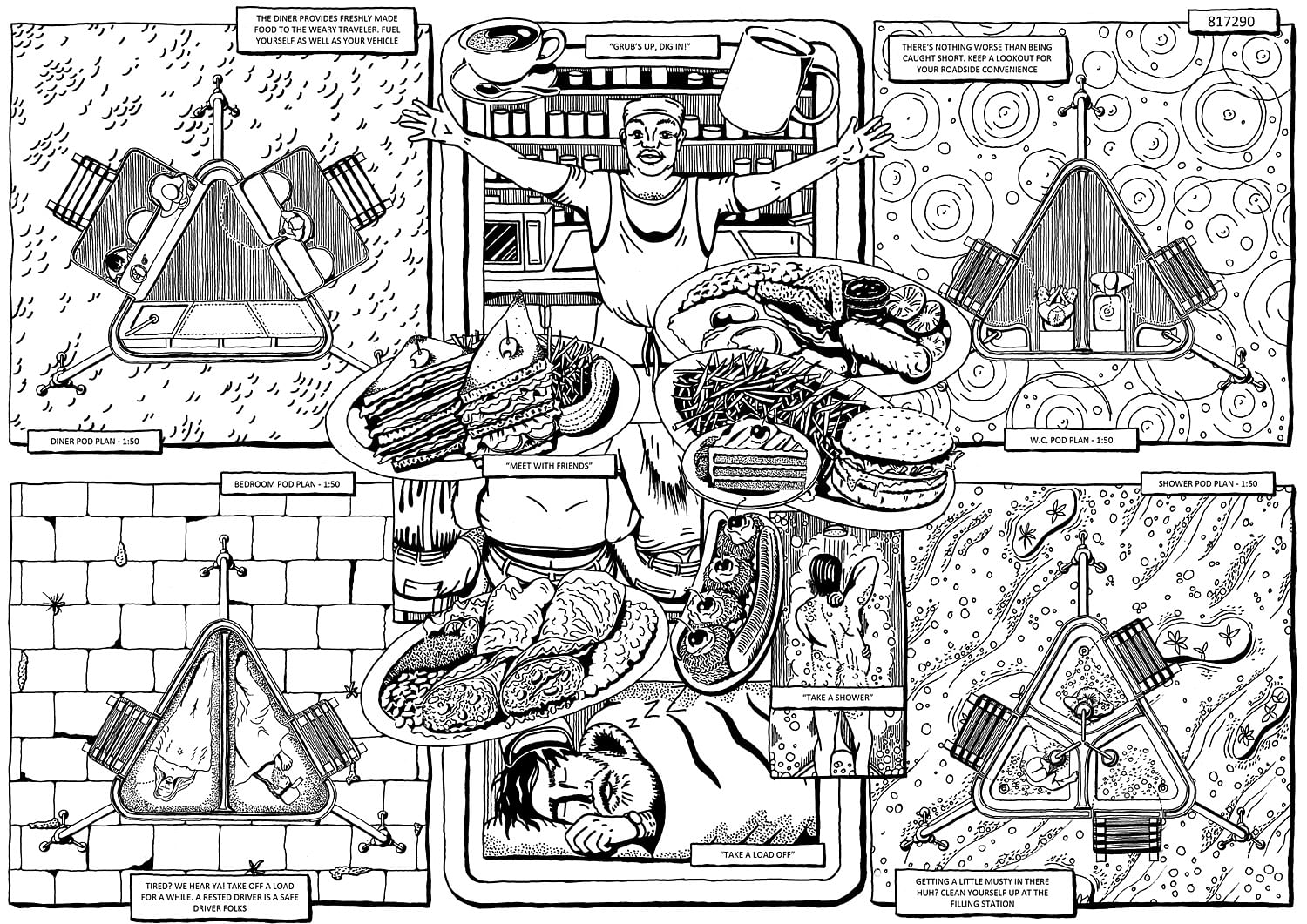
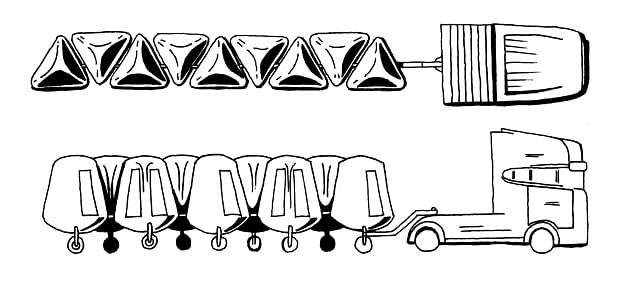
JURY'S COMMENT: "By placing people at the center of the design rather than vehicles, Fill Up Here shifts focus from present-day filling stations to those of the future. The increasing fuel efficiency of modern cars will slowly but surely put emphasis on refueling the travelers themselves rather than their vehicles. The function of the service station – whether it is to store fuel, serve food, or house people – is adapted to the pod. This opens up an interesting discussion about whether or not architecture should adapt to the user or if the user should be expected to adapt to the architecture. While the 'one size fits all' approach never seems to be the most ideal – it always requires so much compromise – it is convincing as a viable solution to any site. It deals with the activities that these pods can provide for an uncertain future, without focusing on the design too much – even though it has been considered in terms of dimensions of these activities. Another benefit of the pod approach is its allowing for technological changes in the future while still providing for a clear vision of the filling station and its accoutrements. Presentation-wise, the proposal does a great job of showing, rather than telling, through carefully selected vignettes. And while the graphic style is distinctly playful on the surface, the proposal reveals a deep understanding of the brief."

Check out the Honorable Mention + additional project images in the gallery below.

Related

ideas competition ● gas station ● gas ● filling stations ● experience design ● combo competitions ● combo

Share

  • Follow

    0 Comments

  • Comment as :

Filling Station(s) winners rev up the gas station typology

New architecture and design competitions: Warming Huts, NOMA Phil Freelon Professional Design Awards, AIA COTE Top Ten for Students, and Portland Waterfront Park Design

Sponsored Post by Buildner

Design a yoga pavilion in Italy. The Oak Moon Pavilion is launched!

Sponsored Post by Buildner

Use architecture to create different emotional states. Museum of Emotions #9 is launched!

Sponsored Post by Buildner

Take a seat and make a statement. The Architect's Chair / Stockholm Furniture Fair Edition is launched!

Six projects make 2026 Stirling Prize shortlist for UK’s best new building

Sponsored Post by Buildner

Mujassam Watan Urban Sculpture Challenge #8 FINAL registration deadline is in 5 DAYS!

Sponsored Post by Buildner

Design the future of Vancouver’s skyline. Vancouver Tall Challenge is launched!

Sponsored Post by Buildner

Design an observation tower in Latvia. The Quiet Tower is launched!

Sign up for Bustler's Email Newsletters

The Architect’s Chair competition: 5th edition reveals winning designs

UK’s best new architecture honored at 2026 RIBA National Awards

World Architecture Festival: Explore the shortlisted finalists for 2026

New architecture and design competitions: Tiny Houses, A' Design Award, L A M P, and Walzwerk

Studio Gang receives 2026 AIA Chicago Firm Award for ‘conceptual rigor’

Ellen Peirson wins 2026 Wheelwright Prize for kitchens as ‘mineral landscapes’

Here are the winners of the 2026 AIA Los Angeles Board of Directors Awards

Next page » Loading

Filling Station(s) winners rev up the gas station typology

By Bustler Editors|

Tuesday, Jun 30, 2015

Share

The Filling Station(s) winning entries.

Related

ideas competition ● gas station ● gas ● filling stations ● experience design ● combo competitions ● combo

For most commuters who travel by car, a gas station is nothing more than a quick pitstop as they about their day. In their latest installment, Combo Competitions held the Filling Station(s) ideas competition that had participants rethink the gas station typology as such: "Is there an ideal contemporary filling station, and can it be designed to last both functionally and aesthetically?"

Read on for more.

Entrants worldwide designed two separate gas stations for a site in rural Colombia and another one in a location of their choice, including fictional places. The competition resulted in three prize winners and one honorable mention.

If Combo Competitions sounds familiar, they previously held competitions that focused on other typologies like houses of worship, movie cinemas, parking lots built with extra perks, and designs that fuse nature and the built environment.

Take a gander at the winning entries below.

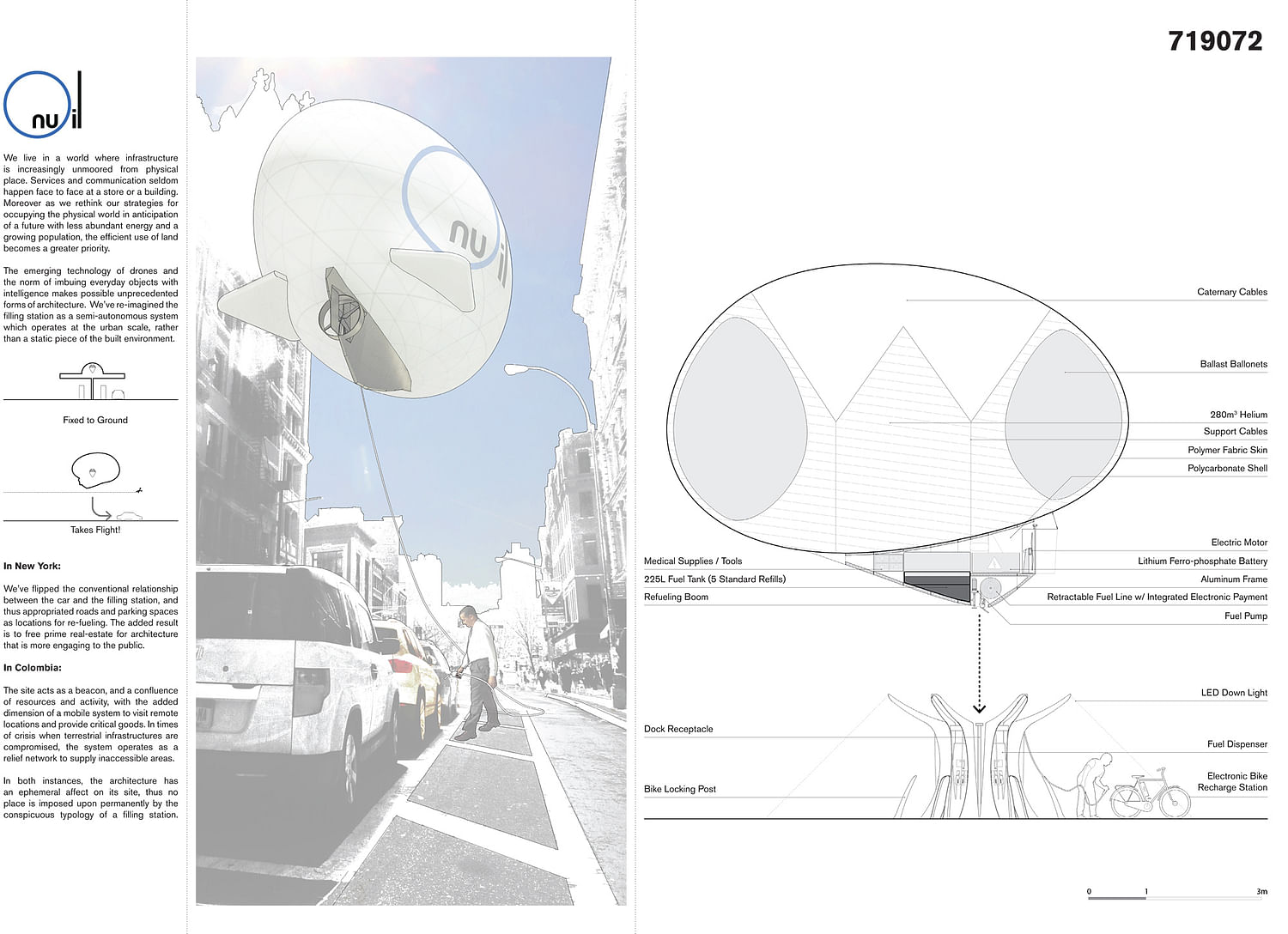
1ST PRIZE: NU OIL
by FELIX YANG and THOMAS NOUSSIS
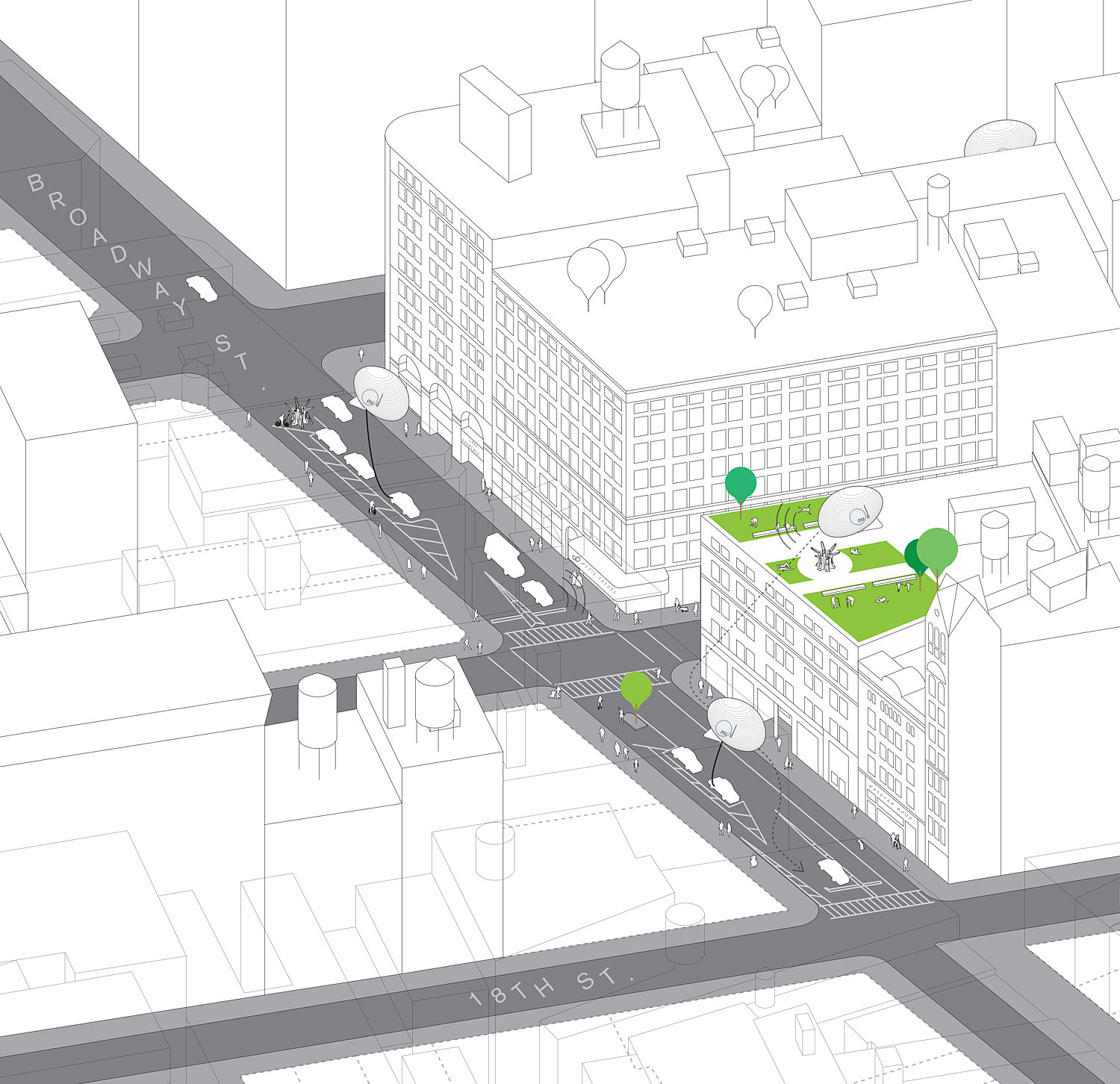
1ST PRIZE: NU OIL by FELIX YANG + THOMAS NOUSSIS

JURY'S COMMENTS: "Nu Oil not only envisions a new architecture for filling stations, but an entirely new method of distribution. By challenging the actual concept of refueling, this proposal at once disappears the typical filling station and adds a 'futuristic' one, full of potentials. Even the ground apparatus – referencing the gas-guzzling filling station typology of the past – supersedes its predecessor in a far more spatially efficient way. Much like Amazon’s delivery drones or Google’s proposed Wi-Fi blimps, this scheme is defined by a growing collective desire to be less connected to physical, built infrastructure and shaped more by the potential imbued in simple, semi-autonomous technologies. The floating vessel idea would eliminate the need for intrusive and expensive infrastructure by bringing fuel directly to the user. Underground oil tanks that leak and pollute, and unsightly power lines that are vulnerable in storms would no longer be needed. This must of course be seen in the light of having giant blimps full of fuel hovering over our cities and rural lands. It takes advantage of current technologies and offers new uses for them. As a floating refueling point, Nu Oil can provide fuel and other sustenance to people in all sorts of dire conditions. This additional feature of disaster and emergency response is precisely the type of bonus feature architecture should always strive to accommodate. The proposal is presented in a simple and straightforward way, clear and informative."

2ND PRIZE: MODULAR FILLING STATION
by MATTIAS DAHLBERG, ROBIN KRASSE, and KARL LAGERQVIST
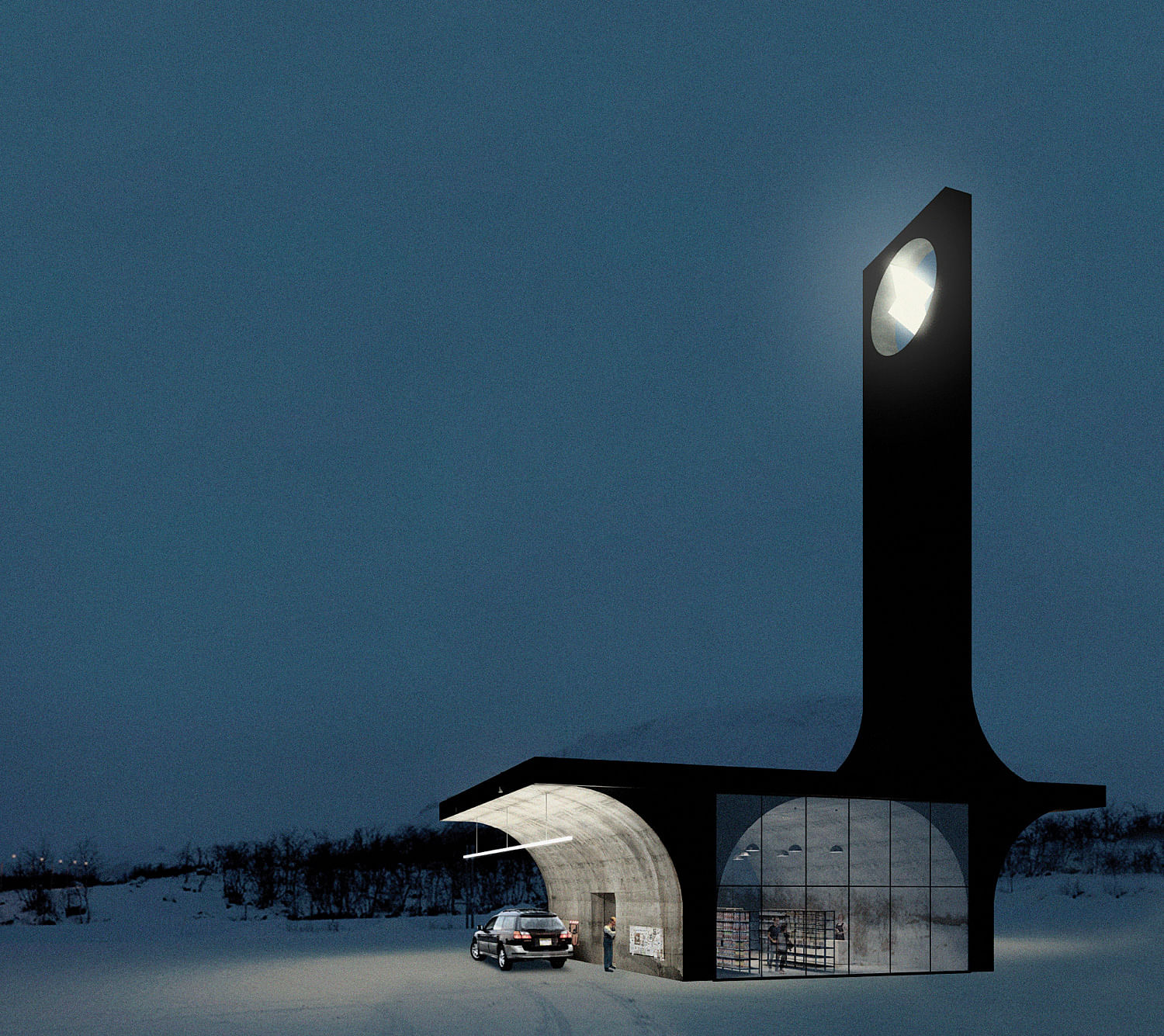
2ND PRIZE: MODULAR FILLING STATION by MATTIAS DAHLBERG, ROBIN KRASSE, and KARL LAGERQVIST
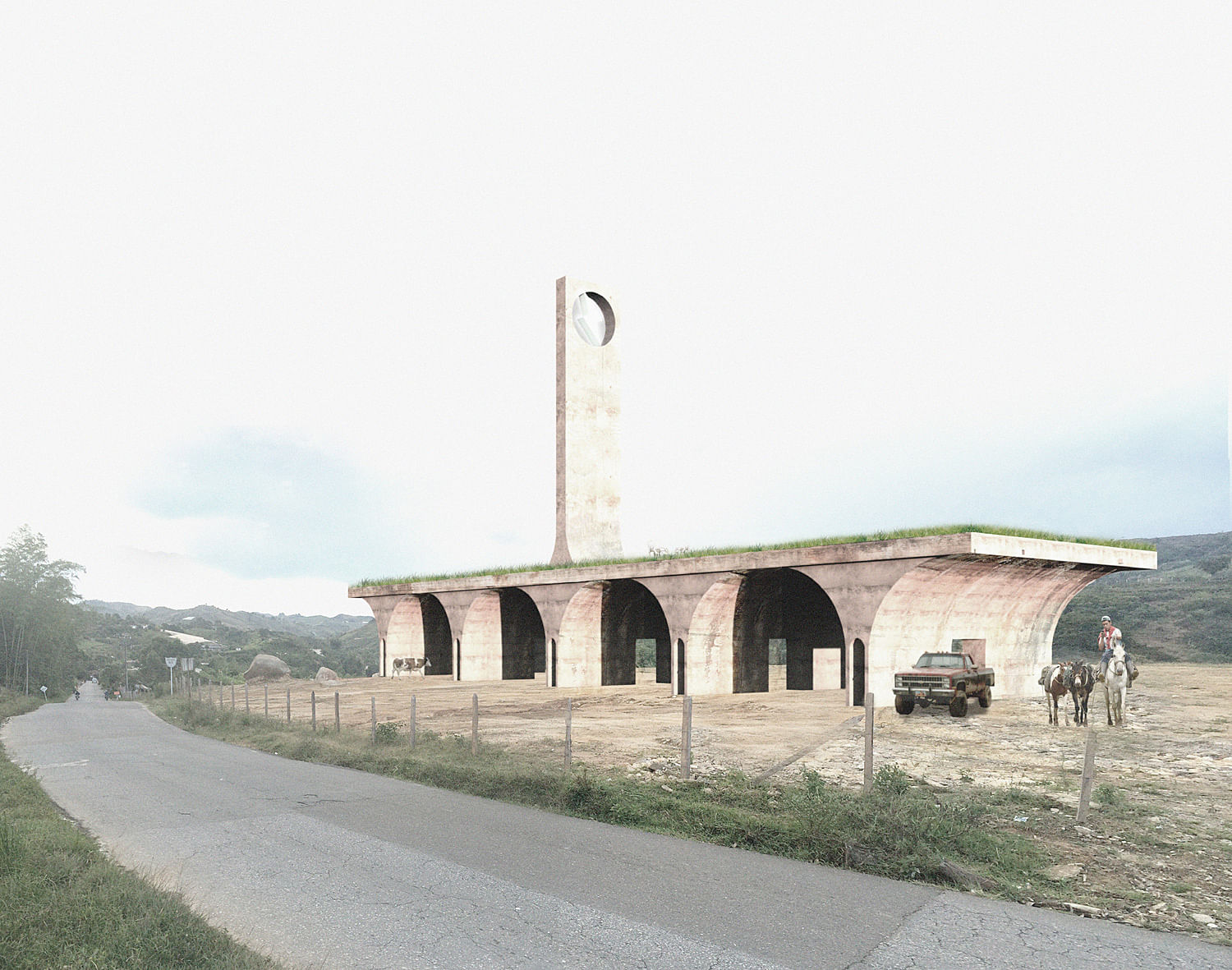
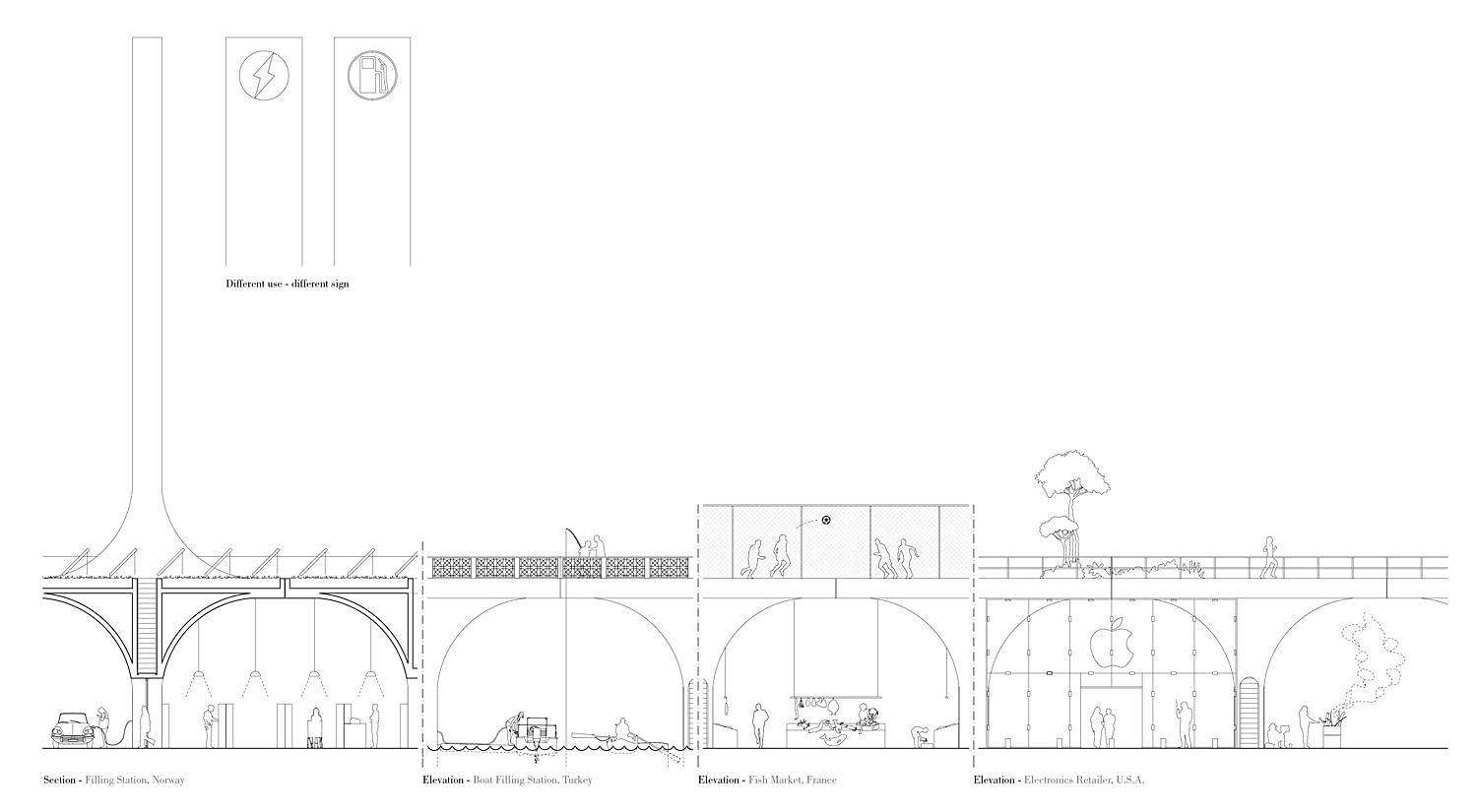

JURY'S COMMENT: "Modular Filling Stations has a pragmatic approach to the future of filling stations: there are no extravagant ideas, just a straightforward but thoughtful analysis of what a filling station is – and can be, depending on location. Passing over rethinking the actual concept of refueling, the proposal focuses mainly on a universal aesthetics for the typology. It evokes a traditional infrastructure form, linking the past to the future. Part ruin, part construction site, it provides spaces for a multitude of other programs, be it canoes, fishing huts or Apples stores. While the design clearly feels at home on relatively empty sites, an urban example would have been useful to gauge its adaptability to different environments. The concrete modules possess a timeless beauty, as if they have always been present: basic building blocks that seem as capable on their own as they are when being part of a substantial development. Although you could argue that the components are basic enough to be a viable option regardless of local economy, they do require an enormous amount of material to complete a simple task. The presentation effortlessly captures the essence of the design variations, and explains the concept satisfactory without using any descriptive text, save for en excerpt from a poem to set the tone."

3RD PRIZE: FILL UP HERE
by ALEX COX
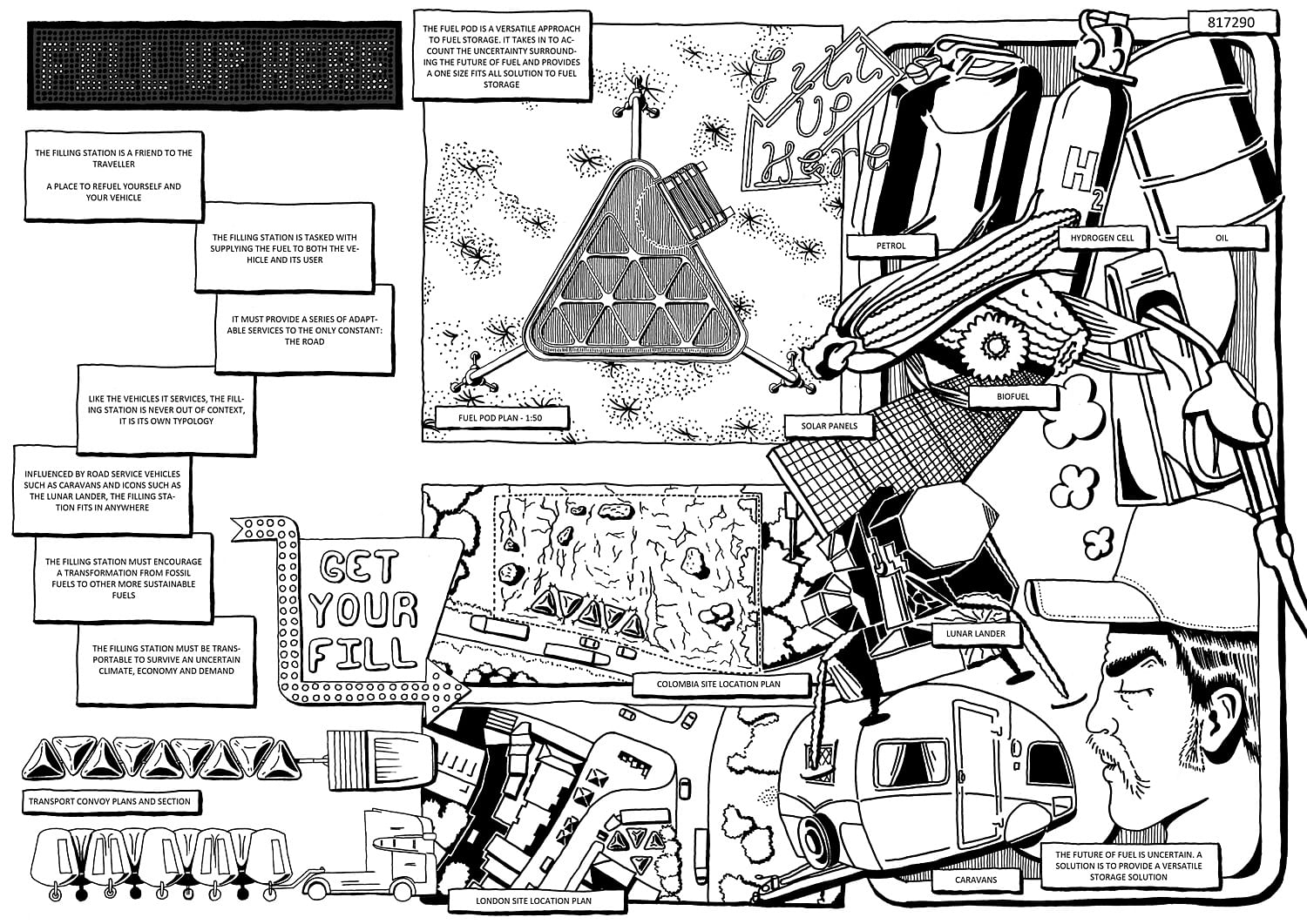
3RD PRIZE: FILL UP HERE by ALEX COX

JURY'S COMMENT: "By placing people at the center of the design rather than vehicles, Fill Up Here shifts focus from present-day filling stations to those of the future. The increasing fuel efficiency of modern cars will slowly but surely put emphasis on refueling the travelers themselves rather than their vehicles. The function of the service station – whether it is to store fuel, serve food, or house people – is adapted to the pod. This opens up an interesting discussion about whether or not architecture should adapt to the user or if the user should be expected to adapt to the architecture. While the 'one size fits all' approach never seems to be the most ideal – it always requires so much compromise – it is convincing as a viable solution to any site. It deals with the activities that these pods can provide for an uncertain future, without focusing on the design too much – even though it has been considered in terms of dimensions of these activities. Another benefit of the pod approach is its allowing for technological changes in the future while still providing for a clear vision of the filling station and its accoutrements. Presentation-wise, the proposal does a great job of showing, rather than telling, through carefully selected vignettes. And while the graphic style is distinctly playful on the surface, the proposal reveals a deep understanding of the brief."

Check out the Honorable Mention + additional project images in the gallery below.
Share

  • Follow

    0 Comments

  • Comment as :

Archinect JobsArchinect Jobs

The Archinect Job Board attracts the world's top architectural design talents.

VIEW ALL JOBS POST A JOB

Job Captain

Michael Maltzan Architecture

Job Captain

Los Angeles, CA, US

JOB CAPTAIN for Hospitality Design Firm

EDG Interior Architecture + Design

JOB CAPTAIN for Hospitality Design Firm

Novato, CA, US

Senior Retail Project Manager

Mapos Architects, DPC

Senior Retail Project Manager

New York, NY, US

Project Manager / Project Architect (6–10 Years’ Experience)

Millan Architect / Studio Inc.

Project Manager / Project Architect (6–10 Years’ Experience)

Venice, CA, US

Project Designer

Mammoth

Project Designer

Brooklyn, NY, US

Job Captain - Education

DAHLIN Architecture | Planning | Interiors

Job Captain - Education

San Diego, CA, US

Specifications Writer

LMN

Specifications Writer

Seattle, WA, US

Architect / Designer

Bureau V

Architect / Designer

New York, NY, US

Associate: Theatre Space Designer

Apeiro Design

Associate: Theatre Space Designer

New York, NY, US

Project Manager - Residential

DAHLIN Architecture | Planning | Interiors

Project Manager - Residential

Bellevue, WA, US

Next page » Loading