• Login / Join
  • About
  • •
  • Contact
  • •
  • Advertising
bustler logo
bustler logo
  • News
  • Competitions
  • Events
  • Bustler is powered by Archinect
  • Sign up for Bustler's Email Newsletters

  • Follow these Bustler feeds:

  • Search

    Search in

  • Submit

    What are you submitting?

    News Pitch
    Competition
    Event
  • Login / Join
  • News|Competitions|Events
  • Search
    | Submit
    | Follow
  • Search in

    What are you submitting?

    News Pitch
    Competition
    Event

    Follow these Bustler feeds:

  • About|Contact|Advertising
  • Login / Join

Heike Hanada with Benedict Tonon Selected to Design the New Bauhaus Museum in Weimar

By Bustler Editors|

Monday, Jul 9, 2012
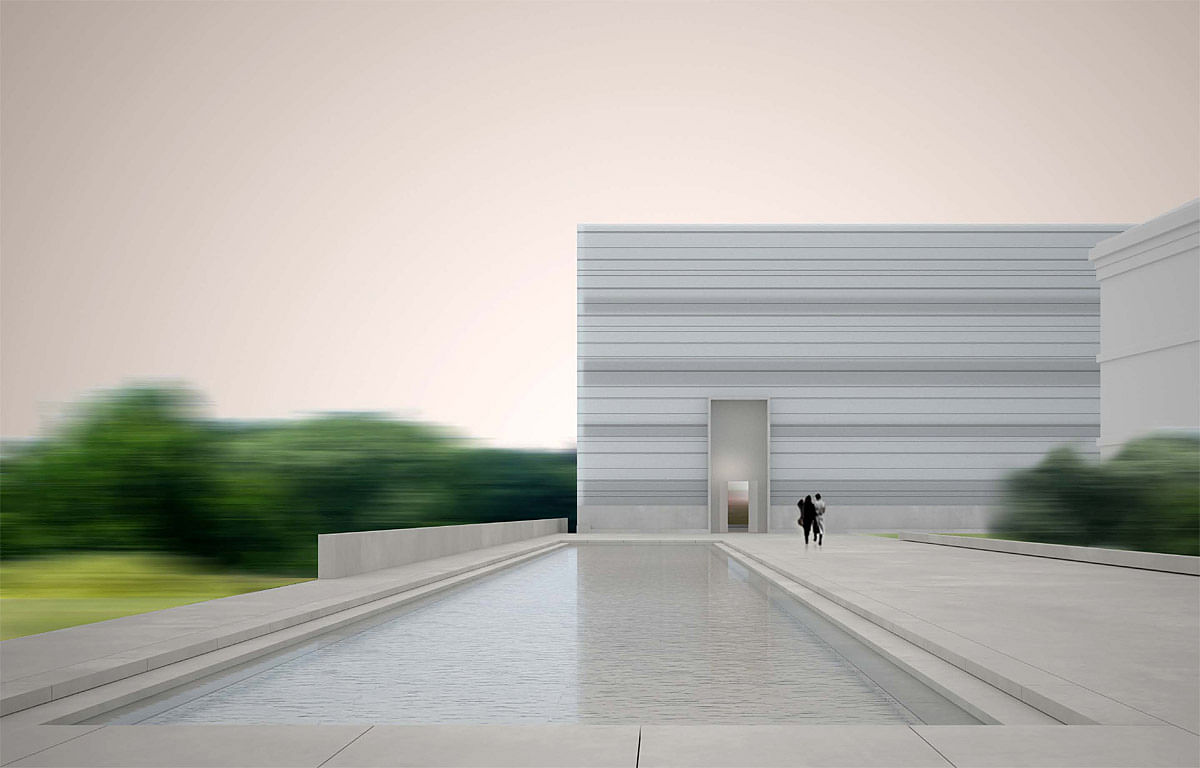
Rendering of the selected design for the New Bauhaus Museum in Weimar, Germany by Heike Hanada with Benedict Tonon (Image: Heike Hanada / Benedict Tonon)

In the final tendering procedure for the New Bauhaus Museum in Weimar, Germany, the highly minimalistic design concept by Berlin-based architect Heike Hanada with Benedict Tonon was today selected as the winning entry. Klassik Stiftung Weimar, the host of the international architectural competition for this prestigious project, had invited the four competition finalists (previously on Bustler) to partially rework the initial designs.

The New Bauhaus Museum is scheduled to open in 2015.

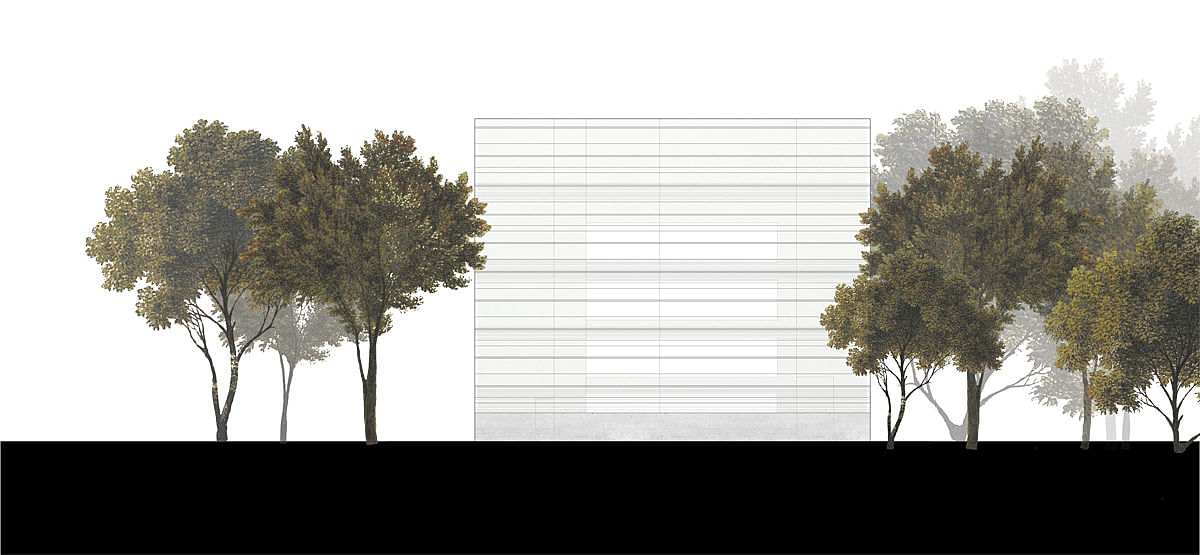
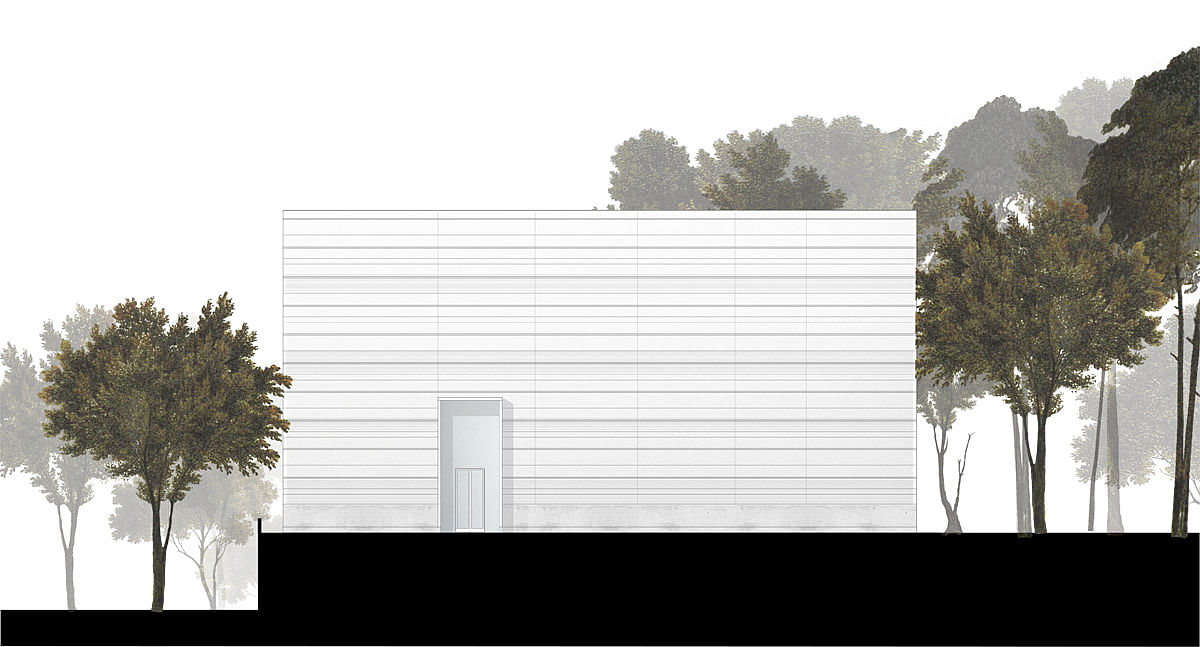
The winning design by Heike Hanada with Benedict Tonon positions a geometrically clear cube as a strong freestanding object on the park slope of the adjacent Weimarhallenpark. The jury was impressed by the outer appearance of the building based on the quality of the use of materials and the detailed facade design. The interior spaces offer a very high level of flexibility.

Christoph Matschie, Secretary of Culture of the Federal Country of Thuringia and chair of the Klassik Stiftung Weimar board, complimented the winning architect: "Now the Bauhaus, at its cradle in Weimar, finally gets a befitting place. Once again the Bauhaus will become a sign of ascent in the coming age."
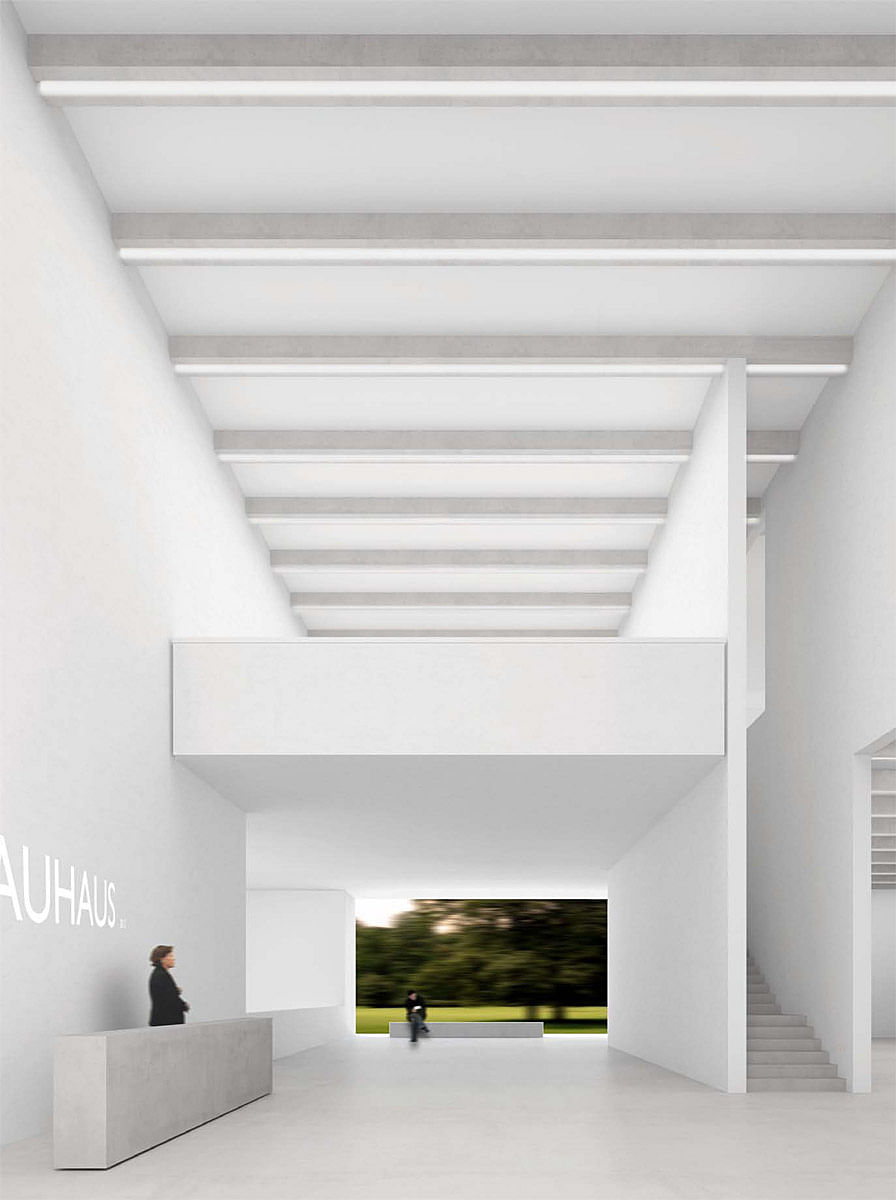
Foyer and information area (Image: Heike Hanada / Benedict Tonon)

Project Description from the Klassik Stiftung Weimar (Translation from German via Google Translate):

The body of the museum consists of poured concrete, standing at the edge of the Weimar Hall Park. From a stone base of the glass block grows as a monolithic sculpture in space. The interior of the house offers space and structure, the outside lights of solitaire. Its edges and surfaces are translucent, diffuse transitions. Precision and clarity in the urban setting, the body responds in detail in its outermost layer of uncertainty and lights blur. This attitude pervades the complementary concept of the house. Visual impact and technical necessity, perception and action combine to form one unit.

Night view (Image: Heike Hanada / Benedict Tonon)

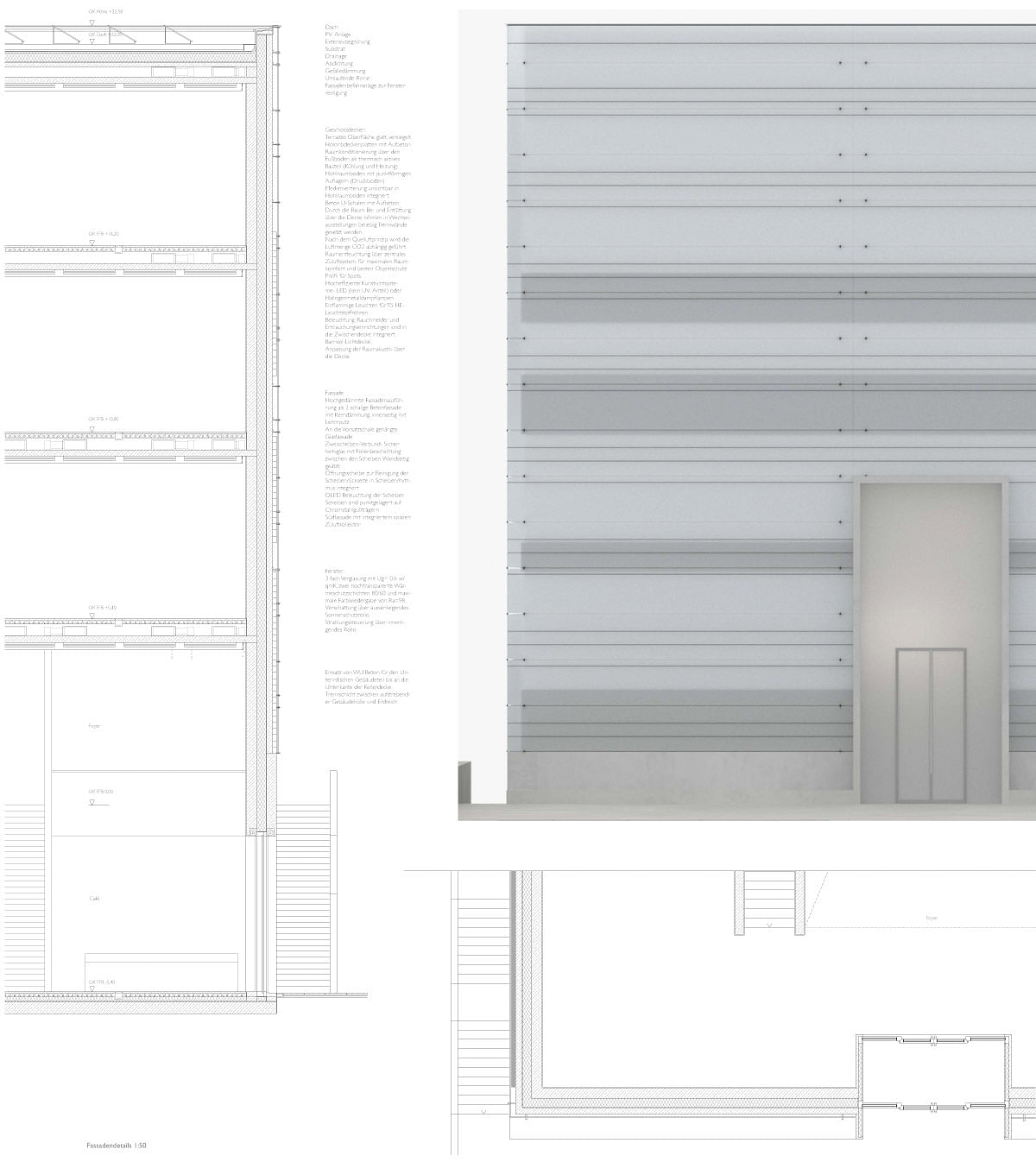
Narrow, opaque frosted glass strips which are arranged horizontally lying on metal brackets. They float freely without framing and form a glassy skin. Technology and optical effects to achieve an energetically meaningful symbiosis. The glass panels are a regular horizontal rhythm. This is overlaid with a linear grid of fine, etched black lines. The clear rhythm is broken here apparently irregular. The imaginary and the real space blend. The nighttime illumination by means of narrow strips of foil OLED (LED as a surface) behind glass supports this effect.
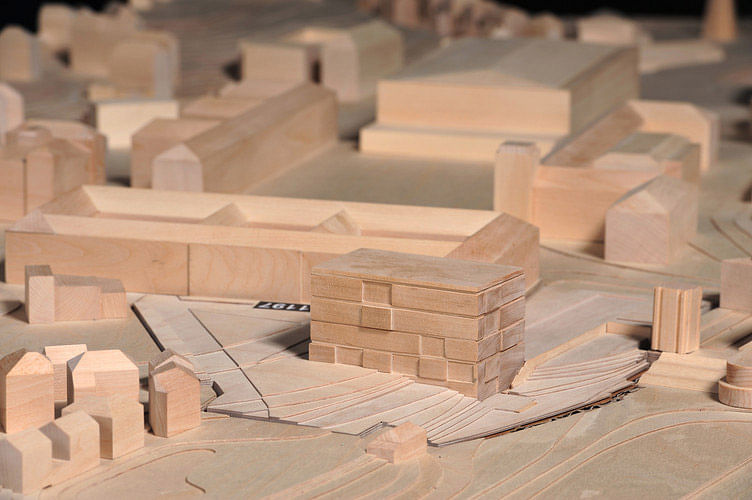
Model photo (Photo: Klassik Stiftung Weimar)

Narrow, opaque frosted glass strips which are arranged horizontally lying on metal brackets. They float freely without framing and form a glassy skin. Technology and optical effects to achieve an energetically meaningful symbiosis. The glass panels are a regular horizontal rhythm. This is overlaid with a linear grid of fine, etched black lines. The clear rhythm is broken here apparently irregular. The imaginary and the real space blend. The nighttime illumination by means of narrow strips of foil OLED (LED as a surface) behind glass supports this effect.
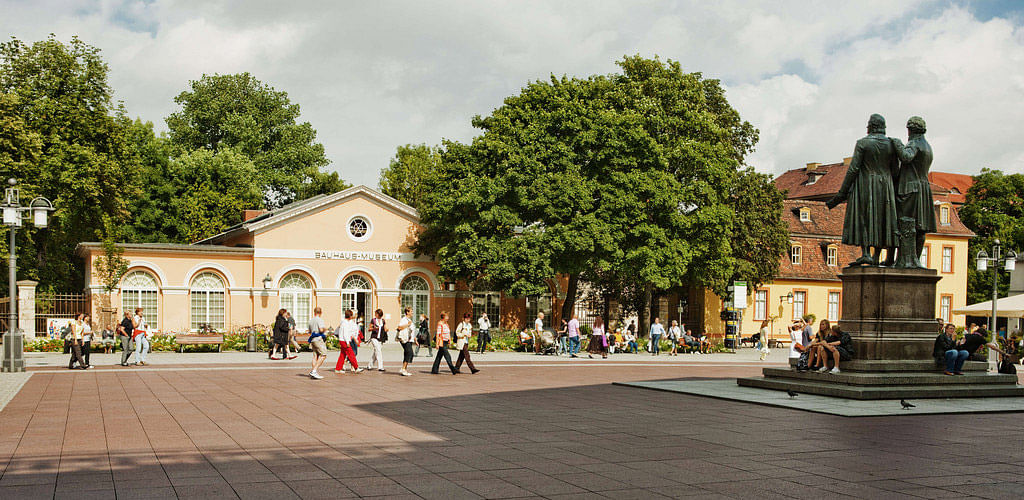
Photo of the current Bauhaus Museum at Theater Square (Photo: Jens Hauspurg © Klassik Stiftung Weimar)

The design is characterized by a differentiated energy concept, developed by the internationally renowned office Transsolar / Stuttgart. Component activation, heat pumps, ventilation and solar panels ensure compliance with the required indoor climate conditions and simultaneously lead to a consequent reduction in energy requirements. The compactness of the building promises a comparatively small expenditure of resources. The bill proposes a number of measures aimed at the sustainability of the construction of durable building materials such as glass, concrete, stone and clay plaster is ensured.

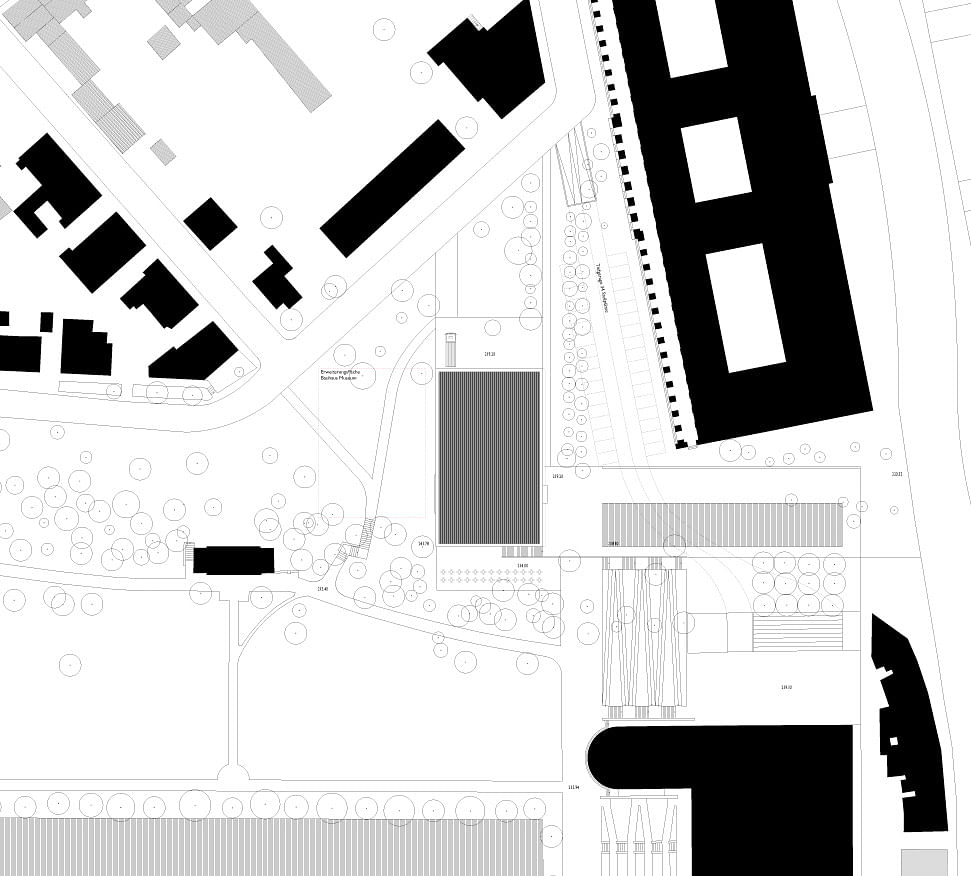
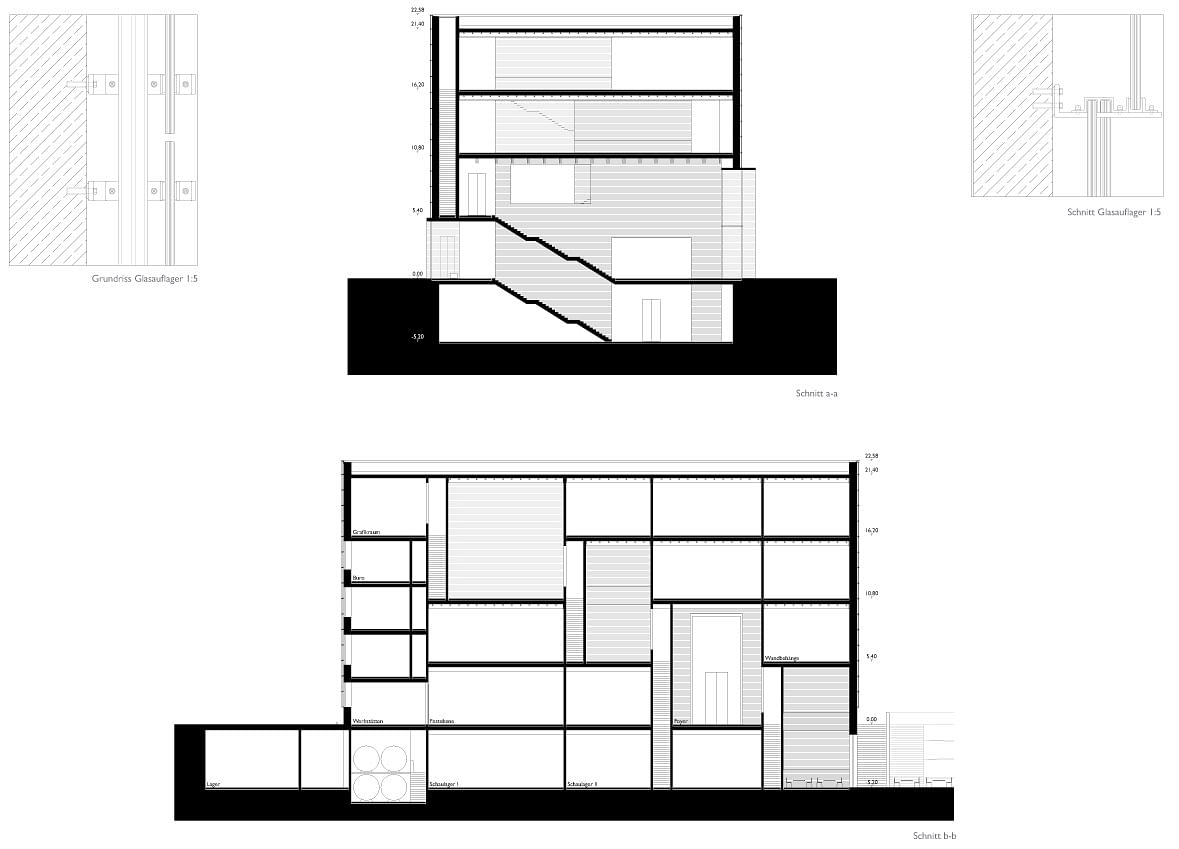
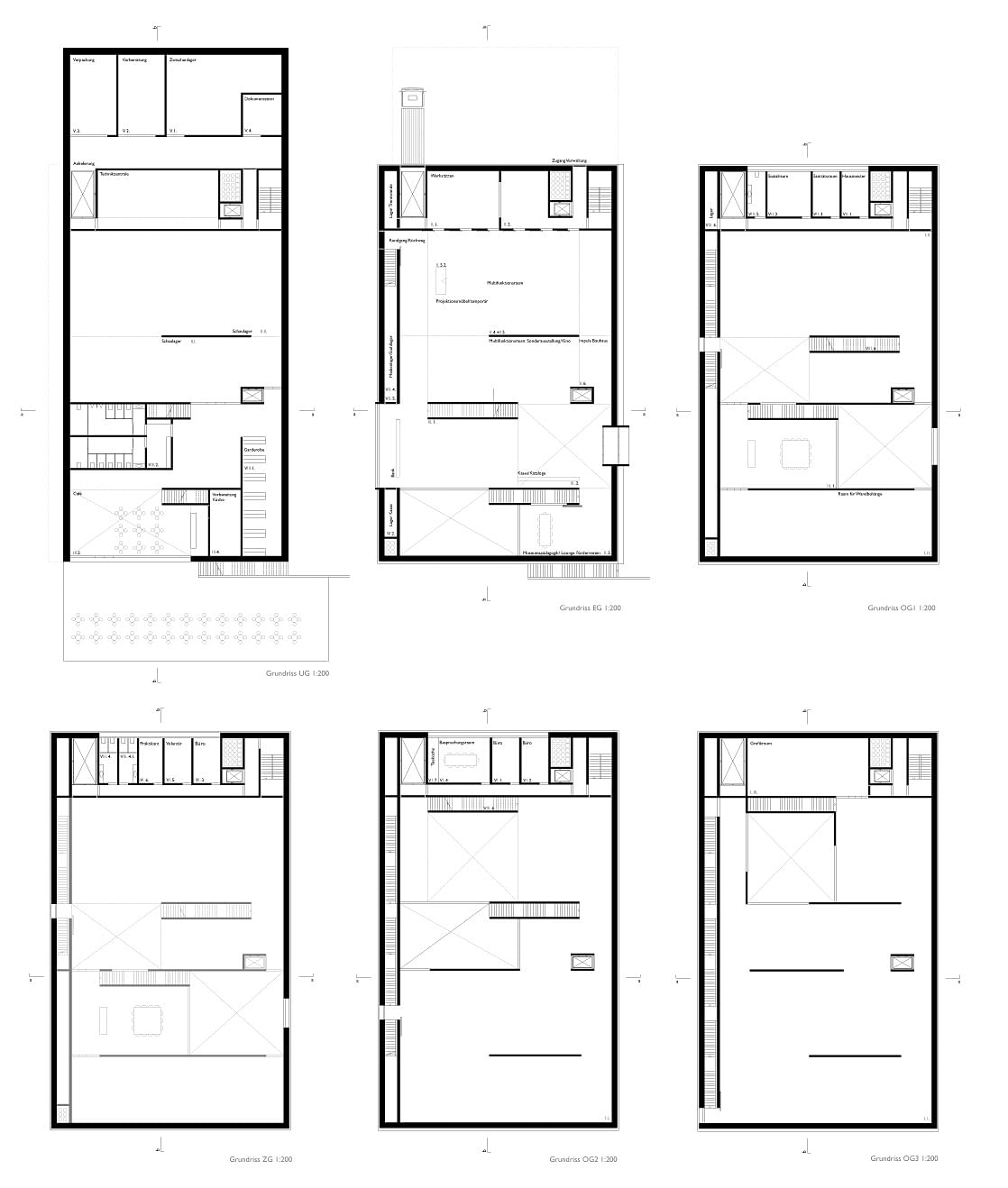
Find more plans of the museum in the image gallery below.
Related

weimar ● museum ● modernism ● germany ● europe ● bauhaus museum ● bauhaus

Share

  • Follow

    0 Comments

  • Comment as :

Heike Hanada with Benedict Tonon Selected to Design the New Bauhaus Museum in Weimar

Best new interiors of 2026 chosen at AIA Interior Architecture Awards

Best global architecture honored at RIBA International Awards 2026

World’s most beautiful airports of 2026 chosen by Prix Versailles

New architecture and design competitions: Brick in Architecture Awards, Study Architecture Student Showcase, N.Y.C. Groceries, and New York High Falls Riverfront Market

SmithGroup’s ‘pioneering’ Philip Merrill Environmental Center wins AIA Twenty-five Year Award

Sponsored Post by Buildner

Museum of Emotions / Edition #8 FINAL registration deadline is in 5 DAYS!

Here are the winners of the 2026 AIA Architecture Awards

40 emerging architects and designers under 40 from Europe honored

Sign up for Bustler's Email Newsletters

Northwestern University selects 12-firm longlist to design new engineering building

New architecture and design competitions: Exploring 130 Years of American Design, Christo & Jeanne-Claude Center, 13 White Houses, and La Pyramide

Micro-architecture honored in latest Tiny House Architecture Competition

World’s most beautiful restaurants of 2026 chosen by Prix Versailles

Sponsored Post by Buildner

Design a wine tasting room in Italy! Valli Wine Tasting Room is launched!

10 can't-miss architecture & design events to see this June in London, Los Angeles, Chicago, San Francisco, Detroit, San Diego, Porto, and Barcelona

Sponsored Post by Buildner

Museum of Emotions / Edition #8 FINAL registration deadline is approaching!

Next page » Loading

Heike Hanada with Benedict Tonon Selected to Design the New Bauhaus Museum in Weimar

By Bustler Editors|

Monday, Jul 9, 2012

Share

Rendering of the selected design for the New Bauhaus Museum in Weimar, Germany by Heike Hanada with Benedict Tonon (Image: Heike Hanada / Benedict Tonon)

Related

weimar ● museum ● modernism ● germany ● europe ● bauhaus museum ● bauhaus

In the final tendering procedure for the New Bauhaus Museum in Weimar, Germany, the highly minimalistic design concept by Berlin-based architect Heike Hanada with Benedict Tonon was today selected as the winning entry. Klassik Stiftung Weimar, the host of the international architectural competition for this prestigious project, had invited the four competition finalists (previously on Bustler) to partially rework the initial designs.

The New Bauhaus Museum is scheduled to open in 2015.

The winning design by Heike Hanada with Benedict Tonon positions a geometrically clear cube as a strong freestanding object on the park slope of the adjacent Weimarhallenpark. The jury was impressed by the outer appearance of the building based on the quality of the use of materials and the detailed facade design. The interior spaces offer a very high level of flexibility.

Christoph Matschie, Secretary of Culture of the Federal Country of Thuringia and chair of the Klassik Stiftung Weimar board, complimented the winning architect: "Now the Bauhaus, at its cradle in Weimar, finally gets a befitting place. Once again the Bauhaus will become a sign of ascent in the coming age."

Foyer and information area (Image: Heike Hanada / Benedict Tonon)

Project Description from the Klassik Stiftung Weimar (Translation from German via Google Translate):

The body of the museum consists of poured concrete, standing at the edge of the Weimar Hall Park. From a stone base of the glass block grows as a monolithic sculpture in space. The interior of the house offers space and structure, the outside lights of solitaire. Its edges and surfaces are translucent, diffuse transitions. Precision and clarity in the urban setting, the body responds in detail in its outermost layer of uncertainty and lights blur. This attitude pervades the complementary concept of the house. Visual impact and technical necessity, perception and action combine to form one unit.

Night view (Image: Heike Hanada / Benedict Tonon)

Narrow, opaque frosted glass strips which are arranged horizontally lying on metal brackets. They float freely without framing and form a glassy skin. Technology and optical effects to achieve an energetically meaningful symbiosis. The glass panels are a regular horizontal rhythm. This is overlaid with a linear grid of fine, etched black lines. The clear rhythm is broken here apparently irregular. The imaginary and the real space blend. The nighttime illumination by means of narrow strips of foil OLED (LED as a surface) behind glass supports this effect.

Model photo (Photo: Klassik Stiftung Weimar)

Narrow, opaque frosted glass strips which are arranged horizontally lying on metal brackets. They float freely without framing and form a glassy skin. Technology and optical effects to achieve an energetically meaningful symbiosis. The glass panels are a regular horizontal rhythm. This is overlaid with a linear grid of fine, etched black lines. The clear rhythm is broken here apparently irregular. The imaginary and the real space blend. The nighttime illumination by means of narrow strips of foil OLED (LED as a surface) behind glass supports this effect.

Photo of the current Bauhaus Museum at Theater Square (Photo: Jens Hauspurg © Klassik Stiftung Weimar)

The design is characterized by a differentiated energy concept, developed by the internationally renowned office Transsolar / Stuttgart. Component activation, heat pumps, ventilation and solar panels ensure compliance with the required indoor climate conditions and simultaneously lead to a consequent reduction in energy requirements. The compactness of the building promises a comparatively small expenditure of resources. The bill proposes a number of measures aimed at the sustainability of the construction of durable building materials such as glass, concrete, stone and clay plaster is ensured.

Find more plans of the museum in the image gallery below.
Share

  • Follow

    0 Comments

  • Comment as :

Archinect JobsArchinect Jobs

The Archinect Job Board attracts the world's top architectural design talents.

VIEW ALL JOBS POST A JOB

Architectural Designer

1100 Architect

Architectural Designer

New York, NY, US

Marketing Coordinator / EA

Stoss Landscape Urbanism

Marketing Coordinator / EA

Boston, MA, US

Project Manager / Project Architect (5–10 Years’ Experience)

Millan Architect / Studio Inc.

Project Manager / Project Architect (5–10 Years’ Experience)

Venice, CA, US

Junior Architect / Architectural Designer

S20M

Junior Architect / Architectural Designer

New York, NY, US

Architect

Joe Serrins Studio

Architect

New York, NY, US

Project Architect

Office JDY

Project Architect

Brooklyn, NY, US

Job Captain / Designer

Heather Young Architects

Job Captain / Designer

Palo Alto, CA, US

Architectural/Structural Drafter

New Beginnings Engineering

Architectural/Structural Drafter

Irvine, CA, US

Architect

OBRA Architects

Architect

New York, NY, US

Architectural Designer Level 2

Arthur Chabon Architect

Architectural Designer Level 2

New York, NY, US

Next page » Loading