• Login / Join
  • About
  • •
  • Contact
  • •
  • Advertising
bustler logo
bustler logo
  • News
  • Competitions
  • Events
  • Bustler is powered by Archinect
  • Sign up for Bustler's Email Newsletters

  • Follow these Bustler feeds:

  • Search

    Search in

  • Submit

    What are you submitting?

    News Pitch
    Competition
    Event
  • Login / Join
  • News|Competitions|Events
  • Search
    | Submit
    | Follow
  • Search in

    What are you submitting?

    News Pitch
    Competition
    Event

    Follow these Bustler feeds:

  • About|Contact|Advertising
  • Login / Join

HNTB+MVVA Win ARC Wildlife Crossing Competition

By Bustler Editors|

Tuesday, Jan 25, 2011
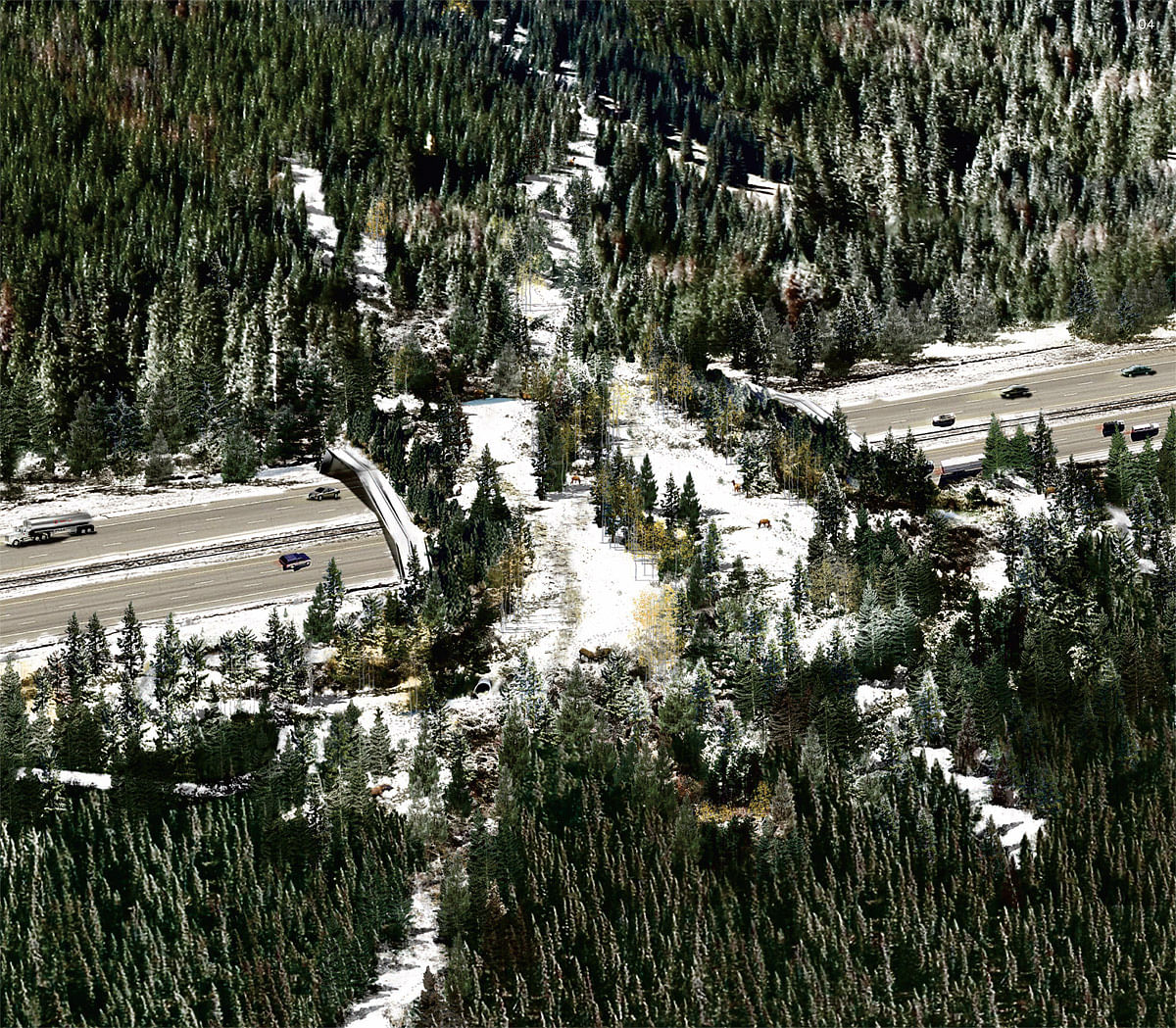
Competition-winning entry "hypar-nature" by HNTB+MVVA

Last Sunday, the ARC International Wildlife Crossing Infrastructure Design Competition announced that HNTB Engineering with Michael Van Valkenburgh Associates, Inc. (HNTB+MVVA) has won the first international wildlife crossing structure design competition. ARC was designed to solve the problem of ensuring the safe mobility of humans and wildlife by allowing them to coexist through innovative engineering and architecture. Five design firms from around the world competed to develop the next generation wildlife crossing.

HNTB+MVVA’s design is cost-effective, modular, easy to construct, provides greater material control, and uses a unique built-in drainage system.

"The winning design combines complex ecology and engineering with practical intelligence by taking ordinary technology and recasting it in a new way,” said Nina-Marie Lister, the ARC competition advisor and professor at Ryerson University in Toronto, Canada. “Using a simple, modular approach to construction, the HNTB+MVVA design deploys familiar, everyday materials with elegance and cost-effectiveness. The jury chose this design because it is not only feasible, but because it has the capacity to transform what we think of as possible – a novel design solution to a growing problem that could serve as a model for the world.”    

Growing scientific research shows the importance of wildlife crossings and their effectiveness at reducing wildlife-vehicle collisions. In Banff National Park in Alberta, Canada, a continuous series of 22 underpasses and two overpasses has resulted in an 80 percent reduction in total wildlife fatalities because wildlife was allowed to roam free uninterrupted of human transportation. As a result, there have been approximately 240,000 crossings (and counting) of 11 species of large mammals, including wolf, grizzly bear, elk, lynx, mountain lion, and moose across these paths.
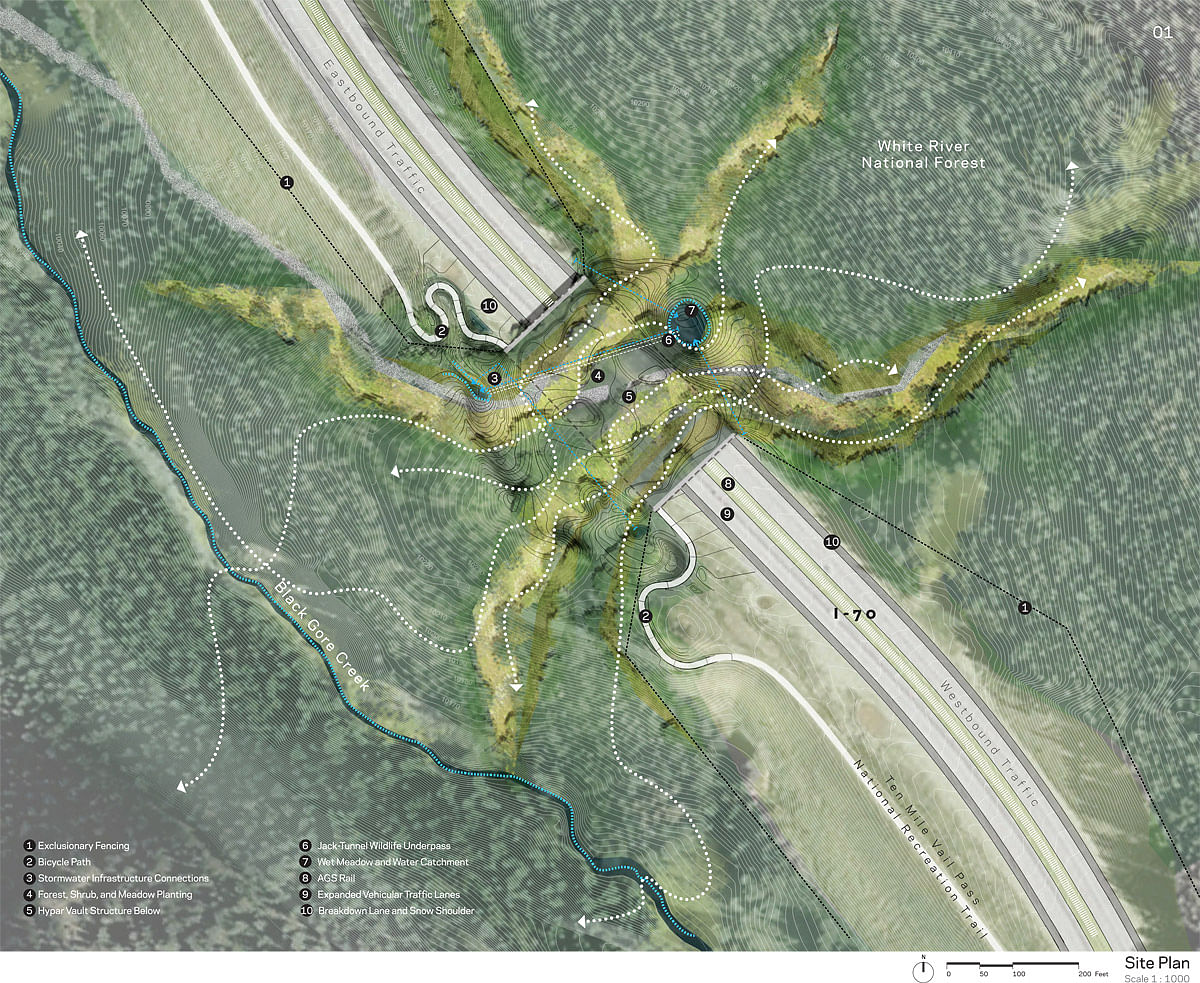
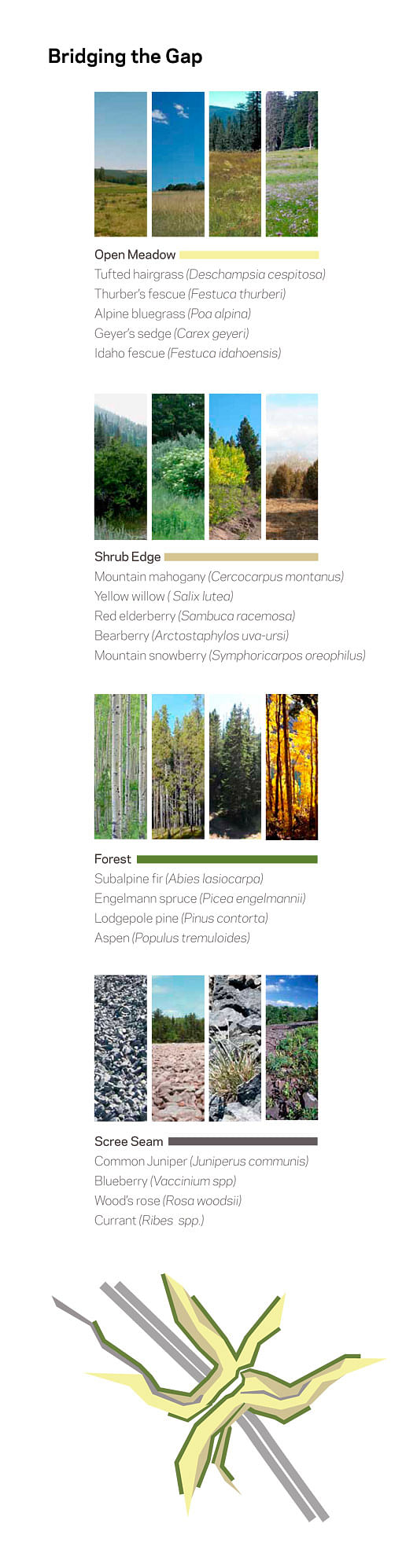
Site plan

“This competition demonstrates that we have the technical expertise and the know-how to overcome design challenges and implement cutting-edge survival practices” said Charles Waldheim, chair of the ARC jury. “What we really need now is the political, economic, and social leadership to bring this design to life.”    

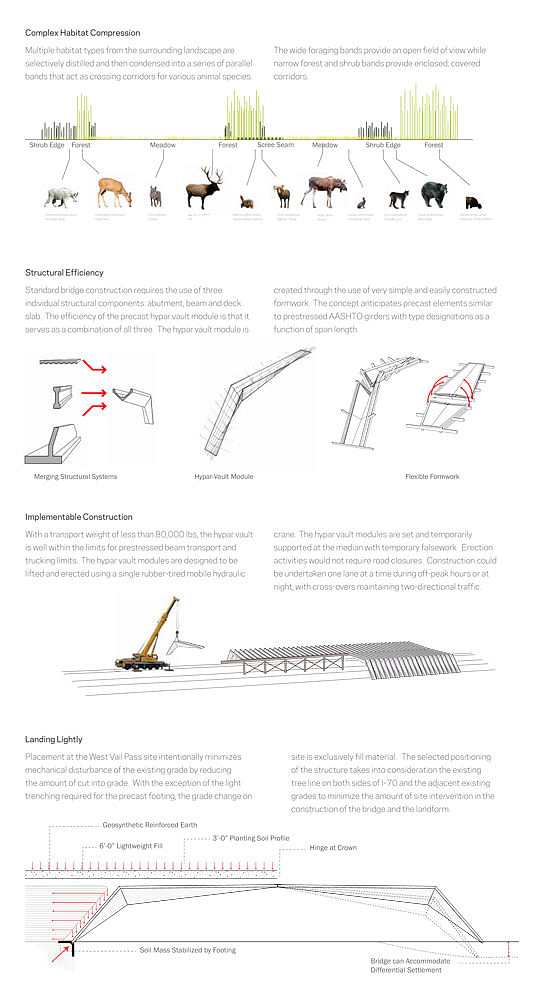
The HNTB+MVVA design includes a single span across the highway with no center pier as opposed to the Banff overpasses, which are comprised of two single spans with a median in the center. This single span is a unique feature that will provide a much safer experience for drivers by creating a more open experience. There are also significant benefits to wildlife in the winning design as it is approximately four times wider than the structures in Banff. This provides an ideal setting to accommodate wildlife movement and a diversity of habitats on top of the bridge. One of the more promising design features from a constructability and engineering standpoint is that the winning design can be built without closing the highway in both directions.

Site section

“The international competition both establishes and inspires a new category of public infrastructure that is both responsive and responsible to environmental concerns,” said Jared Polis (D-CO), Colorado Congressman. “The ARC competition addresses a global problem with a Colorado-based solution that will demonstrate the importance of international cooperation.”    

The jury was impressed by the caliber of all five of the finalist designs. The finalists were chosen to compete from 36 team submissions across nine countries, representing more than 100 firms worldwide. The jury was looking not only for sustainable, beautiful, compelling designs that met the needs of people and respected wildlife, but also those which utilized materials that make infrastructure more affordable in terms of capital cost, maintenance, and long term sustainability and, ultimately, make our roads safer.
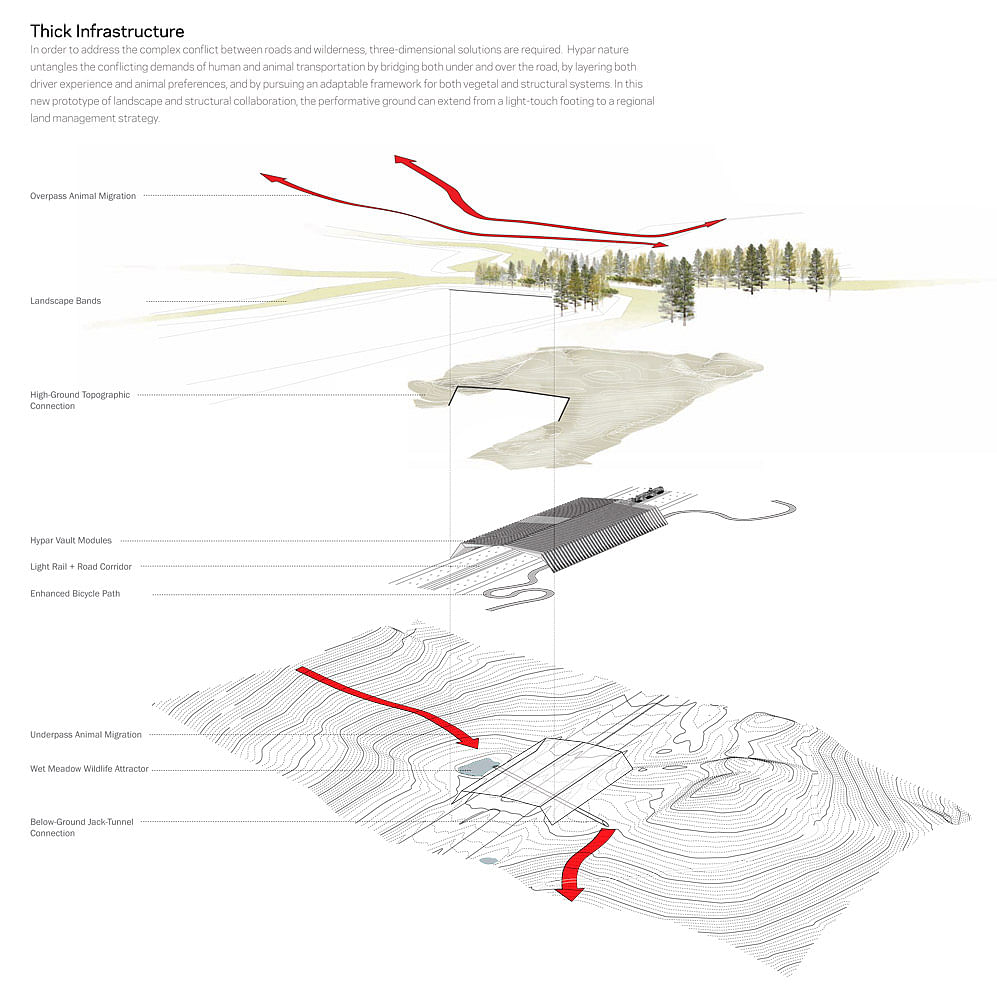
Thick infrastructure

The jury was impressed by the caliber of all five of the finalist designs. The finalists were chosen to compete from 36 team submissions across nine countries, representing more than 100 firms worldwide. The jury was looking not only for sustainable, beautiful, compelling designs that met the needs of people and respected wildlife, but also those which utilized materials that make infrastructure more affordable in terms of capital cost, maintenance, and long term sustainability and, ultimately, make our roads safer.    

The site of the design competition was West Vail Pass on I-70 in Colorado, about 90 miles west of Denver. West Vail Pass was chosen as the site of the wildlife crossing from among 25 candidates from 16 states across North America. Colorado’s I-70 corridor is considered to be a significant barrier to wildlife movement because it is the only east-west interstate providing for the movement of people, goods, and services across the state and bisects a critical habitat linkage in the Southern Rocky Mountain region.
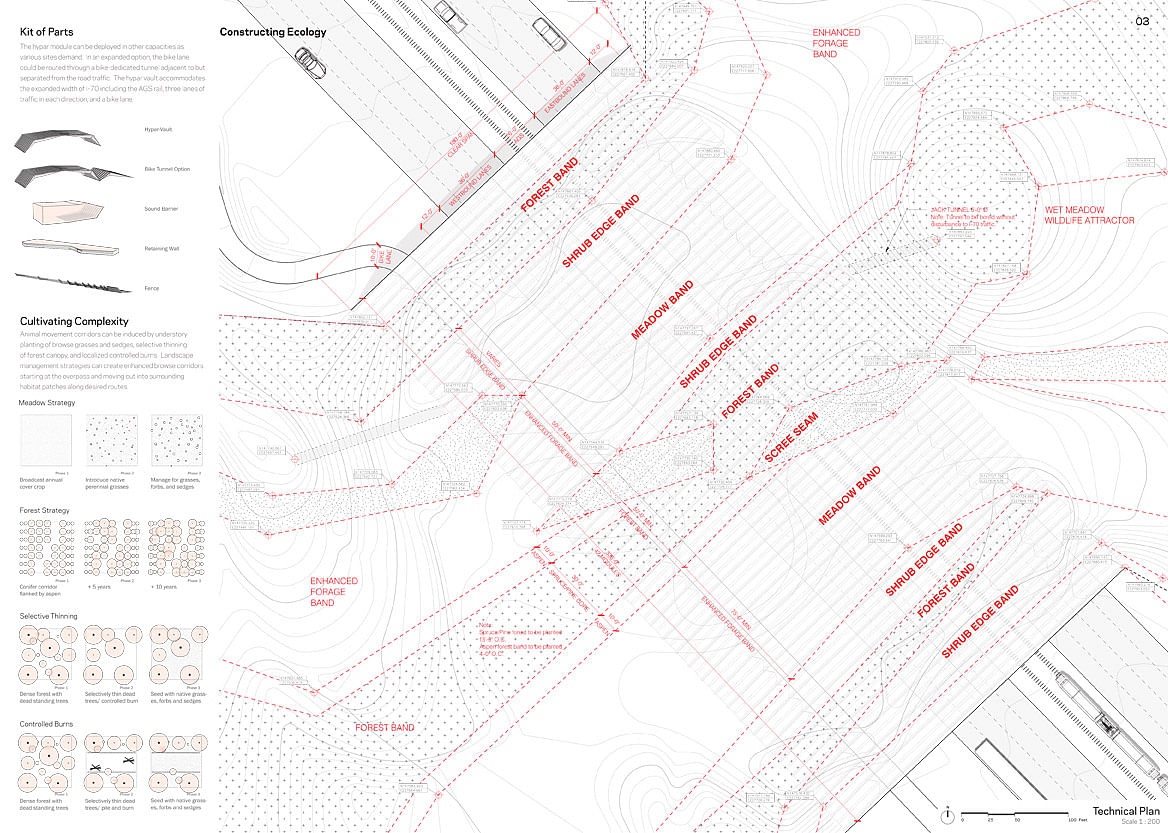
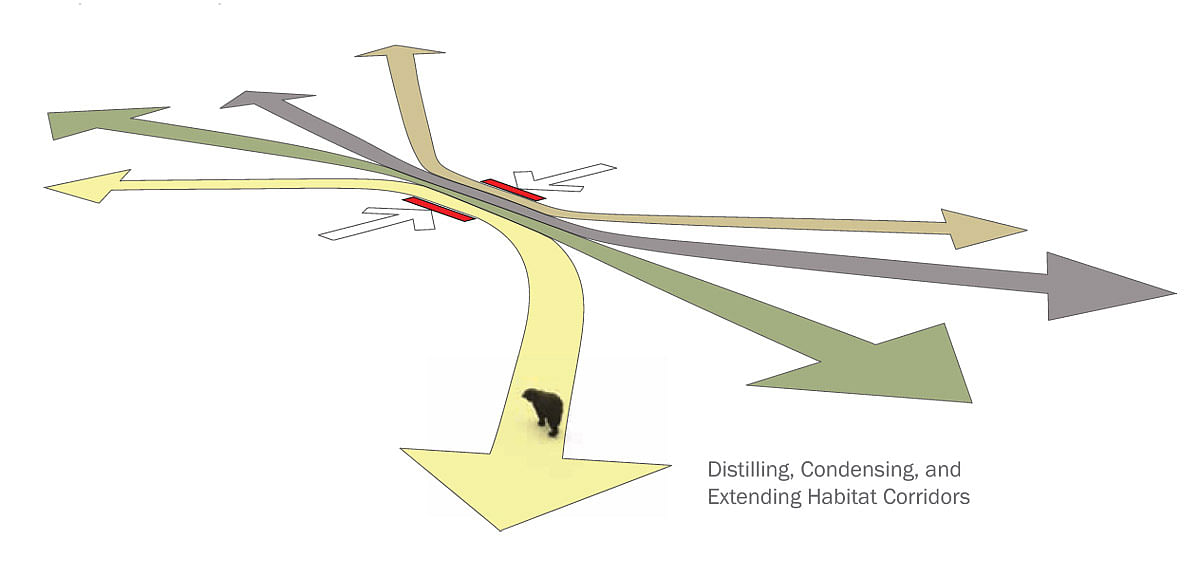
Constructing ecology, kit of parts, cultivating complexity

Each finalist received an honorarium of $15,000 and the winning design team received $40,000. Robert Rock, Senior Associate for Michael Van Valkenburgh Associates, Inc. and Ted Zoli, Technical Director of Bridges for HNTB and MacArthur Fellow (nicknamed the “Genius Award”) presented the winning design.

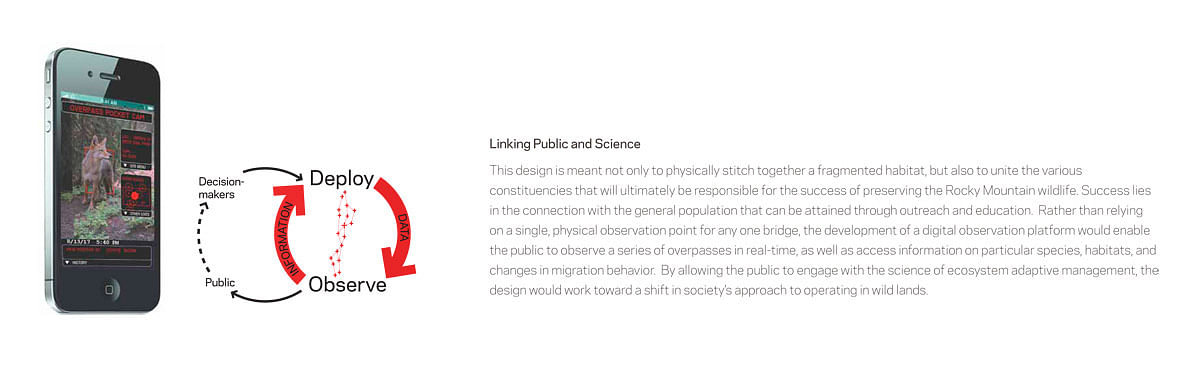
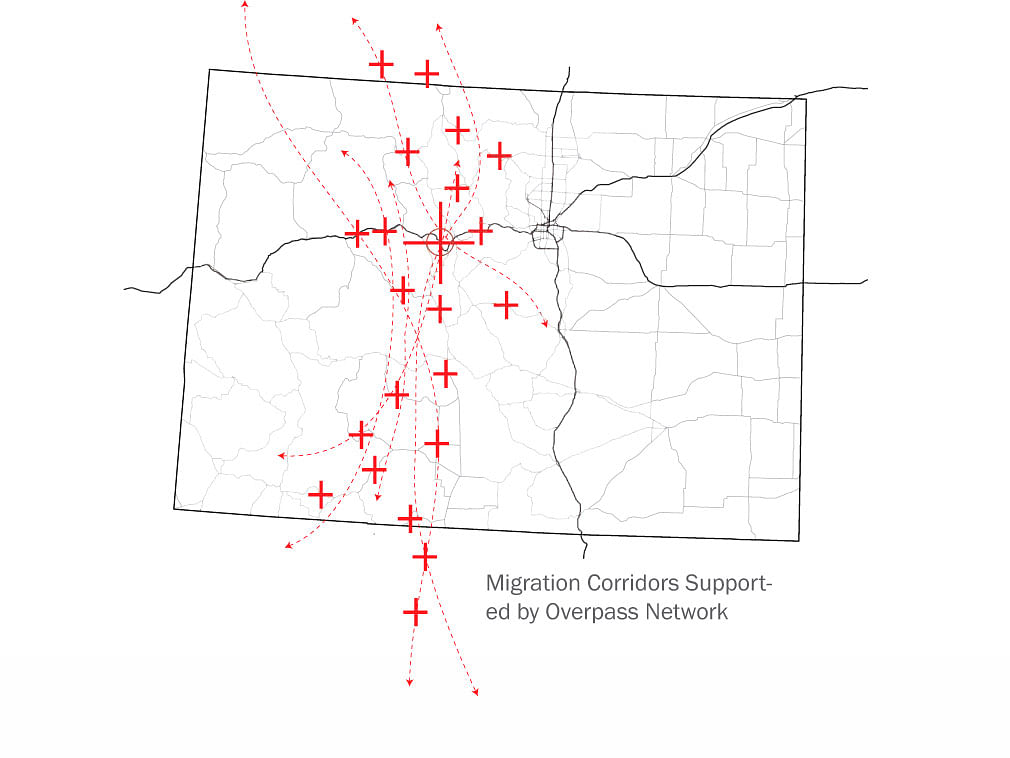
See more plans and diagrams in the image gallery below. Images courtesy of ARC competition.
Related

wildlife ● vail ● usa ● transit ● traffic ● michael van valkenburgh associates ● landscape ● hntb ● colorado ● bridge ● arc ● wildlife crossing

Share

  • Follow

    0 Comments

  • Comment as :

HNTB+MVVA Win ARC Wildlife Crossing Competition

New architecture and design competitions: IDEAS Awards, UIA-HYP CUP International Student Competition, Vancouver Tall Challenge, and Memorial to the Sixth Extinction

Best small projects chosen at AIA Small Project Award 2026

10 standout sustainable projects honored at AIA COTE Top Ten Award 2026

Best residential architecture of 2026 honored at AIA Housing Award

Best new interiors of 2026 chosen at AIA Interior Architecture Awards

Best global architecture honored at RIBA International Awards 2026

World’s most beautiful airports of 2026 chosen by Prix Versailles

New architecture and design competitions: Brick in Architecture Awards, Study Architecture Student Showcase, N.Y.C. Groceries, and New York High Falls Riverfront Market

Sign up for Bustler's Email Newsletters

SmithGroup’s ‘pioneering’ Philip Merrill Environmental Center wins AIA Twenty-five Year Award

Sponsored Post by Buildner

Museum of Emotions / Edition #8 FINAL registration deadline is in 5 DAYS!

Here are the winners of the 2026 AIA Architecture Awards

40 emerging architects and designers under 40 from Europe honored

Northwestern University selects 12-firm longlist to design new engineering building

New architecture and design competitions: Exploring 130 Years of American Design, Christo & Jeanne-Claude Center, 13 White Houses, and La Pyramide

Micro-architecture honored in latest Tiny House Architecture Competition

Next page » Loading

HNTB+MVVA Win ARC Wildlife Crossing Competition

By Bustler Editors|

Tuesday, Jan 25, 2011

Share

Competition-winning entry "hypar-nature" by HNTB+MVVA

Related

wildlife ● vail ● usa ● transit ● traffic ● michael van valkenburgh associates ● landscape ● hntb ● colorado ● bridge ● arc ● wildlife crossing

Last Sunday, the ARC International Wildlife Crossing Infrastructure Design Competition announced that HNTB Engineering with Michael Van Valkenburgh Associates, Inc. (HNTB+MVVA) has won the first international wildlife crossing structure design competition. ARC was designed to solve the problem of ensuring the safe mobility of humans and wildlife by allowing them to coexist through innovative engineering and architecture. Five design firms from around the world competed to develop the next generation wildlife crossing.

HNTB+MVVA’s design is cost-effective, modular, easy to construct, provides greater material control, and uses a unique built-in drainage system.

"The winning design combines complex ecology and engineering with practical intelligence by taking ordinary technology and recasting it in a new way,” said Nina-Marie Lister, the ARC competition advisor and professor at Ryerson University in Toronto, Canada. “Using a simple, modular approach to construction, the HNTB+MVVA design deploys familiar, everyday materials with elegance and cost-effectiveness. The jury chose this design because it is not only feasible, but because it has the capacity to transform what we think of as possible – a novel design solution to a growing problem that could serve as a model for the world.”    

Growing scientific research shows the importance of wildlife crossings and their effectiveness at reducing wildlife-vehicle collisions. In Banff National Park in Alberta, Canada, a continuous series of 22 underpasses and two overpasses has resulted in an 80 percent reduction in total wildlife fatalities because wildlife was allowed to roam free uninterrupted of human transportation. As a result, there have been approximately 240,000 crossings (and counting) of 11 species of large mammals, including wolf, grizzly bear, elk, lynx, mountain lion, and moose across these paths.

Site plan

“This competition demonstrates that we have the technical expertise and the know-how to overcome design challenges and implement cutting-edge survival practices” said Charles Waldheim, chair of the ARC jury. “What we really need now is the political, economic, and social leadership to bring this design to life.”    

The HNTB+MVVA design includes a single span across the highway with no center pier as opposed to the Banff overpasses, which are comprised of two single spans with a median in the center. This single span is a unique feature that will provide a much safer experience for drivers by creating a more open experience. There are also significant benefits to wildlife in the winning design as it is approximately four times wider than the structures in Banff. This provides an ideal setting to accommodate wildlife movement and a diversity of habitats on top of the bridge. One of the more promising design features from a constructability and engineering standpoint is that the winning design can be built without closing the highway in both directions.

Site section

“The international competition both establishes and inspires a new category of public infrastructure that is both responsive and responsible to environmental concerns,” said Jared Polis (D-CO), Colorado Congressman. “The ARC competition addresses a global problem with a Colorado-based solution that will demonstrate the importance of international cooperation.”    

The jury was impressed by the caliber of all five of the finalist designs. The finalists were chosen to compete from 36 team submissions across nine countries, representing more than 100 firms worldwide. The jury was looking not only for sustainable, beautiful, compelling designs that met the needs of people and respected wildlife, but also those which utilized materials that make infrastructure more affordable in terms of capital cost, maintenance, and long term sustainability and, ultimately, make our roads safer.

Thick infrastructure

The jury was impressed by the caliber of all five of the finalist designs. The finalists were chosen to compete from 36 team submissions across nine countries, representing more than 100 firms worldwide. The jury was looking not only for sustainable, beautiful, compelling designs that met the needs of people and respected wildlife, but also those which utilized materials that make infrastructure more affordable in terms of capital cost, maintenance, and long term sustainability and, ultimately, make our roads safer.    

The site of the design competition was West Vail Pass on I-70 in Colorado, about 90 miles west of Denver. West Vail Pass was chosen as the site of the wildlife crossing from among 25 candidates from 16 states across North America. Colorado’s I-70 corridor is considered to be a significant barrier to wildlife movement because it is the only east-west interstate providing for the movement of people, goods, and services across the state and bisects a critical habitat linkage in the Southern Rocky Mountain region.

Constructing ecology, kit of parts, cultivating complexity

Each finalist received an honorarium of $15,000 and the winning design team received $40,000. Robert Rock, Senior Associate for Michael Van Valkenburgh Associates, Inc. and Ted Zoli, Technical Director of Bridges for HNTB and MacArthur Fellow (nicknamed the “Genius Award”) presented the winning design.

See more plans and diagrams in the image gallery below. Images courtesy of ARC competition.
Share

  • Follow

    0 Comments

  • Comment as :

Archinect JobsArchinect Jobs

The Archinect Job Board attracts the world's top architectural design talents.

VIEW ALL JOBS POST A JOB

Architect / Project Architect

Joseph David Associates

Architect / Project Architect

Designer (Level 3)

KPMB

Designer (Level 3)

Cambridge, MA, US

Junior Architect in nyc

Lara Apelian Studio

Junior Architect in nyc

New York, NY, US

Intermediate Designer

Rafael Viñoly Architects

Intermediate Designer

New York, NY, US

Project Architect

Office JDY

Project Architect

Brooklyn, NY, US

Junior/Intermediate Architect

Archimaera Architecture

Junior/Intermediate Architect

New York, NY, US

Project Manager

Payette

Project Manager

Boston, MA, US

Project Manager / Project Architect (5–10 Years’ Experience)

Millan Architect / Studio Inc.

Project Manager / Project Architect (5–10 Years’ Experience)

Venice, CA, US

Senior Associate/ Project Manager

DWY Landscape Architects

Senior Associate/ Project Manager

Sarasota, FL, US

Project Manager/Designer

BOTO Design Architects

Project Manager/Designer

Santa Monica, CA, US

Next page » Loading