• Login / Join
  • About
  • •
  • Contact
  • •
  • Advertising
bustler logo
bustler logo
  • News
  • Competitions
  • Events
  • Bustler is powered by Archinect
  • Sign up for Bustler's Email Newsletters

  • Follow these Bustler feeds:

  • Search

    Search in

  • Submit

    What are you submitting?

    News Pitch
    Competition
    Event
  • Login / Join
  • News|Competitions|Events
  • Search
    | Submit
    | Follow
  • Search in

    What are you submitting?

    News Pitch
    Competition
    Event

    Follow these Bustler feeds:

  • About|Contact|Advertising
  • Login / Join

MUJI AWARD 03 Results

By Bustler Editors|

Wednesday, Dec 3, 2008

MUJI AWARD 03, with its theme of “Found MUJI”, was open to applicants for two months from May 26 to July 31, 2008. Some 1,986 entries from 35 countries were received. The organizers recently announced the winning entries that made it through very rigid judging process.

Masaaki Kanai, President of Ryohin Keikaku Co., Ltd., said: “We would like to thank everyone from around the world who sent in so many entries. The theme was “Found” … from nature; knowledge from those that came before us; from one’s own unique culture; or from people’s consciousness of the unconscious. We live today in an age where we seek to be the very best in the game of life, while still holding on to consideration and discretion on a variety of levels. A straw the way nature made it, a garbage bag the same shape of that nostalgic milk container, bed mats and detergent made of plant matter, grandpa’s nail hooks - I was very happy to see that this way of thinking was evident in a great many of the works entered into the competition. I would once again like to express my appreciation to all those who participated in the competition.:

The winners are as follows:

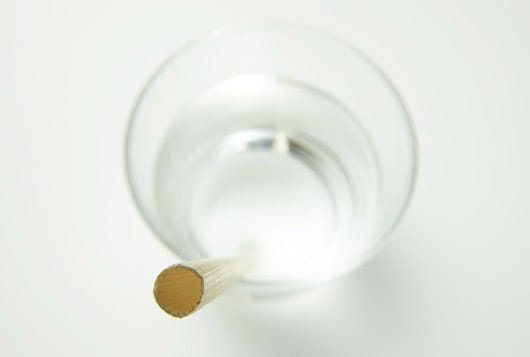
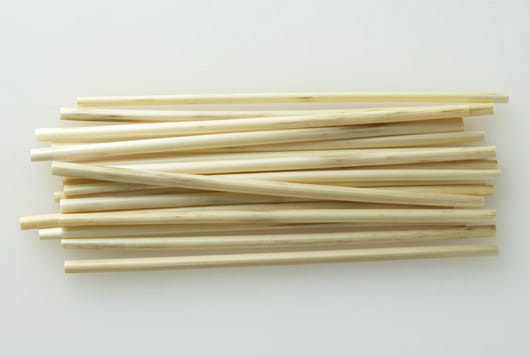
Gold Prize: “Straw straw” by Yuki Iida (Japan)

“The original meaning of the term “straw” was “wheat straw”. Wall art depicting people using straws of wheat to drink from have been discovered from ancient Mesopotamian ruins. Straws of wheat are forms created by nature; they are materials that return to the soil. There’s no waste in either the shape itself, or in its actual existence.”
image

Gold Prize: “Straw straw” by Yuki Iida (Japan)

image

Gold Prize: “Straw straw” by Yuki Iida (Japan)

image

Gold Prize: “Straw straw” by Yuki Iida (Japan)


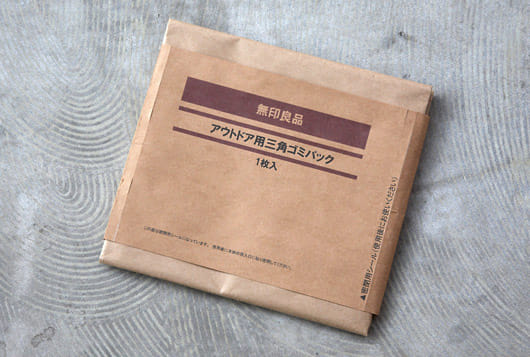
Silver Prize: “Trash pack for outdoors” by Ken Sugimoto/Eri Sugimoto (USA)

“A trash bag that easily stands up by itself. By taking advantage of the triangular pack that originated in Sweden and has been used for years for serving milk for school lunches in Japan, we were able to achieve a sense of stability, while the tendency to worry about the actual contents of the bag has been lessened. Can be put to good use when camping, on a picnic, or with other outdoor activities.”

image

Silver Prize: “Trash pack for outdoors” by Ken Sugimoto/Eri Sugimoto (USA)

image

Silver Prize: “Trash pack for outdoors” by Ken Sugimoto/Eri Sugimoto (USA)

image

Silver Prize: “Trash pack for outdoors” by Ken Sugimoto/Eri Sugimoto (USA)


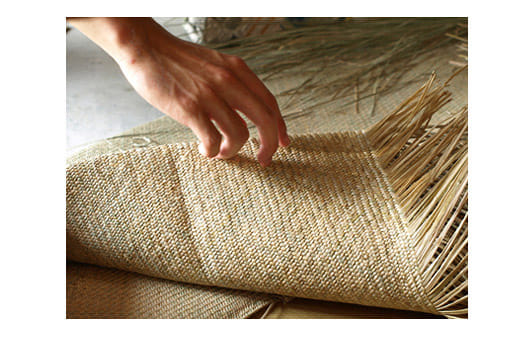
Bronze Prize: “Tachia Mat” by Jung-Chen Hung/Chia-en Lu (Taiwan)

“Taiwan is an island located on the Pacific Ocean, and there is a small town in the middle city of Taiwan called “Tachia.” It’s a beautiful place famous for its straw mat, which is made from a specific variety of rush, and usually the mat is hand-weaved by people in the village. Straw mat products are normally seen as floor mats, sitting mats, and hats, which feature respirable, odor-absorptive, quick-drying functions, also the soft straw scent smells purely blissful. “Tachia Mat” is redesigned from the ordinary Tachia straw mat, makes it into a fitted bed sheet that covers the mattress entirely, instead of the traditional one-piece type that simply sits on top of the bed. Comparing to the machine-made mats, the material of “Tachia Mat” is much more flexible and foldable since it’s handmade. Today energy-saving is considered as a critical issue, and “Tachia Mat” is definitely a product that will bring a fresh and cool aura. With MUJI’s global markets, once “Tachia Mat” is being mass produced, there will be more and more people enjoying the nice and cool summer nights.”

image

Bronze Prize: “Tachia Mat” by Jung-Chen Hung/Chia-en Lu (Taiwan)

image

Bronze Prize: “Tachia Mat” by Jung-Chen Hung/Chia-en Lu (Taiwan)

image

Bronze Prize: “Tachia Mat” by Jung-Chen Hung/Chia-en Lu (Taiwan)


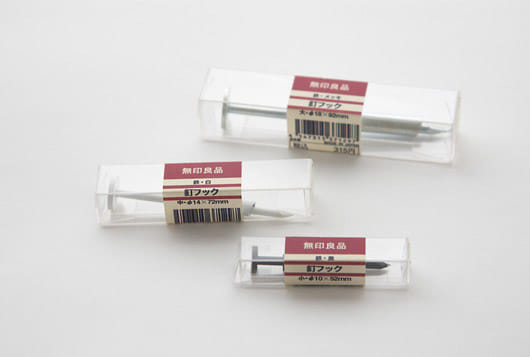
Bronze Prize: “Grandpa’s nail hook” by Masashi Watanabe (Japan)

“My grandfather nonchalantly pounded nails into posts and hung various things on them. So that things didn’t fall off these nails, he unconsciously pounded them in at an angle. To me, these felt like the most rational sort of hook you could get. While a simple nail would have sufficed, I made a few alterations. It struck me that if you could secure a nail at a set angle and length every time, then you could have beautiful hooks anywhere you could pound a nail in.”

image

Bronze Prize: “Grandpa’s nail hook” by Masashi Watanabe (Japan)

image

Bronze Prize: “Grandpa’s nail hook” by Masashi Watanabe (Japan)

image

Bronze Prize: “Grandpa’s nail hook” by Masashi Watanabe (Japan)


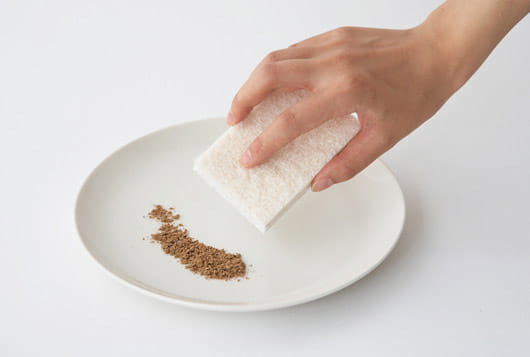
Bronze Prize: “Camelia washing-up liquid” by Huang Yi Tang (Taiwan)

“The camellia oleifera abel is a type of wild camellia that grows wild in the mountains of Taiwan. Since the seed includes a large amount of oil, it has been used from way back as cooking oil. After having removed all of this edible oil, the residue is ground into a powder; this is called “tea powder”. This “tea powder” not only has antibacterial and odor eliminating properties, it also breaks down oil, and is greatly suited to washing dishes. And since tea oil is included, it is mild on the user’s skin and has the added advantage of being gentle on the environment. Since it is something born from waste products, it is very economical.”

image

Bronze Prize: “Camelia washing-up liquid” by Huang Yi Tang (Taiwan)

image

Bronze Prize: “Camelia washing-up liquid” by Huang Yi Tang (Taiwan)

image

Bronze Prize: “Camelia washing-up liquid” by Huang Yi Tang (Taiwan)


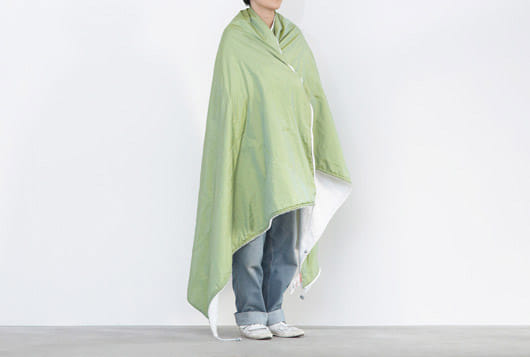
Bronze Prize: “Second Skin.” by Jbaptiste Sénéquier (France)

““Second Skin.” is a double layered with 2 different textured sides - the outer layer being waterproof and protective, the inner layer being soft and gentle. It has the ability to transform itself and help you adapt to any situations - Use as a Towel, Changing Room, bag or Waterproof Poncho…all you need to do is… “Zip it, tighten it, loosen it, carry it, turn it, spread it…...and relax.”“

image

Bronze Prize: “Second Skin.” by Jbaptiste Sénéquier (France)

image

Bronze Prize: “Second Skin.” by Jbaptiste Sénéquier (France)

image

Bronze Prize: “Second Skin.” by Jbaptiste Sénéquier (France)


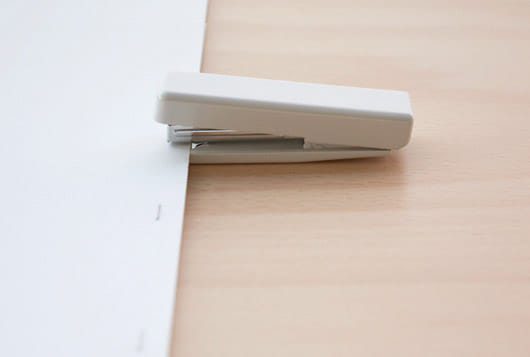
Bronze Prize: “A precise stapler” by Joonhyun Kim (South Korea)

“When you usually use a stapler, you can’t seem to align the staple up exactly where you want it to be, which often leads to trouble. To solve this kind of problem, an indentation lined up with the corner of the paper has been set, making it easy for you to sink a staple in exactly the place you want it to go.”

image

Bronze Prize: “A precise stapler” by Joonhyun Kim (South Korea)

image

Bronze Prize: “A precise stapler” by Joonhyun Kim (South Korea)

image

Bronze Prize: “A precise stapler” by Joonhyun Kim (South Korea)

Images: MUJI AWARD/Ryohin Keikaku Co., Ltd.

Related

asia ● award ● japan ● nature ● prize ● product design ● sustainable ● winners ● muji

Share

  • Follow

    0 Comments

  • Comment as :

MUJI AWARD 03 Results

New architecture and design competitions: Brick in Architecture Awards, Study Architecture Student Showcase, N.Y.C. Groceries, and New York High Falls Riverfront Market

SmithGroup’s ‘pioneering’ Philip Merrill Environmental Center wins AIA Twenty-five Year Award

Sponsored Post by Buildner

Museum of Emotions / Edition #8 FINAL registration deadline is in 5 DAYS!

Here are the winners of the 2026 AIA Architecture Awards

40 emerging architects and designers under 40 from Europe honored

Northwestern University selects 12-firm longlist to design new engineering building

New architecture and design competitions: Exploring 130 Years of American Design, Christo & Jeanne-Claude Center, 13 White Houses, and La Pyramide

Micro-architecture honored in latest Tiny House Architecture Competition

Sign up for Bustler's Email Newsletters

World’s most beautiful restaurants of 2026 chosen by Prix Versailles

Sponsored Post by Buildner

Design a wine tasting room in Italy! Valli Wine Tasting Room is launched!

10 can't-miss architecture & design events to see this June in London, Los Angeles, Chicago, San Francisco, Detroit, San Diego, Porto, and Barcelona

Sponsored Post by Buildner

Museum of Emotions / Edition #8 FINAL registration deadline is approaching!

Seven global projects make AR Public Awards shortlist 2026

Sponsored Post by Buildner

Design a slow-living restaurant in Portugal! Portugal Long Table Restaurant is launched!

World's best tall buildings honored at the CVU 2026 Award of Excellence

Next page » Loading

MUJI AWARD 03 Results

By Bustler Editors|

Wednesday, Dec 3, 2008

Share

Related

asia ● award ● japan ● nature ● prize ● product design ● sustainable ● winners ● muji

MUJI AWARD 03, with its theme of “Found MUJI”, was open to applicants for two months from May 26 to July 31, 2008. Some 1,986 entries from 35 countries were received. The organizers recently announced the winning entries that made it through very rigid judging process.

Masaaki Kanai, President of Ryohin Keikaku Co., Ltd., said: “We would like to thank everyone from around the world who sent in so many entries. The theme was “Found” … from nature; knowledge from those that came before us; from one’s own unique culture; or from people’s consciousness of the unconscious. We live today in an age where we seek to be the very best in the game of life, while still holding on to consideration and discretion on a variety of levels. A straw the way nature made it, a garbage bag the same shape of that nostalgic milk container, bed mats and detergent made of plant matter, grandpa’s nail hooks - I was very happy to see that this way of thinking was evident in a great many of the works entered into the competition. I would once again like to express my appreciation to all those who participated in the competition.:

The winners are as follows:

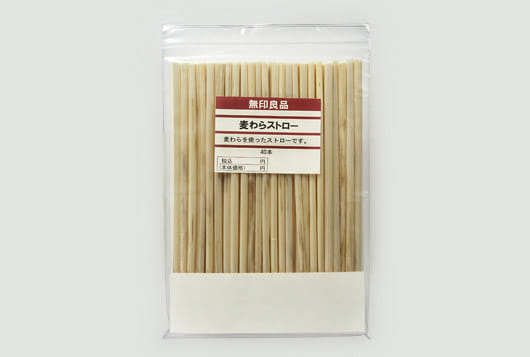
Gold Prize: “Straw straw” by Yuki Iida (Japan)

“The original meaning of the term “straw” was “wheat straw”. Wall art depicting people using straws of wheat to drink from have been discovered from ancient Mesopotamian ruins. Straws of wheat are forms created by nature; they are materials that return to the soil. There’s no waste in either the shape itself, or in its actual existence.”
image

Gold Prize: “Straw straw” by Yuki Iida (Japan)

image

Gold Prize: “Straw straw” by Yuki Iida (Japan)

image

Gold Prize: “Straw straw” by Yuki Iida (Japan)


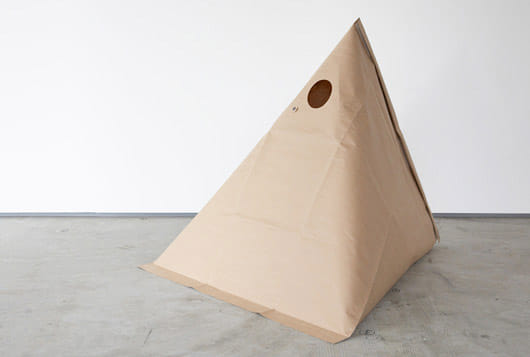
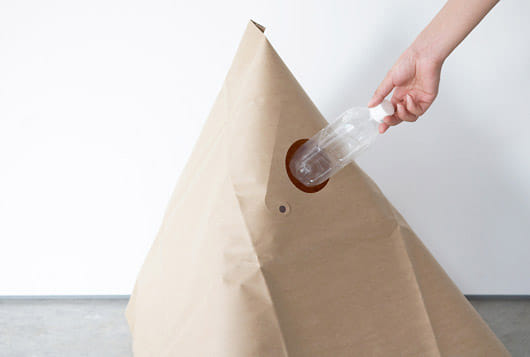
Silver Prize: “Trash pack for outdoors” by Ken Sugimoto/Eri Sugimoto (USA)

“A trash bag that easily stands up by itself. By taking advantage of the triangular pack that originated in Sweden and has been used for years for serving milk for school lunches in Japan, we were able to achieve a sense of stability, while the tendency to worry about the actual contents of the bag has been lessened. Can be put to good use when camping, on a picnic, or with other outdoor activities.”
image

Silver Prize: “Trash pack for outdoors” by Ken Sugimoto/Eri Sugimoto (USA)

image

Silver Prize: “Trash pack for outdoors” by Ken Sugimoto/Eri Sugimoto (USA)

image

Silver Prize: “Trash pack for outdoors” by Ken Sugimoto/Eri Sugimoto (USA)


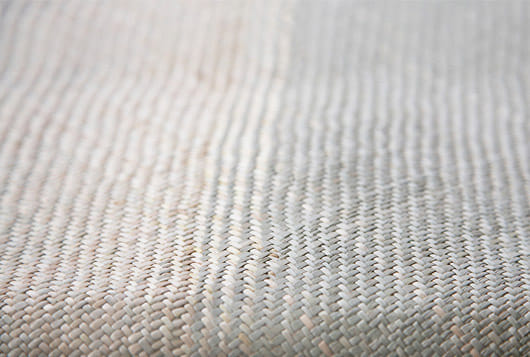
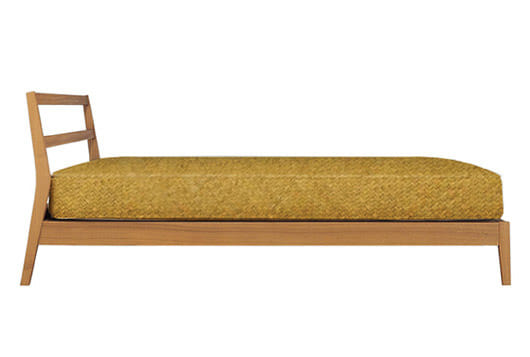
Bronze Prize: “Tachia Mat” by Jung-Chen Hung/Chia-en Lu (Taiwan)

“Taiwan is an island located on the Pacific Ocean, and there is a small town in the middle city of Taiwan called “Tachia.” It’s a beautiful place famous for its straw mat, which is made from a specific variety of rush, and usually the mat is hand-weaved by people in the village. Straw mat products are normally seen as floor mats, sitting mats, and hats, which feature respirable, odor-absorptive, quick-drying functions, also the soft straw scent smells purely blissful. “Tachia Mat” is redesigned from the ordinary Tachia straw mat, makes it into a fitted bed sheet that covers the mattress entirely, instead of the traditional one-piece type that simply sits on top of the bed. Comparing to the machine-made mats, the material of “Tachia Mat” is much more flexible and foldable since it’s handmade. Today energy-saving is considered as a critical issue, and “Tachia Mat” is definitely a product that will bring a fresh and cool aura. With MUJI’s global markets, once “Tachia Mat” is being mass produced, there will be more and more people enjoying the nice and cool summer nights.”
image

Bronze Prize: “Tachia Mat” by Jung-Chen Hung/Chia-en Lu (Taiwan)

image

Bronze Prize: “Tachia Mat” by Jung-Chen Hung/Chia-en Lu (Taiwan)

image

Bronze Prize: “Tachia Mat” by Jung-Chen Hung/Chia-en Lu (Taiwan)


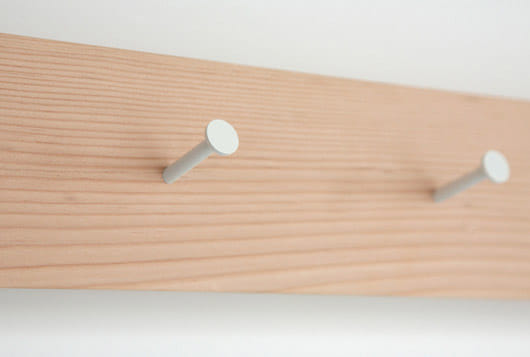
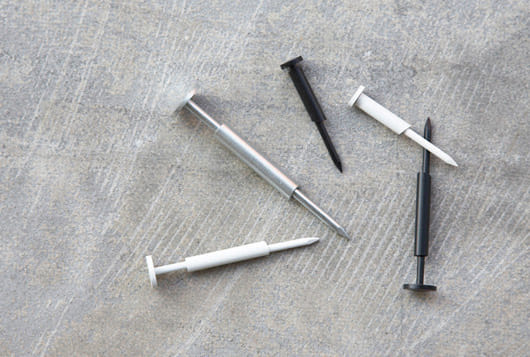
Bronze Prize: “Grandpa’s nail hook” by Masashi Watanabe (Japan)

“My grandfather nonchalantly pounded nails into posts and hung various things on them. So that things didn’t fall off these nails, he unconsciously pounded them in at an angle. To me, these felt like the most rational sort of hook you could get. While a simple nail would have sufficed, I made a few alterations. It struck me that if you could secure a nail at a set angle and length every time, then you could have beautiful hooks anywhere you could pound a nail in.”
image

Bronze Prize: “Grandpa’s nail hook” by Masashi Watanabe (Japan)

image

Bronze Prize: “Grandpa’s nail hook” by Masashi Watanabe (Japan)

image

Bronze Prize: “Grandpa’s nail hook” by Masashi Watanabe (Japan)


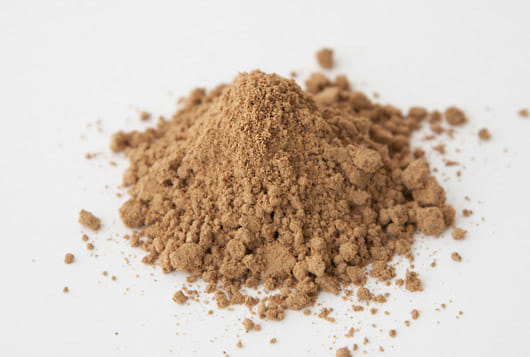
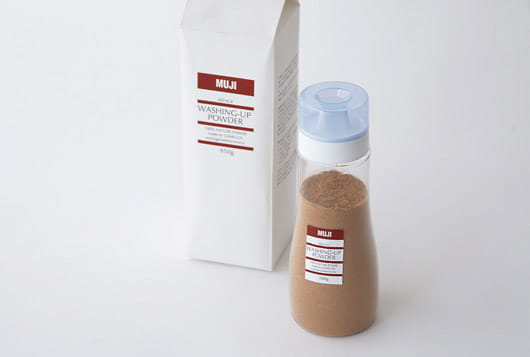
Bronze Prize: “Camelia washing-up liquid” by Huang Yi Tang (Taiwan)

“The camellia oleifera abel is a type of wild camellia that grows wild in the mountains of Taiwan. Since the seed includes a large amount of oil, it has been used from way back as cooking oil. After having removed all of this edible oil, the residue is ground into a powder; this is called “tea powder”. This “tea powder” not only has antibacterial and odor eliminating properties, it also breaks down oil, and is greatly suited to washing dishes. And since tea oil is included, it is mild on the user’s skin and has the added advantage of being gentle on the environment. Since it is something born from waste products, it is very economical.”
image

Bronze Prize: “Camelia washing-up liquid” by Huang Yi Tang (Taiwan)

image

Bronze Prize: “Camelia washing-up liquid” by Huang Yi Tang (Taiwan)

image

Bronze Prize: “Camelia washing-up liquid” by Huang Yi Tang (Taiwan)


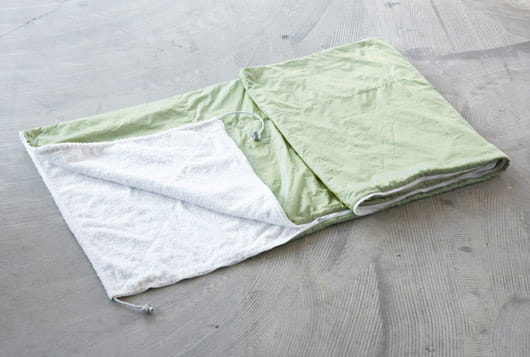
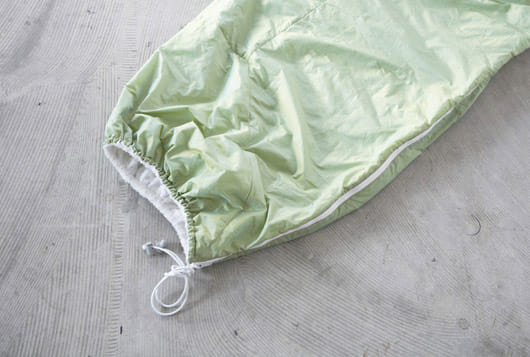
Bronze Prize: “Second Skin.” by Jbaptiste Sénéquier (France)

““Second Skin.” is a double layered with 2 different textured sides - the outer layer being waterproof and protective, the inner layer being soft and gentle. It has the ability to transform itself and help you adapt to any situations - Use as a Towel, Changing Room, bag or Waterproof Poncho…all you need to do is… “Zip it, tighten it, loosen it, carry it, turn it, spread it…...and relax.”“
image

Bronze Prize: “Second Skin.” by Jbaptiste Sénéquier (France)

image

Bronze Prize: “Second Skin.” by Jbaptiste Sénéquier (France)

image

Bronze Prize: “Second Skin.” by Jbaptiste Sénéquier (France)


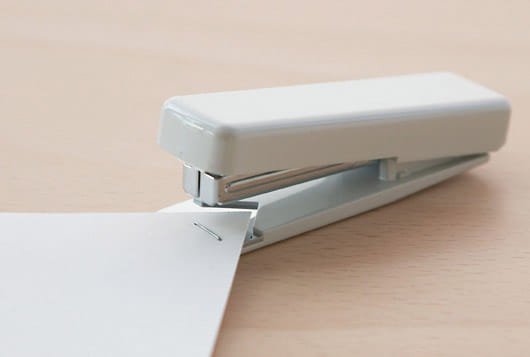
Bronze Prize: “A precise stapler” by Joonhyun Kim (South Korea)

“When you usually use a stapler, you can’t seem to align the staple up exactly where you want it to be, which often leads to trouble. To solve this kind of problem, an indentation lined up with the corner of the paper has been set, making it easy for you to sink a staple in exactly the place you want it to go.”
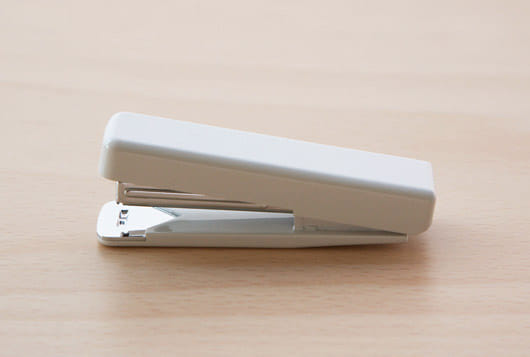
image

Bronze Prize: “A precise stapler” by Joonhyun Kim (South Korea)

image

Bronze Prize: “A precise stapler” by Joonhyun Kim (South Korea)

image

Bronze Prize: “A precise stapler” by Joonhyun Kim (South Korea)

Images: MUJI AWARD/Ryohin Keikaku Co., Ltd.

Share

  • Follow

    0 Comments

  • Comment as :

Archinect JobsArchinect Jobs

The Archinect Job Board attracts the world's top architectural design talents.

VIEW ALL JOBS POST A JOB

Office Assistant / Studio Coordinator

Beinfield Architecture PC

Office Assistant / Studio Coordinator

Norwalk, CT, US

Designer

HATCH ARCHITECTURE

Designer

Los Angeles, CA, US

Marketing + Communications Specialist

Trahan Architects

Marketing + Communications Specialist

New York, NY, US

BIM Application Specialist

Lake Flato Architects

BIM Application Specialist

San Antonio, TX, US

Hospitality Project Architect

bonetti/kozerski architecture DPC

Hospitality Project Architect

New York, NY, US

Architectural Designer II

Studio AR&D Architects

Architectural Designer II

Los Angeles, CA, US

Junior Designer

OLIVER FREUNDLICH DESIGN

Junior Designer

New York, NY, US

 Intermediate Architect

Curtis + Ginsberg Architects LLP

Intermediate Architect

New York, NY, US

Architectural Project Manager - Multifamily

DAHLIN Architecture | Planning | Interiors

Architectural Project Manager - Multifamily

San Diego, CA, US

Senior Designer / Architect

NardiHaus

Senior Designer / Architect

Pasadena, CA, US

Next page » Loading