• Login / Join
  • About
  • •
  • Contact
  • •
  • Advertising
bustler logo
bustler logo
  • News
  • Competitions
  • Events
  • Bustler is powered by Archinect
  • Sign up for Bustler's Email Newsletters

  • Follow these Bustler feeds:

  • Search

    Search in

  • Submit

    What are you submitting?

    News Pitch
    Competition
    Event
  • Login / Join
  • News|Competitions|Events
  • Search
    | Submit
    | Follow
  • Search in

    What are you submitting?

    News Pitch
    Competition
    Event

    Follow these Bustler feeds:

  • About|Contact|Advertising
  • Login / Join

MVRDV's Transformation of Disused Dijon Mustard Laboratory Completed

By Bustler Editors|

Friday, Jul 13, 2012
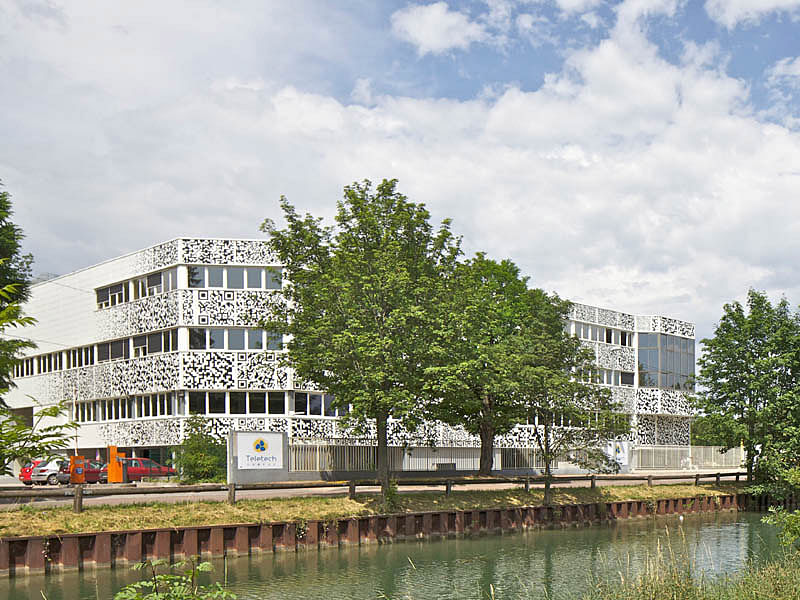
MVRDV Dijon Teletech Campus with QR flashcode facade (Photo: Philippe Ruault)

Rotterdam's MVRDV has completed the transformation of a disused mustard laboratory in Dijon, France (previously on Bustler) into an innovative call center with an education center, incubator and social program.

Project Description from the Architects:

For MVRDV it represents an exemplary project: Transformation through reuse is one of the contemporary issues in European architecture since the current crisis. Completion of the 6500m2 refurbishment into a 600 work spaces call centre for operator Teletech has cost just 4 million Euro. The interventions possible on such a budget were directed towards quality enhancement with maximal maintenance of existing structure and services.
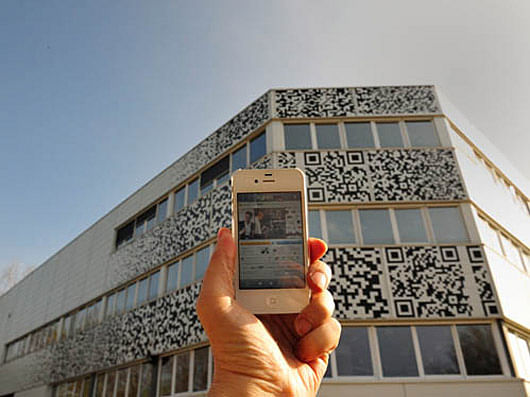
For budget reasons, the facade was extended and stickered with QR flashcodes. (Photo: MVRDV)

All over Europe buildings are vacant and waiting for a new future. Transformations are usually all about the preservation of historically or architecturally significant parts of a building. In this case the building was completed in 2004 and the preservation act directed towards reuse. The building is a former Unilever Amora Dijon mustard laboratory completed in 2004 and closed only five years later in 2009. The building was in a good state but due to its wide volume not suitable for traditional work spaces. The construction budget was too low to exchange the façade or make serious alterations to the structure. The budget makes literal reuse necessary and leads to less replacements and a better sustainable profile of the transformation act.
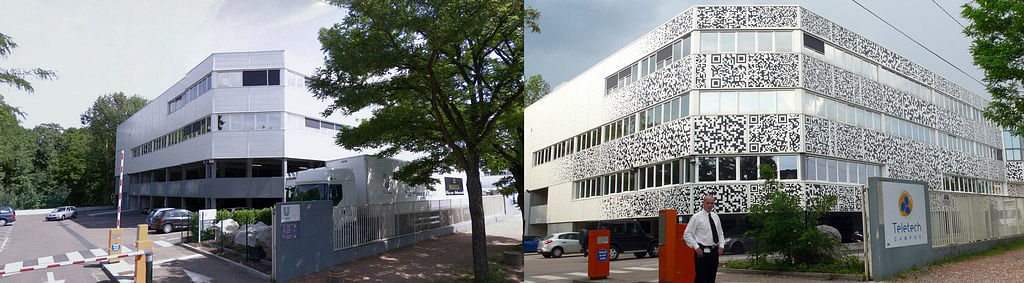
Before and After: Amora Laboratory becomes Teletech Campus. (Photo: MVRDV)

A fine balance between intervention and intelligent re-use of the existing is the essence of the project.  MVRDV sees this transformation as an exemplary project for contemporary European architecture in times of the current crisis. How to reuse a building which is structurally in good shape but not suitable for a traditional transformation and use? The more reuse of the existing is possible the more budget is liberated for interventions. The unusual building evokes an unusual use and in the end will adjust perfectly to the Teletech work rhythm.  
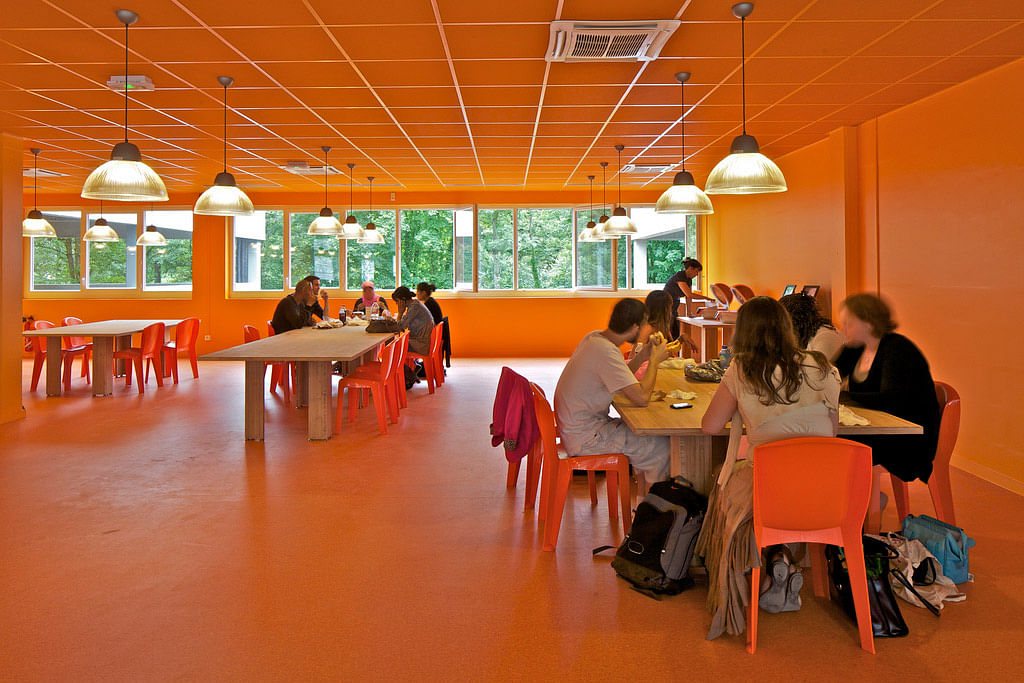
In many cases the budget only allowed to remove or paint the existing elements. (Photo: Philippe Ruault)

The Teletech call centre has rush hours in the morning, afternoon and early evening, only at these moments the building will be fully occupied by its workforce. For these short periods also unusual work places can be used which would not be suitable for eight hour shifts. The transformation strategy is adapted to this irregular use of the building.
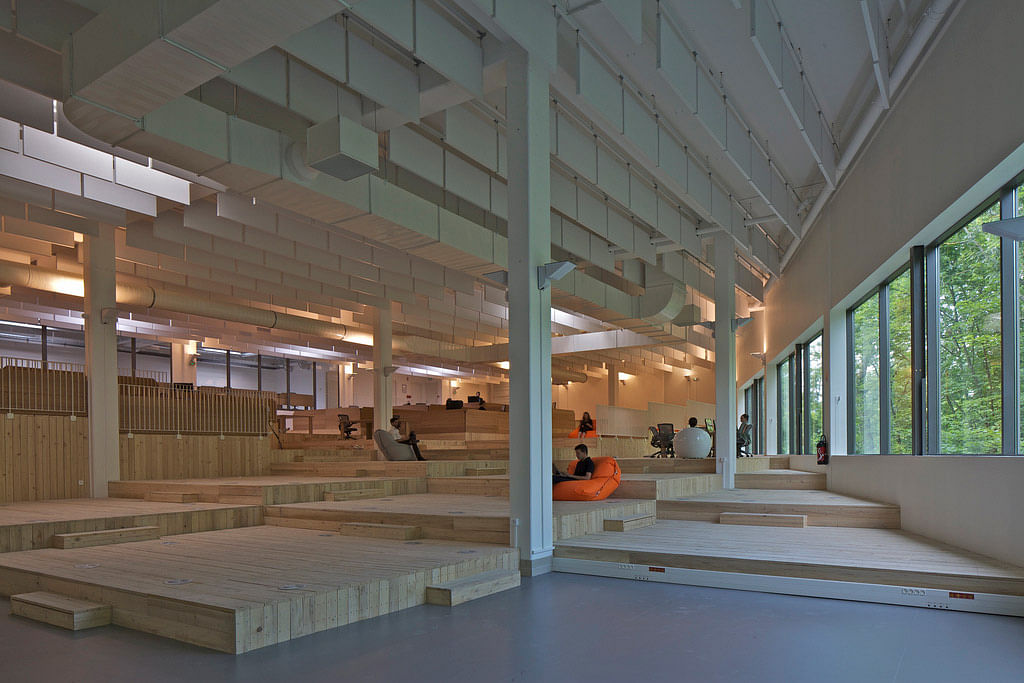
The Tribune in the heart of the building will combine formal and informal work spaces. (Photo: Philippe Ruault)

The inside is turned into a work landscape and the 600 young call centre operators will have flexible spaces: they can log in anywhere they want inside this work landscape. Different qualities such as silent, open or secluded places are offered. The way young people often work, with a laptop on the sofa or bed, was an inspiration for the interior design: the space needs to appeal to the operators to work the way they like, the space will be informally furnished with homely objects to provide a fun and creative working environment.
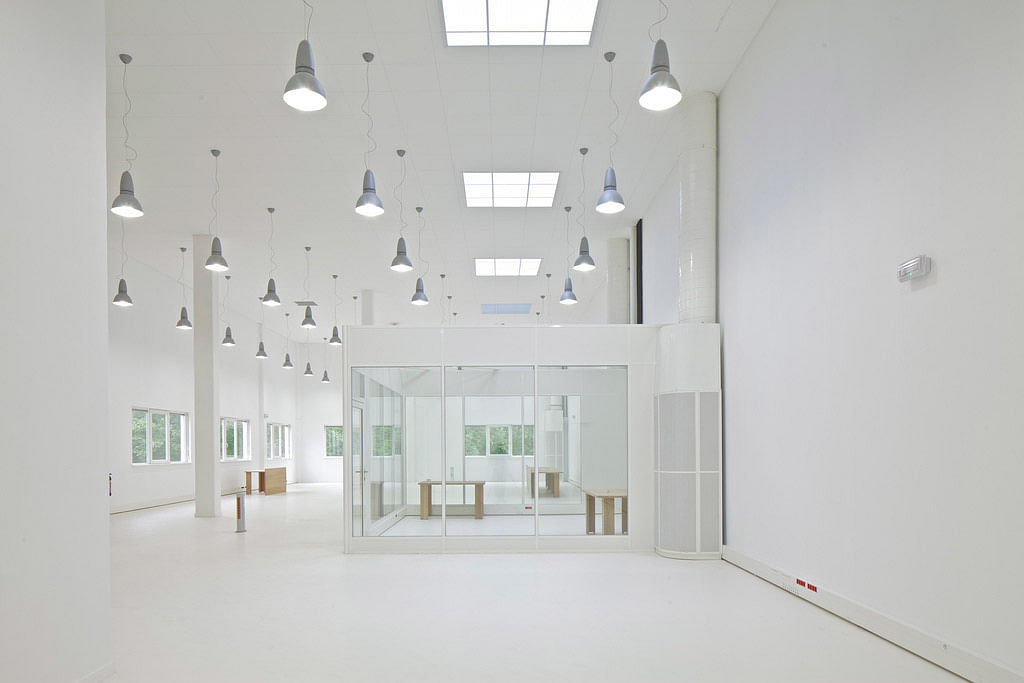
Photo: Philippe Ruault

Outside the rush hours the call centre operators will have free time in which they can make use of the education centre, fitness centre, a gallery and projects incubator, also located inside the building. A big window, entresol spaces, skylights and a large atrium are used to create a community feeling and allow for daylight penetrating  the 40 x 70 metres volume. As these interventions use up a large part of the budget other parts had to be designed as economically as possible.
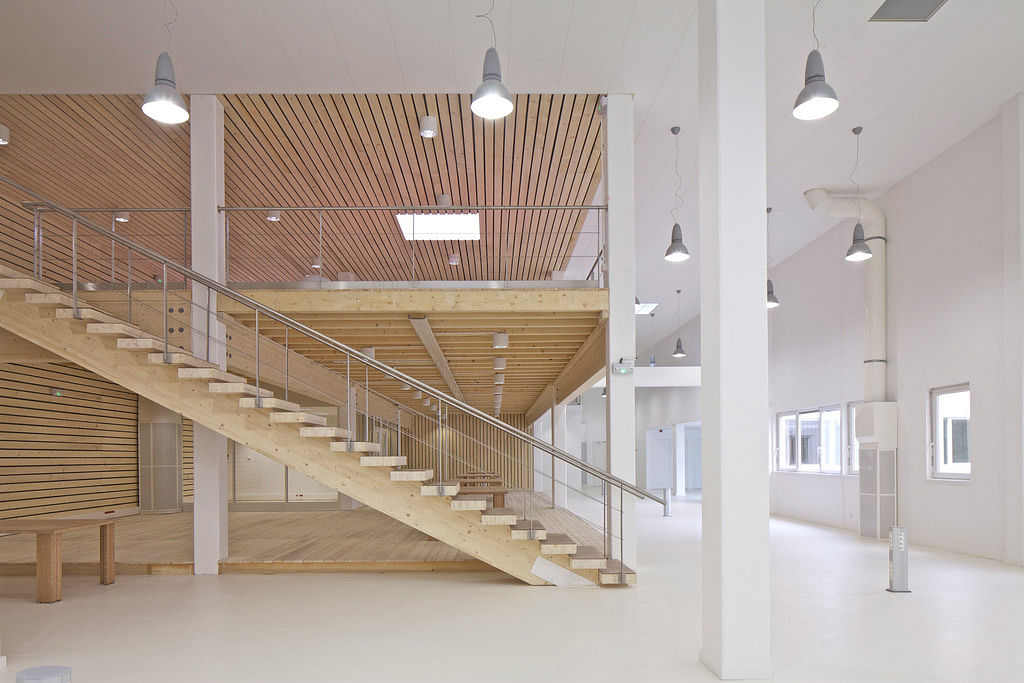
The former laboratory offers ceiling heights unprecedented for call centers. (Photo: Philippe Ruault)

The façade for example could not be exchanged but is transformed with a simple print of a QR flashcode translated into the activities of the company; the façade acts as communicator and signals the transformation. The ground floor contains parking and cannot be inhabited as the building is located on a flood plain. In many cases the budget only allowed to remove or paint the existing elements. The result however is an exciting work space and radically contradicts the usual call centre which is often a series of tedious cubicles.

Photo: Philippe Ruault

Teletech is a French service provider with call centres all over the world. In Dijon, Teletech International will experiment with this combination of call centre, education centre, leisure space and incubator to create and maintain jobs in France which are generally outsourced to developing countries. Despite the worldwide trend in this sector to reduce costs and constantly increase Taylorism, the company invests massively in its social policy along with this construction project.
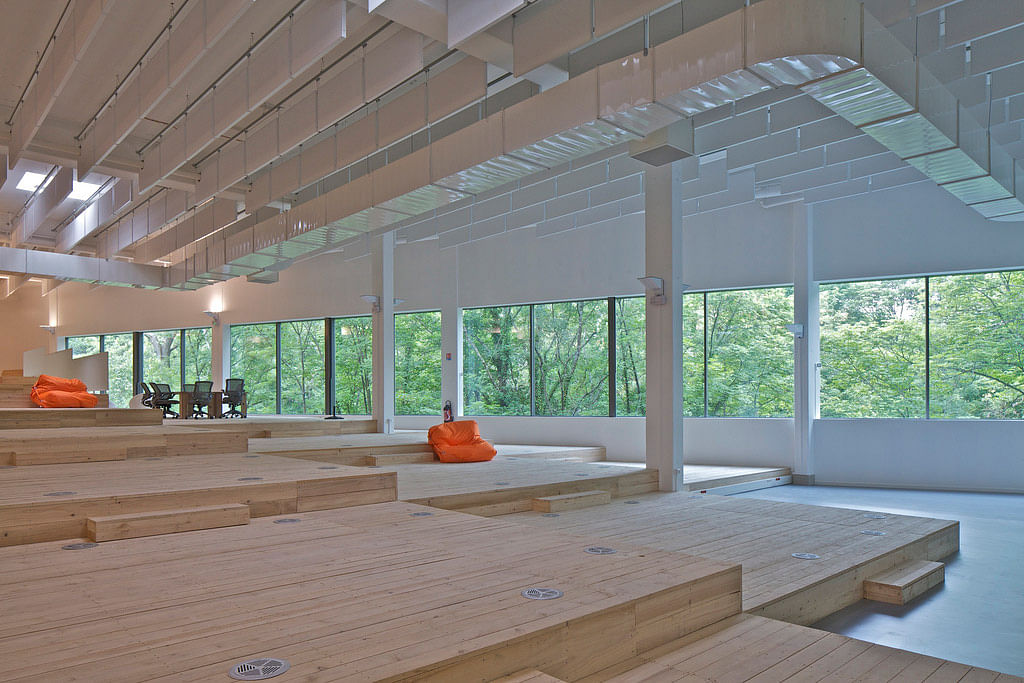
Photo: Philippe Ruault

The ambition is directed towards reinventing and revolutionising existing procedures to improve customer brand relationships through a better qualified call centre agent. Teletech International believes that a qualitative work space is a part of the solution in creating a higher level of interaction with the consumers. The company will attract, teach and keep high level profile employees on site which can offer specialised and sophisticated services. The new building and the social program are an essential part of this innovative strategy.
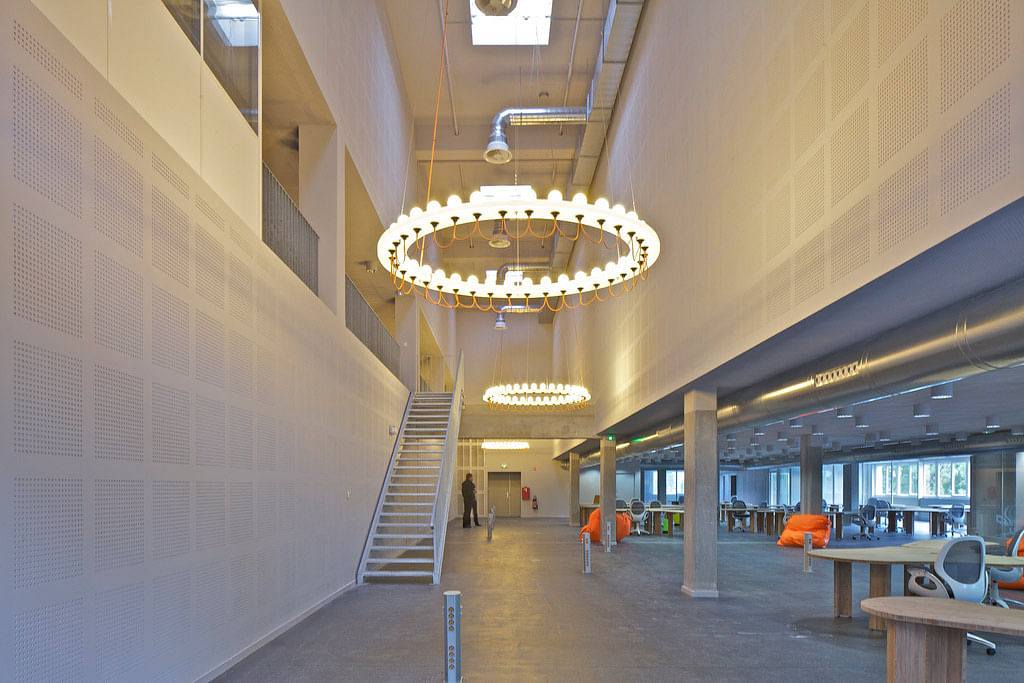
Photo: Philippe Ruault

Related

tech ● office ● mvrdv ● mustard ● lab ● france ● factory ● europe ● dijon ● call center

Share

  • Follow

    0 Comments

  • Comment as :

MVRDV's Transformation of Disused Dijon Mustard Laboratory Completed

Eight innovative timber projects honored at 2026 Wood in Architecture Awards

Beautiful brick architecture honored at BRICK AWARD 26

Over $500,000 awarded to architectural discourse projects by Graham Foundation

Best in urban planning recognized at AIA Regional & Urban Design Award 2026

Sponsored Post by Buildner

Re:Form - New Life for Old Spaces / Edition #3 advance registration deadline is approaching!

New architecture and design competitions: IDEAS Awards, UIA-HYP CUP International Student Competition, Vancouver Tall Challenge, and Memorial to the Sixth Extinction

Best small projects chosen at AIA Small Project Award 2026

10 standout sustainable projects honored at AIA COTE Top Ten Award 2026

Sign up for Bustler's Email Newsletters

Best residential architecture of 2026 honored at AIA Housing Award

Best new interiors of 2026 chosen at AIA Interior Architecture Awards

Best global architecture honored at RIBA International Awards 2026

World’s most beautiful airports of 2026 chosen by Prix Versailles

New architecture and design competitions: Brick in Architecture Awards, Study Architecture Student Showcase, N.Y.C. Groceries, and New York High Falls Riverfront Market

SmithGroup’s ‘pioneering’ Philip Merrill Environmental Center wins AIA Twenty-five Year Award

Sponsored Post by Buildner

Museum of Emotions / Edition #8 FINAL registration deadline is in 5 DAYS!

Next page » Loading

MVRDV's Transformation of Disused Dijon Mustard Laboratory Completed

By Bustler Editors|

Friday, Jul 13, 2012

Share

MVRDV Dijon Teletech Campus with QR flashcode facade (Photo: Philippe Ruault)

Related

tech ● office ● mvrdv ● mustard ● lab ● france ● factory ● europe ● dijon ● call center

Rotterdam's MVRDV has completed the transformation of a disused mustard laboratory in Dijon, France (previously on Bustler) into an innovative call center with an education center, incubator and social program.

Project Description from the Architects:

For MVRDV it represents an exemplary project: Transformation through reuse is one of the contemporary issues in European architecture since the current crisis. Completion of the 6500m2 refurbishment into a 600 work spaces call centre for operator Teletech has cost just 4 million Euro. The interventions possible on such a budget were directed towards quality enhancement with maximal maintenance of existing structure and services.

For budget reasons, the facade was extended and stickered with QR flashcodes. (Photo: MVRDV)

All over Europe buildings are vacant and waiting for a new future. Transformations are usually all about the preservation of historically or architecturally significant parts of a building. In this case the building was completed in 2004 and the preservation act directed towards reuse. The building is a former Unilever Amora Dijon mustard laboratory completed in 2004 and closed only five years later in 2009. The building was in a good state but due to its wide volume not suitable for traditional work spaces. The construction budget was too low to exchange the façade or make serious alterations to the structure. The budget makes literal reuse necessary and leads to less replacements and a better sustainable profile of the transformation act.

Before and After: Amora Laboratory becomes Teletech Campus. (Photo: MVRDV)

A fine balance between intervention and intelligent re-use of the existing is the essence of the project.  MVRDV sees this transformation as an exemplary project for contemporary European architecture in times of the current crisis. How to reuse a building which is structurally in good shape but not suitable for a traditional transformation and use? The more reuse of the existing is possible the more budget is liberated for interventions. The unusual building evokes an unusual use and in the end will adjust perfectly to the Teletech work rhythm.  

In many cases the budget only allowed to remove or paint the existing elements. (Photo: Philippe Ruault)

The Teletech call centre has rush hours in the morning, afternoon and early evening, only at these moments the building will be fully occupied by its workforce. For these short periods also unusual work places can be used which would not be suitable for eight hour shifts. The transformation strategy is adapted to this irregular use of the building.

The Tribune in the heart of the building will combine formal and informal work spaces. (Photo: Philippe Ruault)

The inside is turned into a work landscape and the 600 young call centre operators will have flexible spaces: they can log in anywhere they want inside this work landscape. Different qualities such as silent, open or secluded places are offered. The way young people often work, with a laptop on the sofa or bed, was an inspiration for the interior design: the space needs to appeal to the operators to work the way they like, the space will be informally furnished with homely objects to provide a fun and creative working environment.

Photo: Philippe Ruault

Outside the rush hours the call centre operators will have free time in which they can make use of the education centre, fitness centre, a gallery and projects incubator, also located inside the building. A big window, entresol spaces, skylights and a large atrium are used to create a community feeling and allow for daylight penetrating  the 40 x 70 metres volume. As these interventions use up a large part of the budget other parts had to be designed as economically as possible.

The former laboratory offers ceiling heights unprecedented for call centers. (Photo: Philippe Ruault)

The façade for example could not be exchanged but is transformed with a simple print of a QR flashcode translated into the activities of the company; the façade acts as communicator and signals the transformation. The ground floor contains parking and cannot be inhabited as the building is located on a flood plain. In many cases the budget only allowed to remove or paint the existing elements. The result however is an exciting work space and radically contradicts the usual call centre which is often a series of tedious cubicles.

Photo: Philippe Ruault

Teletech is a French service provider with call centres all over the world. In Dijon, Teletech International will experiment with this combination of call centre, education centre, leisure space and incubator to create and maintain jobs in France which are generally outsourced to developing countries. Despite the worldwide trend in this sector to reduce costs and constantly increase Taylorism, the company invests massively in its social policy along with this construction project.

Photo: Philippe Ruault

The ambition is directed towards reinventing and revolutionising existing procedures to improve customer brand relationships through a better qualified call centre agent. Teletech International believes that a qualitative work space is a part of the solution in creating a higher level of interaction with the consumers. The company will attract, teach and keep high level profile employees on site which can offer specialised and sophisticated services. The new building and the social program are an essential part of this innovative strategy.

Photo: Philippe Ruault

Share

  • Follow

    0 Comments

  • Comment as :

Archinect JobsArchinect Jobs

The Archinect Job Board attracts the world's top architectural design talents.

VIEW ALL JOBS POST A JOB

Junior Designer/Architect

O'Neill Rose Architects

Junior Designer/Architect

Brooklyn, NY, US

Lead Design Architect

The American Housing Corporation

Lead Design Architect

Austin, TX, US

Architectural Designer / Architect (3-5 Years Experience)

Andrew Magnes Architecture

Architectural Designer / Architect (3-5 Years Experience)

Brooklyn, NY, US

Junior/Intermediate Architect

Archimaera Architecture

Junior/Intermediate Architect

New York, NY, US

Project Manager

Populous

Project Manager

San Francisco, CA, US

Project Architect

The American Housing Corporation

Project Architect

Austin, TX, US

Technical Designer

D L English Design Studio

Technical Designer

Pasadena, CA, US

Project Captain

Practice (formerly GGA+)

Project Captain

Pasadena, CA, US

Senior Architectural Designer, Commercial Interiors - New York Office

Fogarty Finger

Senior Architectural Designer, Commercial Interiors - New York Office

New York, NY, US

Senior Associate/ Project Manager

DWY Landscape Architects

Senior Associate/ Project Manager

Sarasota, FL, US

Next page » Loading