• Login / Join
  • About
  • •
  • Contact
  • •
  • Advertising
bustler logo
bustler logo
  • News
  • Competitions
  • Events
  • Bustler is powered by Archinect
  • Sign up for Bustler's Email Newsletters

  • Follow these Bustler feeds:

  • Search

    Search in

  • Submit

    What are you submitting?

    News Pitch
    Competition
    Event
  • Login / Join
  • News|Competitions|Events
  • Search
    | Submit
    | Follow
  • Search in

    What are you submitting?

    News Pitch
    Competition
    Event

    Follow these Bustler feeds:

  • About|Contact|Advertising
  • Login / Join

Proposal for Hotel Residence in Atacama by LAN Architecture

By Bustler Editors|

Tuesday, Jan 17, 2012
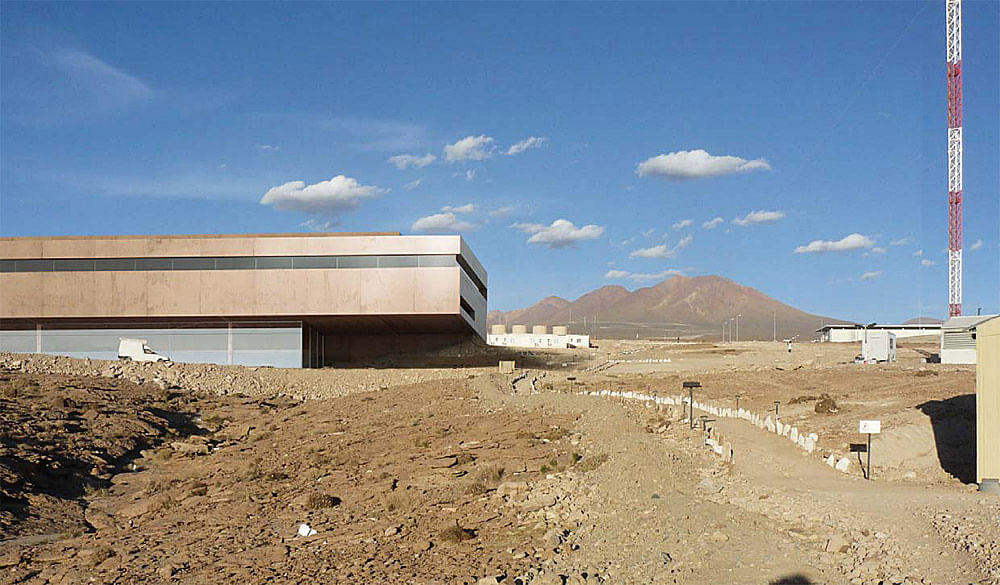
View of southwest corner (Image: LAN Architecture)

And here's another entry to the international competiton for a hotel residence at ALMA, the Atacama Large Millimeter/submillimeter Array, in the Atacama Desert, in the foothills of the Chilean Andes. This proposal here, we received from Paris-based LAN Architecture who collaborated with German structural engineers Bollinger-Grohmann.

Project Description from the Architects:

Extreme

Extreme is the word that keeps coming back on the table at the time of the study.

Extreme but necessary is the choice to implement life and activity in the region.

Extreme is the site, the climate, the drought, the light, the horizontal dimension of the territory.

Extreme is also the way the place will be used: without schedule, without rules, without connection to the site, lost in the middle of the desert.

Extreme is the fact that once there, there is no alternative but to live in this very hotel.

Extreme is also the time given to draw a project that embraces all the factors.

Facing the extreme

This is the drive that leads us, from the desert, through civilizations, techniques and architectures to an idea.

How to transcribe these conditions in a site where for thousands of years the phenomenon hasn’t been generated by itself? How to import urbanity in an area where nature overwhelms man?
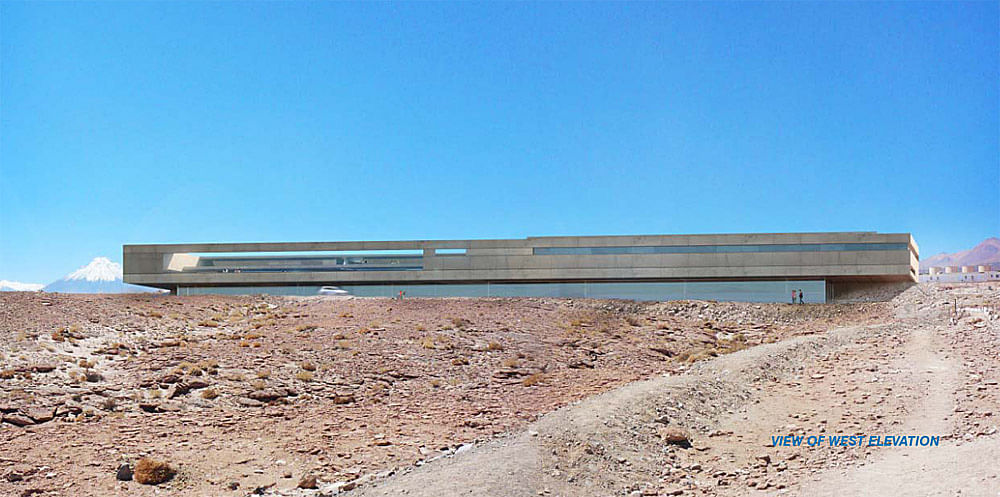
View of west elevation (Image: LAN Architecture)

The hotel project rapidly became a small city project, a human settlement in which is combined habitat, commerce, education, politics, culture.

To achieve the announced objective we set a strategy where each component of the project plays an essential role in the definition of the whole: rooms becomes roof, roof is a plaza, the plaza a window, the window a façade, the façade a landscape, etc.
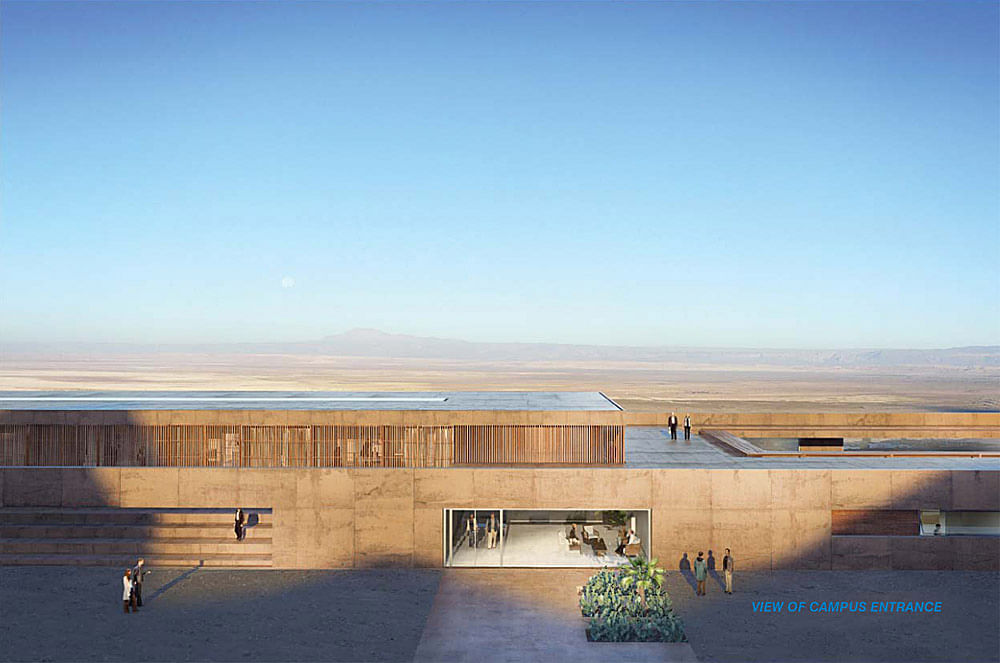
View of campus entrance (Image: LAN Architecture)

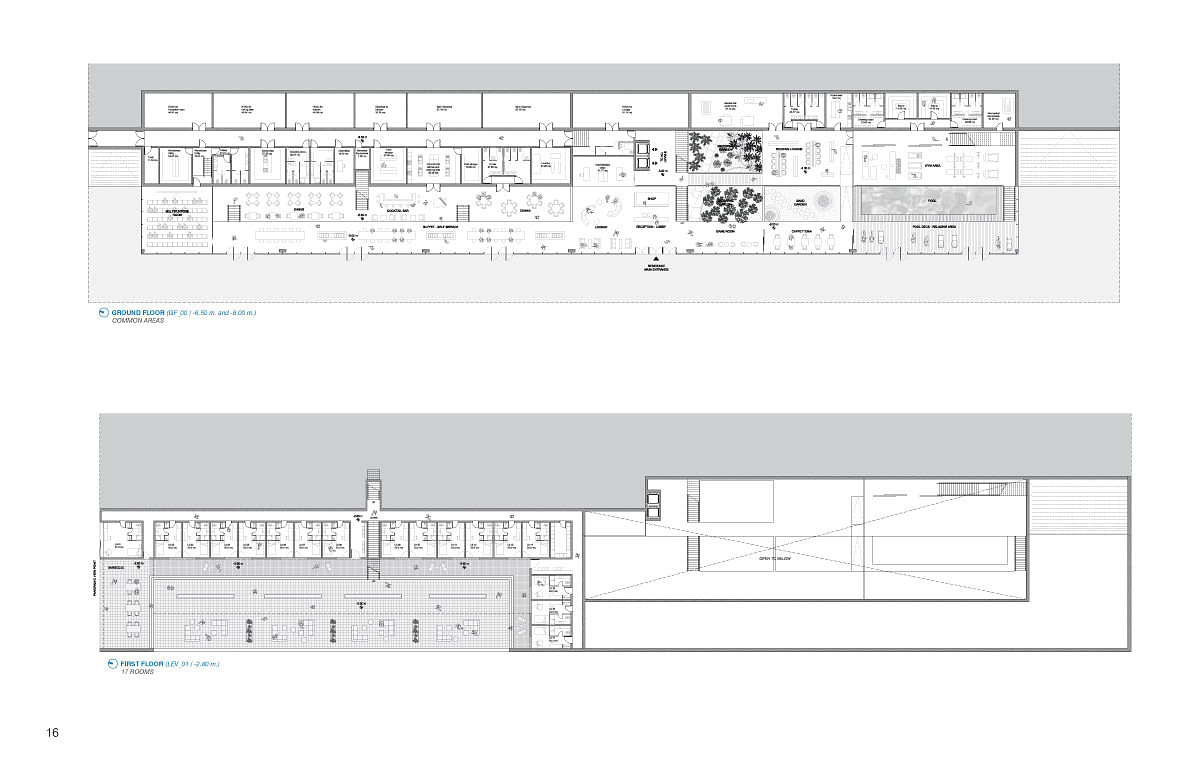
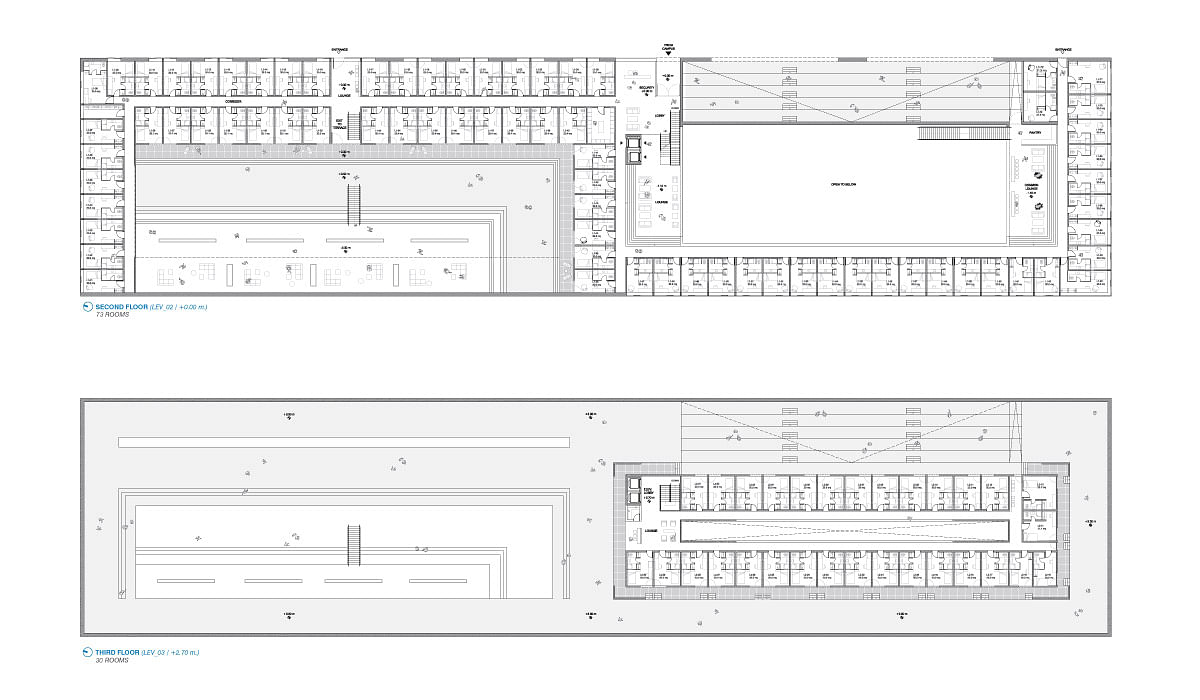
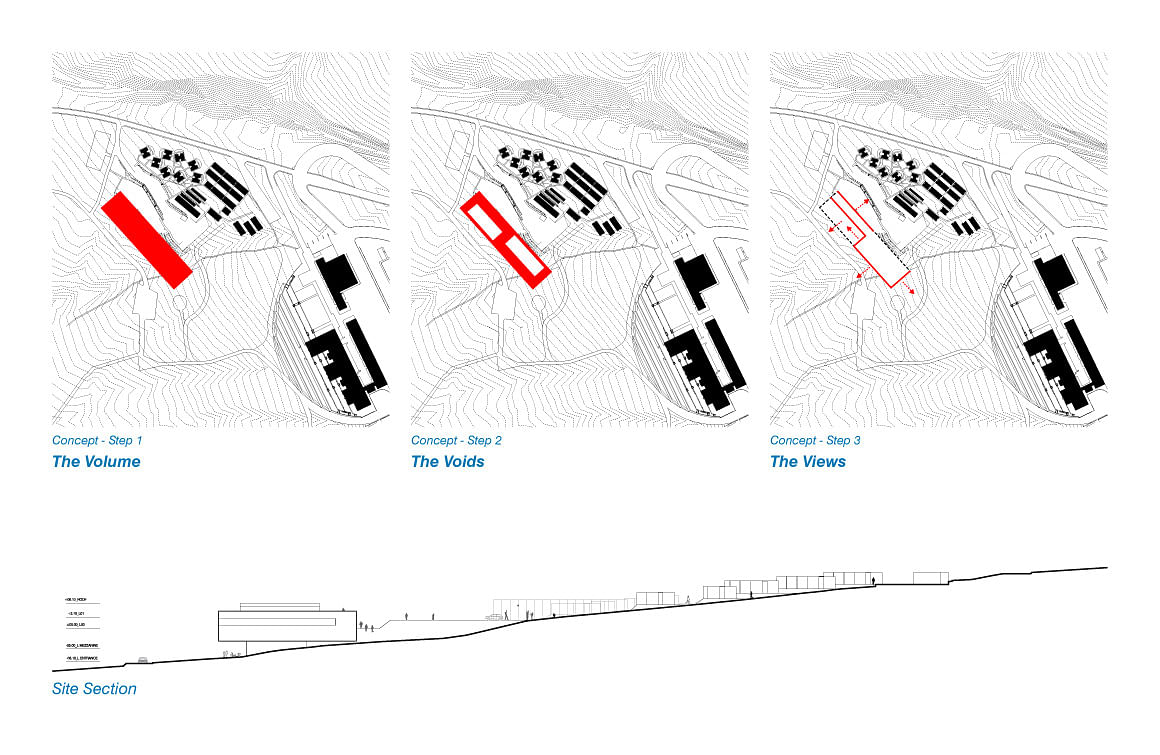
The building consists of a low rise hotel and recreational complex. It measures 32,7m x 144,8m. Spread over three levels and dug partially into the slope it appears to float above the contour lines and is orientated to the west, parallel to the slope with views towards the Salar of Atacama.

The principle theme of the project is to generate transitional spaces between outside and inside that reduce energy needs and offer a variety of different situations.
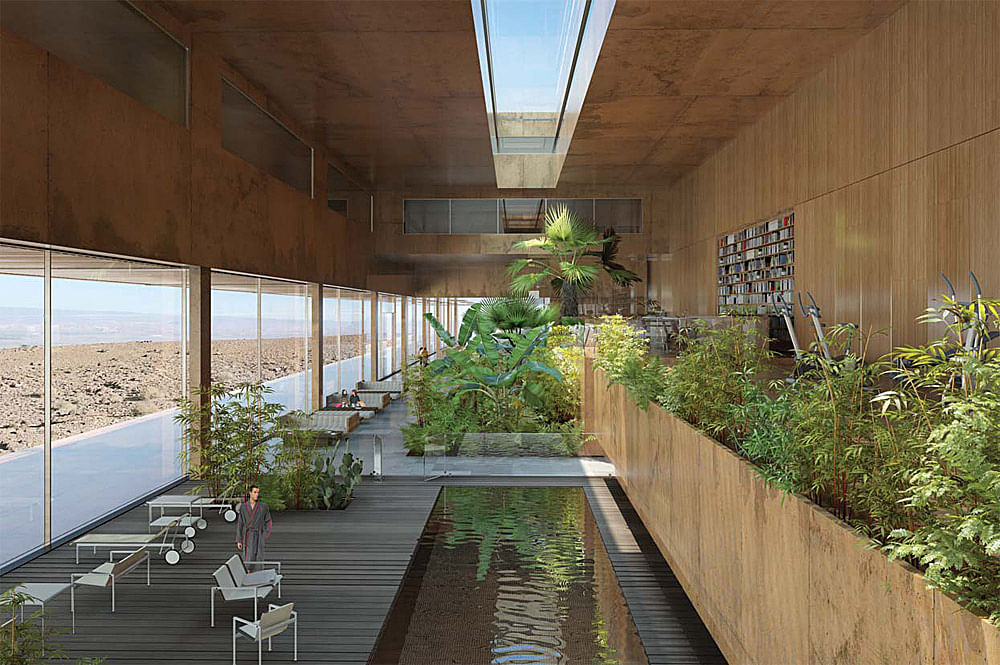
Interior view of pool area and garden (Image: LAN Architecture)

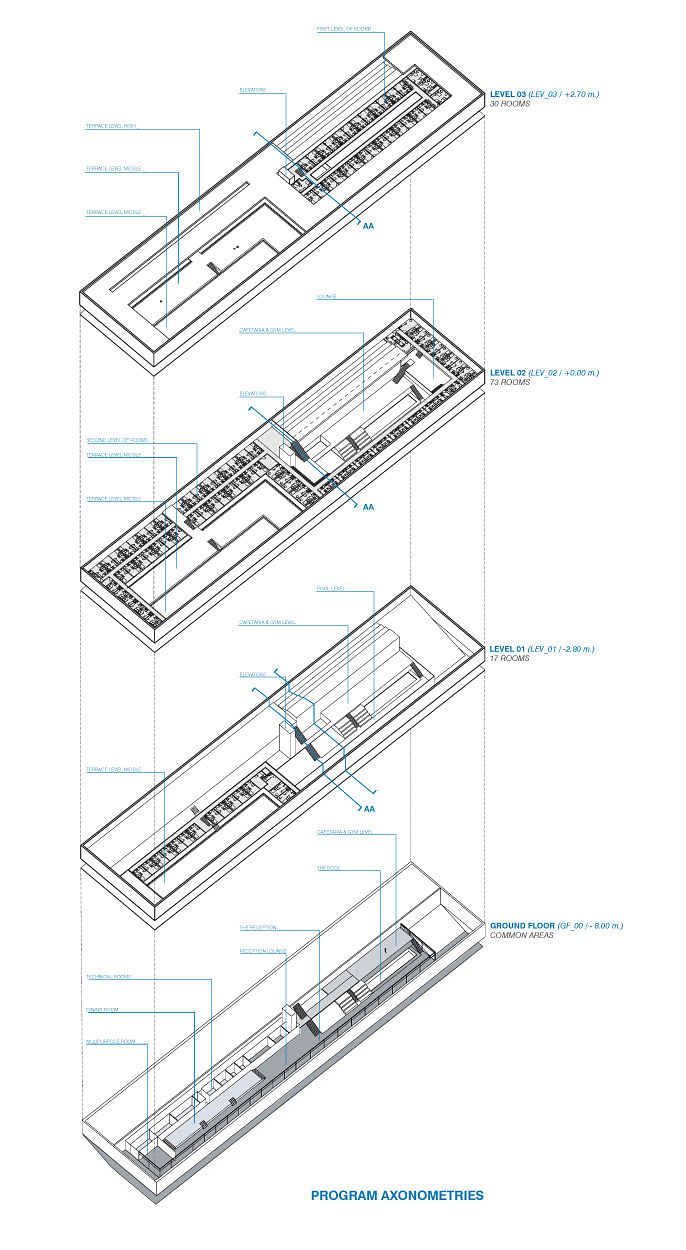
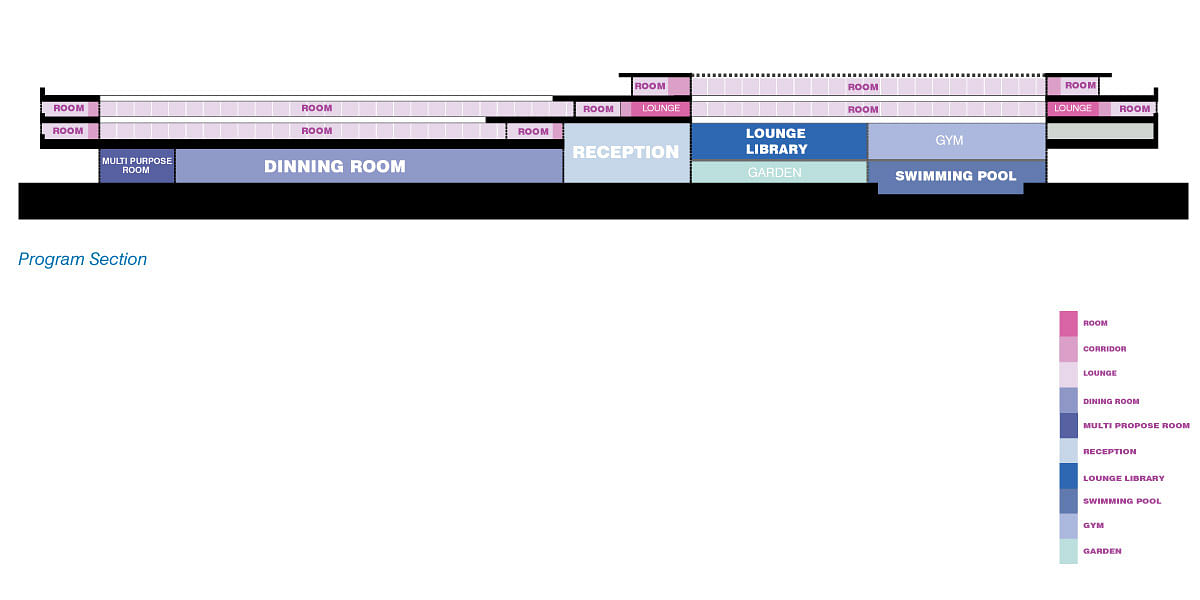
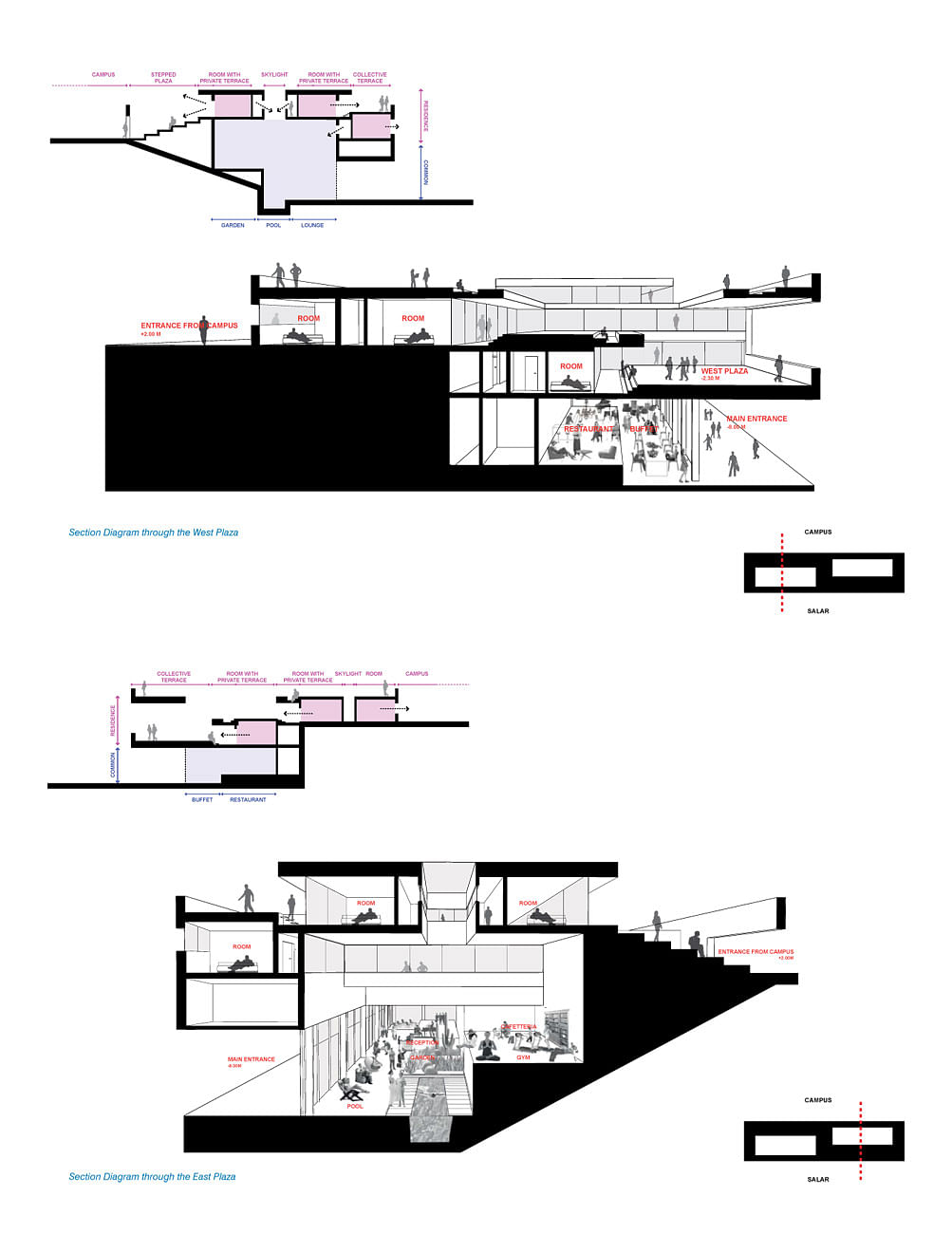
We split the residence program in two distinctive horizontal sections: the upper zone dedicated to the guest’s rooms and the below zone which address the common areas.

In order to limit the impact of the operation on the site, the room system takes place on the higher plateau, taking advantage of the different levels on the site, protects and defines therefore spaces located on the lower level.
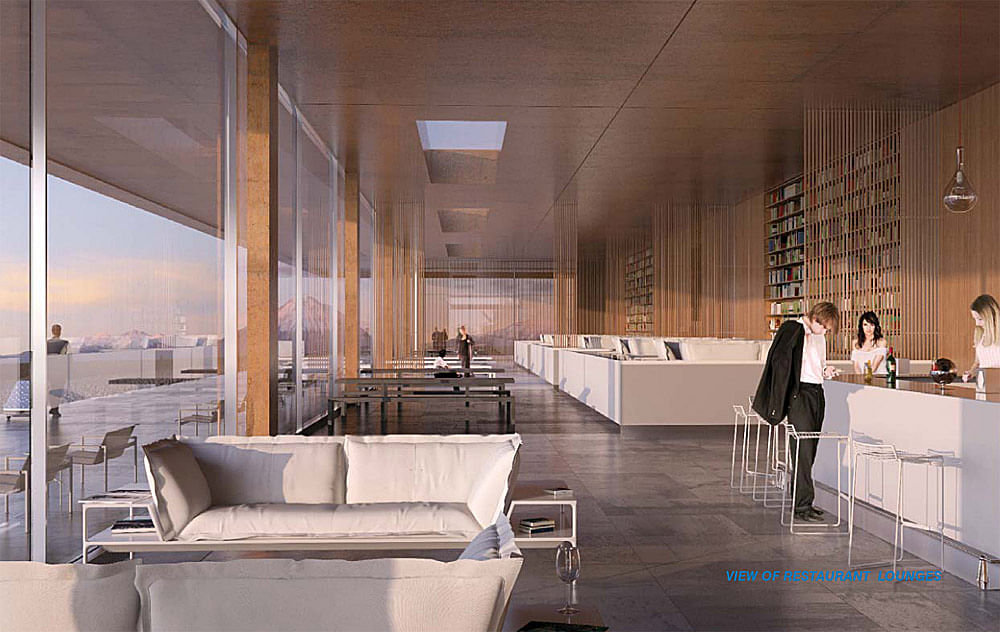
Interior view of restaurant lounge (Image: LAN Architecture)

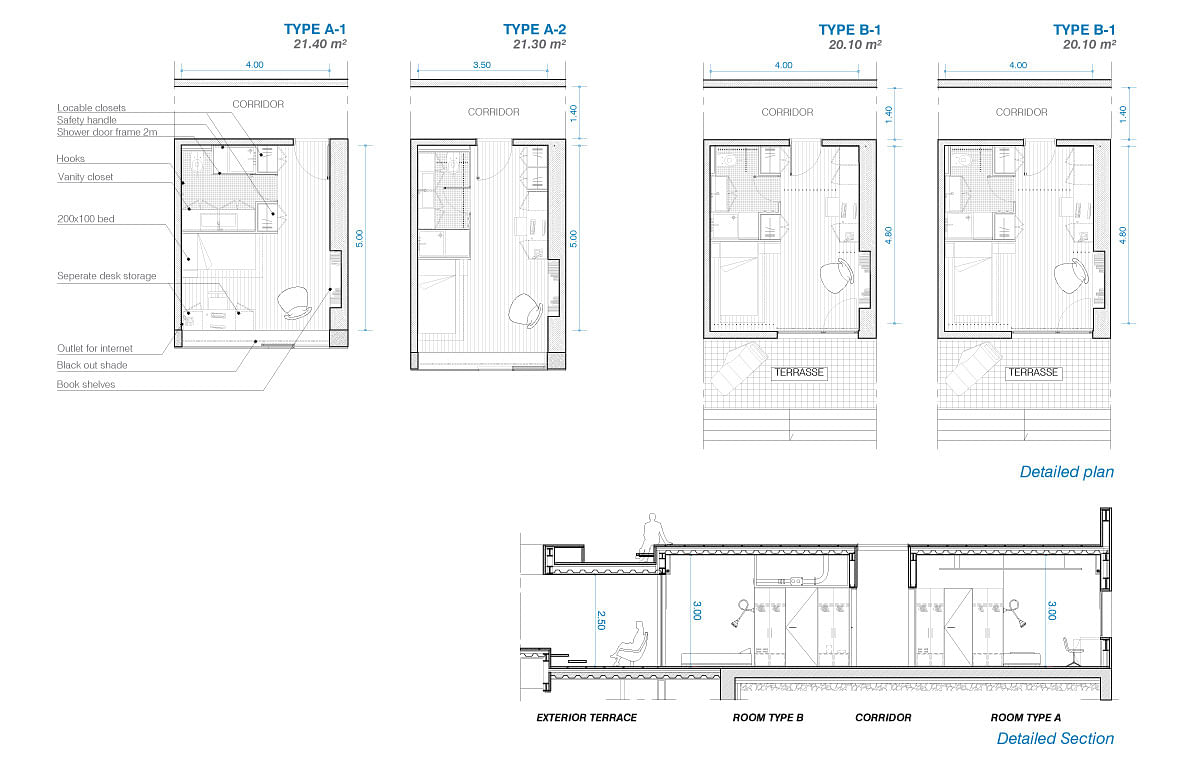
The Residence’s rooms are distributed on three levels: the majority of the suites are allocated at level two, with direct access and security-control entrances from and to the campus. This floor is internally connected to the lower common areas as well as to the other two floors of rooms. 

All the rooms benefit of exterior views as well as connections towards the east and west plaza, whose geometry generates semi-private terraces and more open collective zone where to socialize.

Due to the scale and variety of lounge’s sizes the common space at the rooms floors range from small and intimate spaces to the extreme of the plaza’s openness.
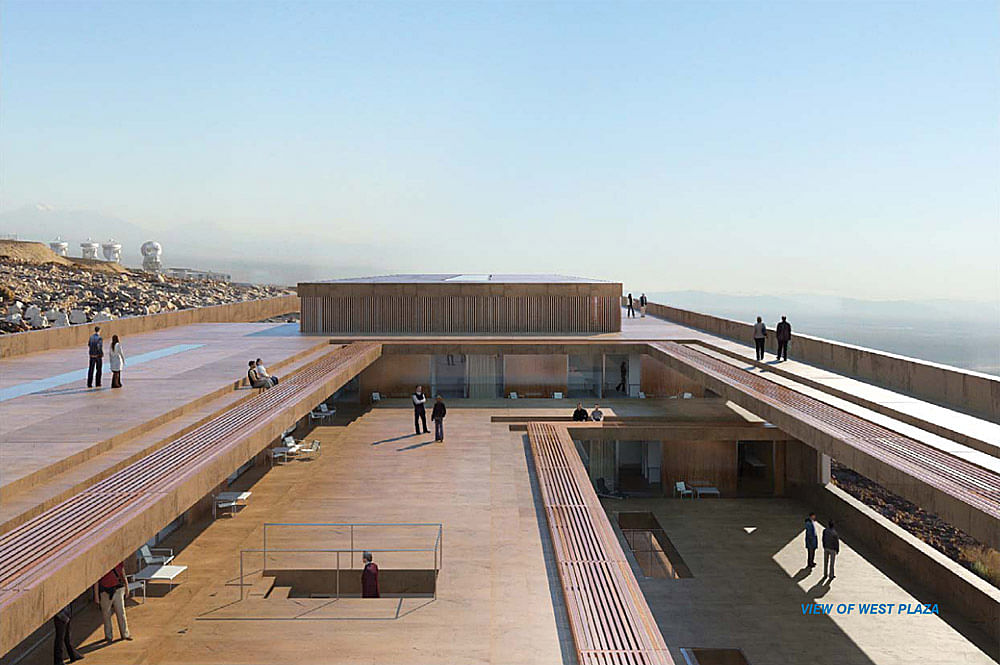
View of west plaza (Image: LAN Architecture)

Orientation and views were the principle factor that guided the layout of the room.

49% of the rooms are oriented towards west, 24% towards east, 17% towards north and 10% towards south. This layout generates two “piazzas” east and west that can be used at different time in the day depending on the sun.

The layout and the organization of the upper part of the project define the common spaces.

The main entrance to the residence is at the ground floor, at level -8.00 m, where all the reception services are gathered.
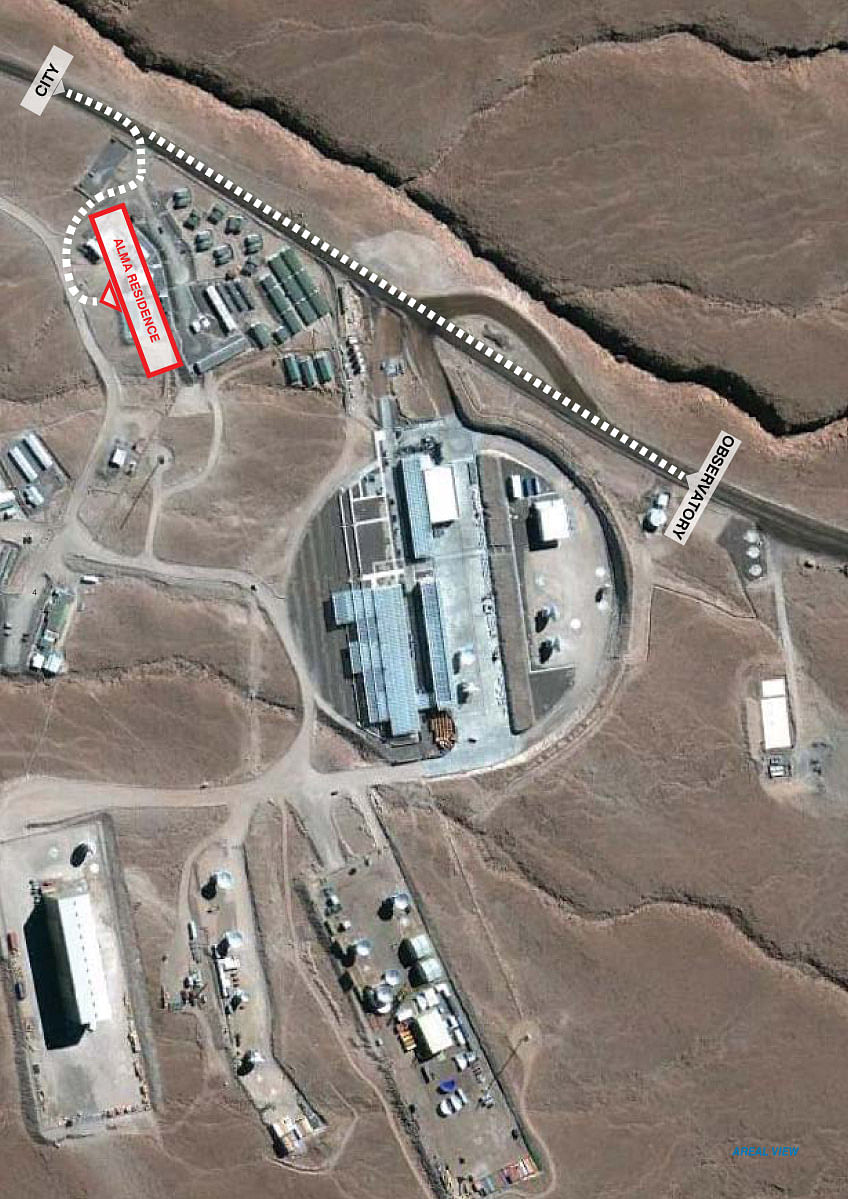
Aerial view (Image: LAN Architecture)

At this floor, the overall organization of the program divides the space in a wet area, where to find all the sport activities as well as the gardens, versus the dry zone, where to find the restaurants lounges and the multipurpose room. The two zone have been customized and accurately designed in order to fit the specificity of the building’ s section:  where the  water reflects the slot of light coming from the last level, the restaurant expands towards the above west plaza.

The restaurant with its 5m high ceiling ending with an open roof slit, the space is visually connected with the west piazza and the horizon becomes the protagonist of its identity, the latter participates by its light and colors to the identity of the space. The space will be used around the clock and should be able to accommodate simultaneously big gatherings, small groups and individuals.
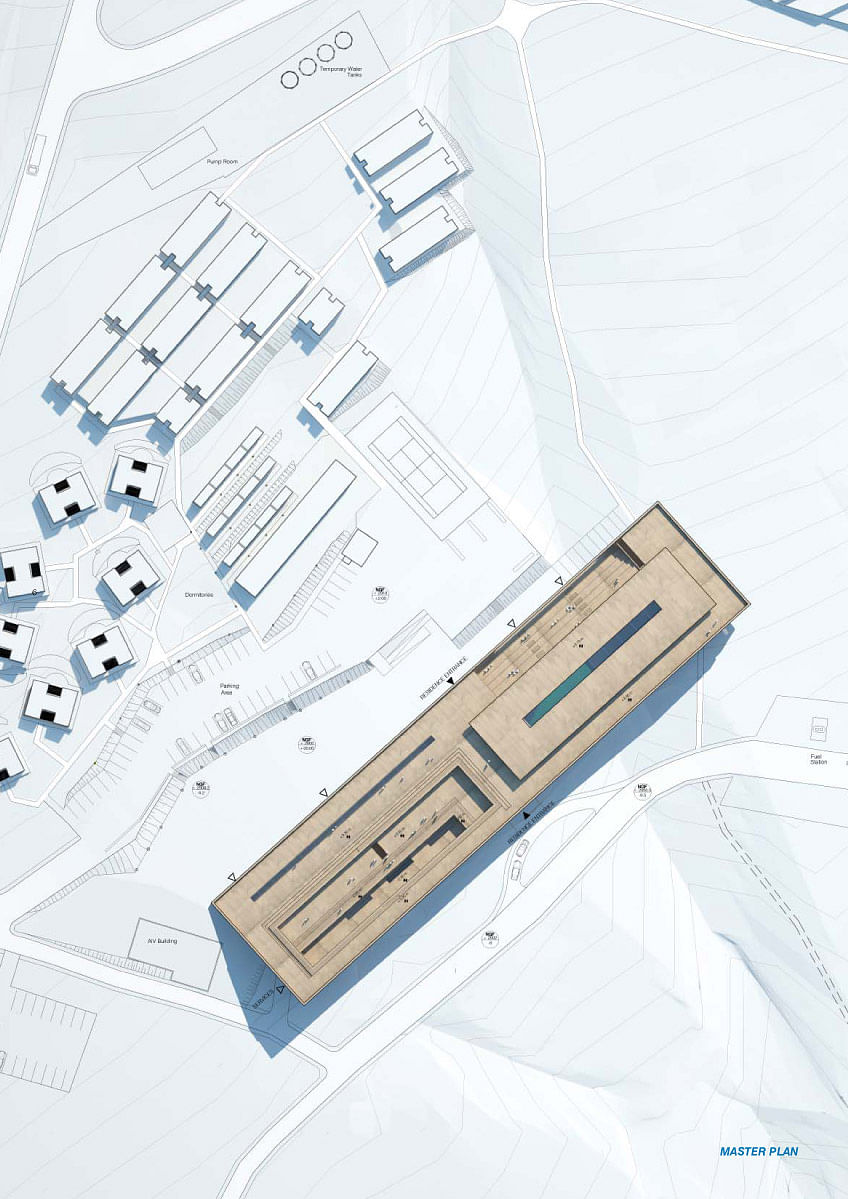
Master plan (Image: LAN Architecture)

The swimming pool part with its 12m high ceiling is a kind of programmed winter garden, an interior landscaped area that offers a very different microclimate from the exterior environment.

The desert is still present but not in a hostile way anymore, it is softened and promotes a friendly atmosphere.

The climate of the Atacama Desert is very particular, and although it is experienced as extreme and inhospitable, the temperatures are not that extreme, at least, not at the altitude of the site at 2900m.

Solar radiation is important as it is paired with practically non cloud cover.

As a result, people and buildings are exposed to a high degree of insolation during the day, almost all the year round, and at night. So if one is protected from the sun and the wind whilst enjoying the outside heat, we can experience one of the most enjoyable climates.
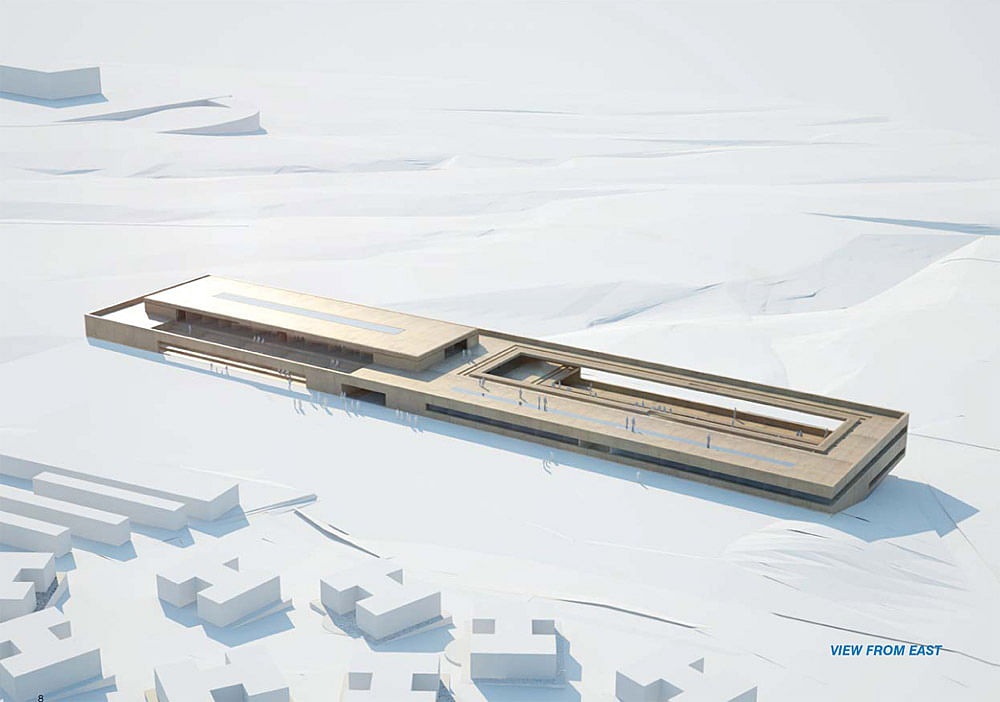
View from east (Image: LAN Architecture)

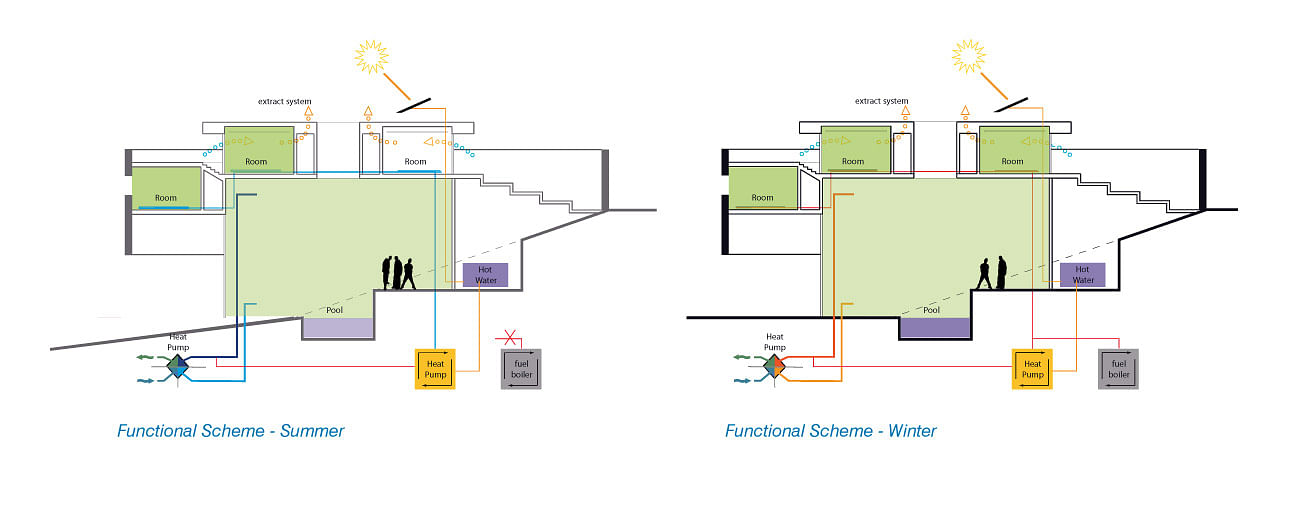
The bioclimatic design is based on the solar protection and limiting heat loss at night.

The strategy is based on a structure of staggered floors offering sun protection and allows the creation of buffer zones that limit convection. These spaces are also an exterior extension of the dwelling.

The aim is to limit the buildings gross requirements in terms of heating, cooling and lighting. The effect is to smooth out the outside temperature curve while limiting the effects of wind and radiation.

The building is conceived as a steel skeleton structure with columns, steel trusses, lightweight infill and composite steel floors. The steel construction allows for a high degree of prefabrication and thus limitation of labor time on site, an optimized weight for the building and a highly ductile structure which can respond well to the high seismic loads and which allows for a high flexibility in the use of the building.
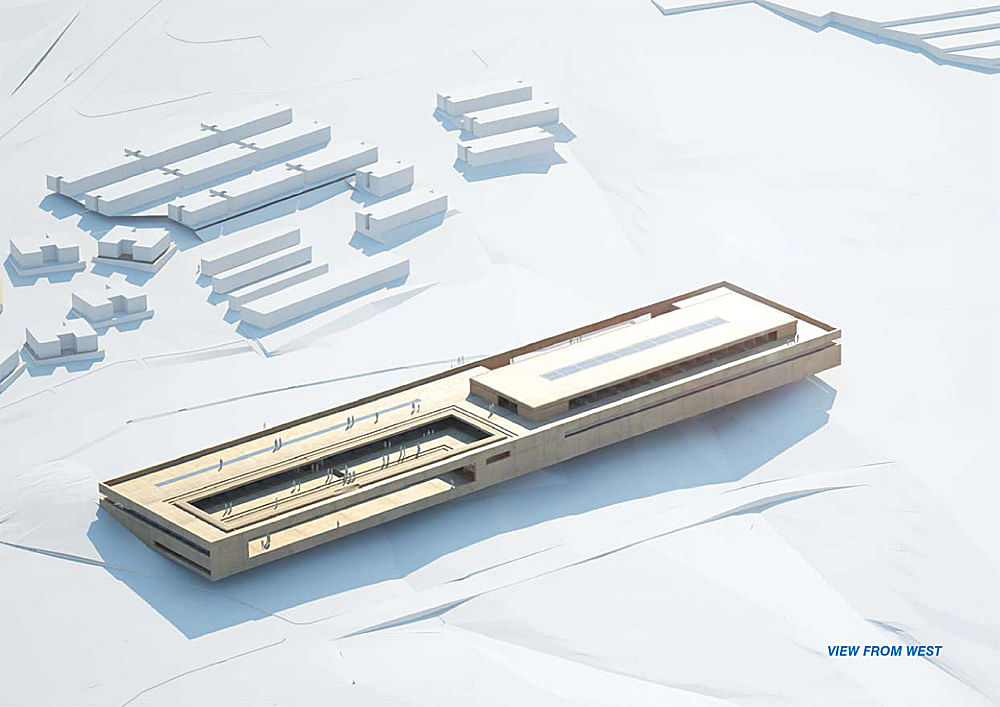
View from west (Image: LAN Architecture)

Project Description from the Architects:

Project: Construction of a Hotel Residence of 120 rooms
Client: European Organization for Astronomical Research in the Southern Hemisphere
Location: ALMA Operations Support Facility in the Atacama Desert, near San Pedro de Atacama in northern Chile
Budget: € 7, 7 M Excl. VAT
Project surface: 5,800 m²
Competition: 2011
Team: LAN Architecture (lead architect), Bollinger-Grohmann (structure)

Check the image gallery below for more diagrams and plans.
Related

science ● research ● observatory ● latin america ● lan architecture ● lan ● chile ● bollinger-grohmann ● atacama ● alma

Share

  • Follow

    0 Comments

  • Comment as :

Proposal for Hotel Residence in Atacama by LAN Architecture

Northwestern University selects 12-firm longlist to design new engineering building

New architecture and design competitions: Exploring 130 Years of American Design, Christo & Jeanne-Claude Center, 13 White Houses, and La Pyramide

Micro-architecture honored in latest Tiny House Architecture Competition

World’s most beautiful restaurants of 2026 chosen by Prix Versailles

Sponsored Post by Buildner

Design a wine tasting room in Italy! Valli Wine Tasting Room is launched!

10 can't-miss architecture & design events to see this June in London, Los Angeles, Chicago, San Francisco, Detroit, San Diego, Porto, and Barcelona

Sponsored Post by Buildner

Museum of Emotions / Edition #8 FINAL registration deadline is approaching!

Seven global projects make AR Public Awards shortlist 2026

Sign up for Bustler's Email Newsletters

Sponsored Post by Buildner

Design a slow-living restaurant in Portugal! Portugal Long Table Restaurant is launched!

World's best tall buildings honored at the CVU 2026 Award of Excellence

Sponsored Post by TWOPAGES

Final call: TWOPAGES X Design Contest 2026 submissions close June 5

Kengo Kuma & Paul Raff win Alberta national park visitor center competition with landscape-focused design

2026 Moira Gemmill and MJ Long prizes announced by W Awards

New architecture and design competitions: Kinderspace, Stewardson Keefe LeBrun Travel Grant, SMALL PROJECT BIG IMPACT, and Garden of University House, Bucharest

The Century of Gehry: New retrospective explores the late architect's work & collaborations

Next page » Loading

Proposal for Hotel Residence in Atacama by LAN Architecture

By Bustler Editors|

Tuesday, Jan 17, 2012

Share

View of southwest corner (Image: LAN Architecture)

Related

science ● research ● observatory ● latin america ● lan architecture ● lan ● chile ● bollinger-grohmann ● atacama ● alma

And here's another entry to the international competiton for a hotel residence at ALMA, the Atacama Large Millimeter/submillimeter Array, in the Atacama Desert, in the foothills of the Chilean Andes. This proposal here, we received from Paris-based LAN Architecture who collaborated with German structural engineers Bollinger-Grohmann.

Project Description from the Architects:

Extreme

Extreme is the word that keeps coming back on the table at the time of the study.

Extreme but necessary is the choice to implement life and activity in the region.

Extreme is the site, the climate, the drought, the light, the horizontal dimension of the territory.

Extreme is also the way the place will be used: without schedule, without rules, without connection to the site, lost in the middle of the desert.

Extreme is the fact that once there, there is no alternative but to live in this very hotel.

Extreme is also the time given to draw a project that embraces all the factors.

Facing the extreme

This is the drive that leads us, from the desert, through civilizations, techniques and architectures to an idea.

How to transcribe these conditions in a site where for thousands of years the phenomenon hasn’t been generated by itself? How to import urbanity in an area where nature overwhelms man?

View of west elevation (Image: LAN Architecture)

The hotel project rapidly became a small city project, a human settlement in which is combined habitat, commerce, education, politics, culture.

To achieve the announced objective we set a strategy where each component of the project plays an essential role in the definition of the whole: rooms becomes roof, roof is a plaza, the plaza a window, the window a façade, the façade a landscape, etc.

View of campus entrance (Image: LAN Architecture)

The building consists of a low rise hotel and recreational complex. It measures 32,7m x 144,8m. Spread over three levels and dug partially into the slope it appears to float above the contour lines and is orientated to the west, parallel to the slope with views towards the Salar of Atacama.

The principle theme of the project is to generate transitional spaces between outside and inside that reduce energy needs and offer a variety of different situations.

Interior view of pool area and garden (Image: LAN Architecture)

We split the residence program in two distinctive horizontal sections: the upper zone dedicated to the guest’s rooms and the below zone which address the common areas.

In order to limit the impact of the operation on the site, the room system takes place on the higher plateau, taking advantage of the different levels on the site, protects and defines therefore spaces located on the lower level.

Interior view of restaurant lounge (Image: LAN Architecture)

The Residence’s rooms are distributed on three levels: the majority of the suites are allocated at level two, with direct access and security-control entrances from and to the campus. This floor is internally connected to the lower common areas as well as to the other two floors of rooms. 

All the rooms benefit of exterior views as well as connections towards the east and west plaza, whose geometry generates semi-private terraces and more open collective zone where to socialize.

Due to the scale and variety of lounge’s sizes the common space at the rooms floors range from small and intimate spaces to the extreme of the plaza’s openness.

View of west plaza (Image: LAN Architecture)

Orientation and views were the principle factor that guided the layout of the room.

49% of the rooms are oriented towards west, 24% towards east, 17% towards north and 10% towards south. This layout generates two “piazzas” east and west that can be used at different time in the day depending on the sun.

The layout and the organization of the upper part of the project define the common spaces.

The main entrance to the residence is at the ground floor, at level -8.00 m, where all the reception services are gathered.

Aerial view (Image: LAN Architecture)

At this floor, the overall organization of the program divides the space in a wet area, where to find all the sport activities as well as the gardens, versus the dry zone, where to find the restaurants lounges and the multipurpose room. The two zone have been customized and accurately designed in order to fit the specificity of the building’ s section:  where the  water reflects the slot of light coming from the last level, the restaurant expands towards the above west plaza.

The restaurant with its 5m high ceiling ending with an open roof slit, the space is visually connected with the west piazza and the horizon becomes the protagonist of its identity, the latter participates by its light and colors to the identity of the space. The space will be used around the clock and should be able to accommodate simultaneously big gatherings, small groups and individuals.

Master plan (Image: LAN Architecture)

The swimming pool part with its 12m high ceiling is a kind of programmed winter garden, an interior landscaped area that offers a very different microclimate from the exterior environment.

The desert is still present but not in a hostile way anymore, it is softened and promotes a friendly atmosphere.

The climate of the Atacama Desert is very particular, and although it is experienced as extreme and inhospitable, the temperatures are not that extreme, at least, not at the altitude of the site at 2900m.

Solar radiation is important as it is paired with practically non cloud cover.

As a result, people and buildings are exposed to a high degree of insolation during the day, almost all the year round, and at night. So if one is protected from the sun and the wind whilst enjoying the outside heat, we can experience one of the most enjoyable climates.

View from east (Image: LAN Architecture)

The bioclimatic design is based on the solar protection and limiting heat loss at night.

The strategy is based on a structure of staggered floors offering sun protection and allows the creation of buffer zones that limit convection. These spaces are also an exterior extension of the dwelling.

The aim is to limit the buildings gross requirements in terms of heating, cooling and lighting. The effect is to smooth out the outside temperature curve while limiting the effects of wind and radiation.

The building is conceived as a steel skeleton structure with columns, steel trusses, lightweight infill and composite steel floors. The steel construction allows for a high degree of prefabrication and thus limitation of labor time on site, an optimized weight for the building and a highly ductile structure which can respond well to the high seismic loads and which allows for a high flexibility in the use of the building.

View from west (Image: LAN Architecture)

Project Description from the Architects:

Project: Construction of a Hotel Residence of 120 rooms
Client: European Organization for Astronomical Research in the Southern Hemisphere
Location: ALMA Operations Support Facility in the Atacama Desert, near San Pedro de Atacama in northern Chile
Budget: € 7, 7 M Excl. VAT
Project surface: 5,800 m²
Competition: 2011
Team: LAN Architecture (lead architect), Bollinger-Grohmann (structure)

Check the image gallery below for more diagrams and plans.
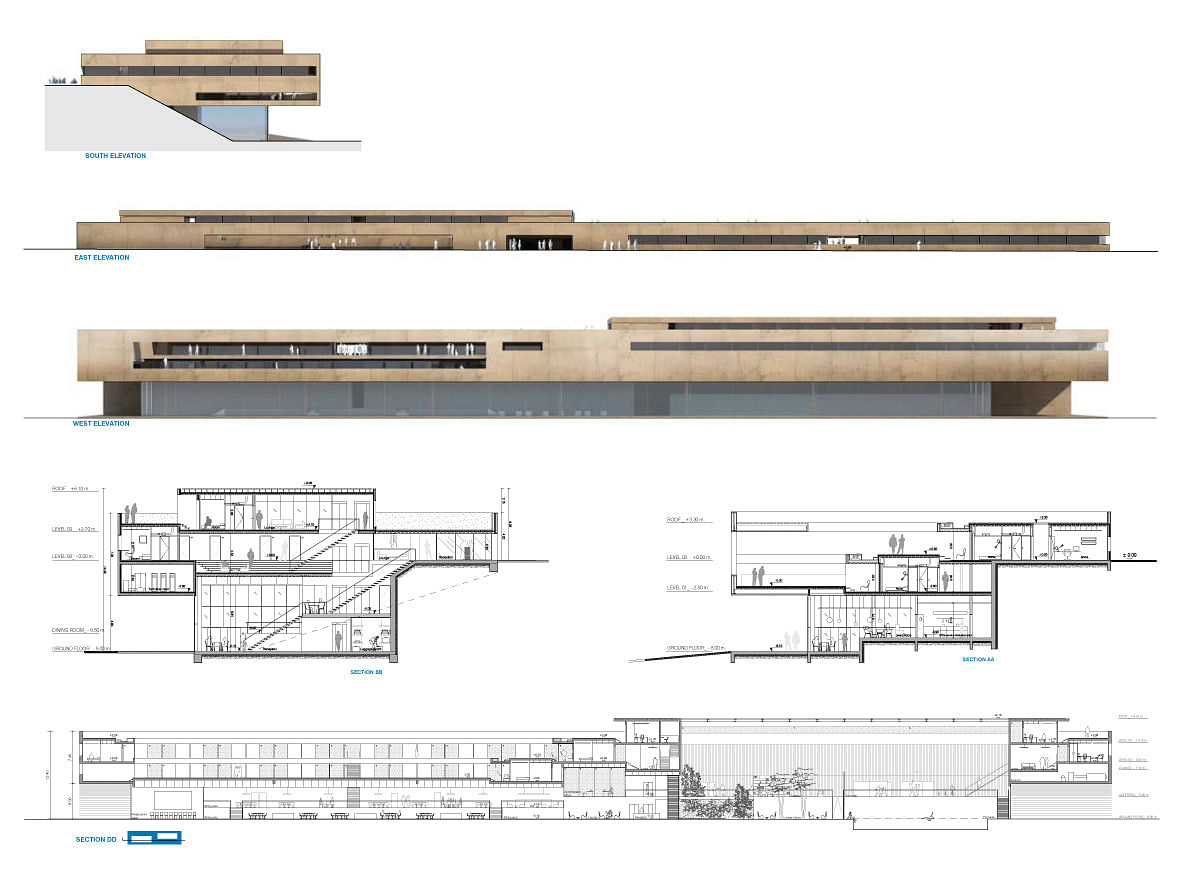
Share

  • Follow

    0 Comments

  • Comment as :

Archinect JobsArchinect Jobs

The Archinect Job Board attracts the world's top architectural design talents.

VIEW ALL JOBS POST A JOB

Intermediate Architect/Designer

DXA Studio

Intermediate Architect/Designer

New York, NY, US

Project Architect/Interior Designer

IMC Architecture

Project Architect/Interior Designer

Brooklyn, NY, US

Office Assistant / Studio Coordinator

Beinfield Architecture PC

Office Assistant / Studio Coordinator

Norwalk, CT, US

Project Architect

Turpentine Design

Project Architect

Fuquay-Varina, NC, US

Architect / Urban Designer

Office for the Next Environment (OFTN)

Architect / Urban Designer

New York, NY, US

Project Manager / Project Architect (5–10 Years’ Experience)

Millan Architect / Studio Inc.

Project Manager / Project Architect (5–10 Years’ Experience)

Venice, CA, US

Architectural Project Manager - Multifamily

DAHLIN ARCHITECTURE | PLANNING | INTERIORS

Architectural Project Manager - Multifamily

Irvine, CA, US

Architectural Designer

Build Block Inc.

Architectural Designer

Los Angeles, CA, US

Architects with 4-10 Years' Experience

Adamson Associates, Inc.

Architects with 4-10 Years' Experience

Los Angeles, CA, US

Architectural Designer

Equal Equal

Architectural Designer

Brooklyn, NY, US

Next page » Loading