• Login / Join
  • About
  • •
  • Contact
  • •
  • Advertising
bustler logo
bustler logo
  • News
  • Competitions
  • Events
  • Bustler is powered by Archinect
  • Sign up for Bustler's Email Newsletters

  • Follow these Bustler feeds:

  • Search

    Search in

  • Submit

    What are you submitting?

    News Pitch
    Competition
    Event
  • Login / Join
  • News|Competitions|Events
  • Search
    | Submit
    | Follow
  • Search in

    What are you submitting?

    News Pitch
    Competition
    Event

    Follow these Bustler feeds:

  • About|Contact|Advertising
  • Login / Join

RIBA Stirling Prize 2010 Shortlist Announced

By Bustler Editors|

Thursday, Jul 22, 2010
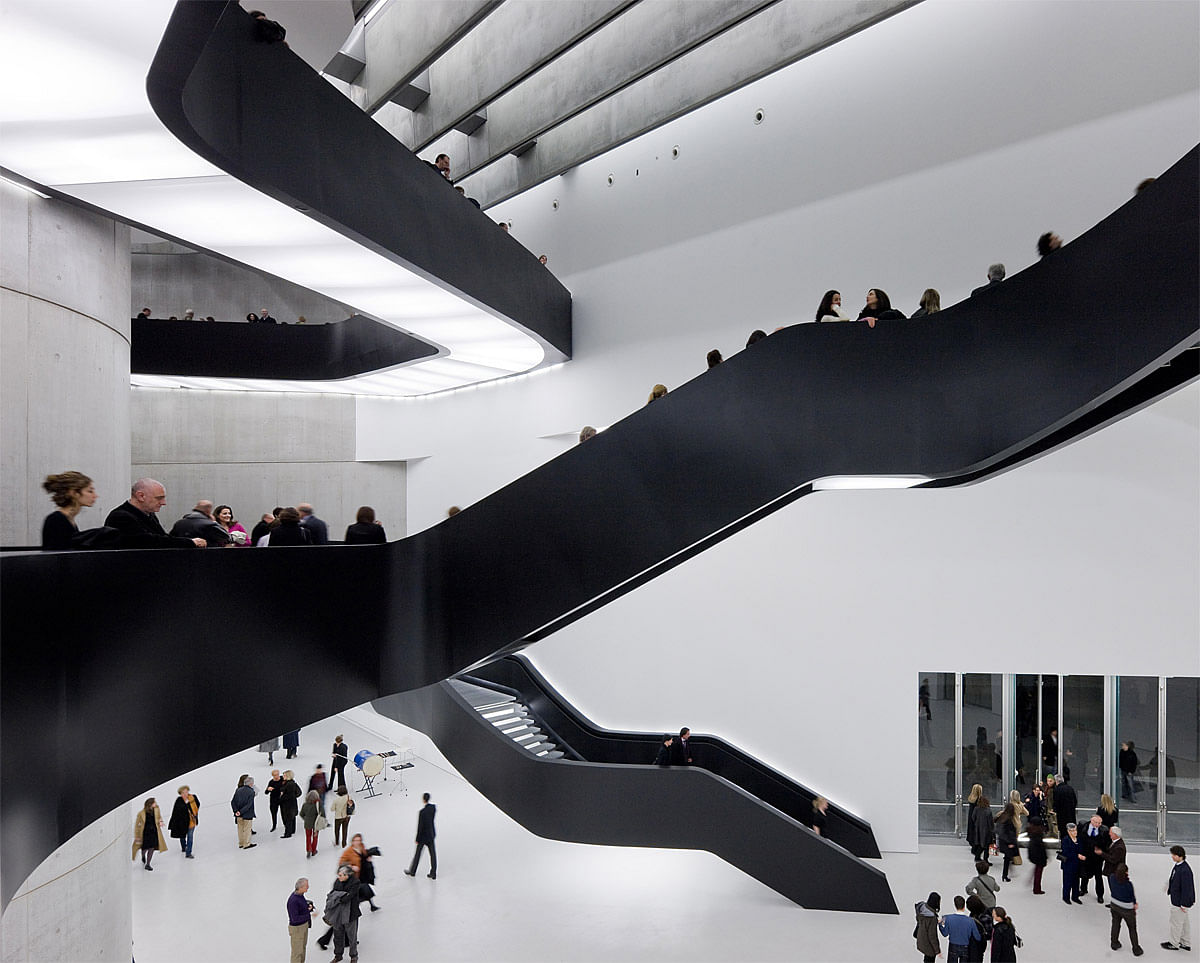
MAXXI, National Museum of XXI Century Arts, Rome by Zaha Hadid Architects, Photo: Iwan Baan

The shortlist for the prestigious £20,000 RIBA Stirling Prize 2010 in association with The Architects’ Journal and Benchmark was announced today.

Now in its fifteenth year, the RIBA Stirling Prize is awarded to the architects of the best new European building ‘built or designed in Britain’. The winner will be announced at The Roundhouse, London on Saturday, October 2, 2010. The six buildings competing for this year’s title are:

MAXXI, National Museum of XXI Art, Rome – Zaha Hadid Architects

This museum of 21st Century art, collected since the inception of the project, is a place of paths and routes. For all its structural pyrotechnics, it is rationally organised as five main suites. The whole is bravely daylit with a sinuous roof of controllable skylights, louvres and beams, whilst at the same time conforming to the very strict climate control requirements of modern galleries; the skylights both orientate and excite the visitor, but also turn them into uplifting spaces.

This is a mature piece of architecture, the distillation of years of experimentation, only a fraction of which ever got built. It is the quintessence of Zaha’s constant attempt to create a landscape, a series of cavernous spaces drawn with a free, roving line.
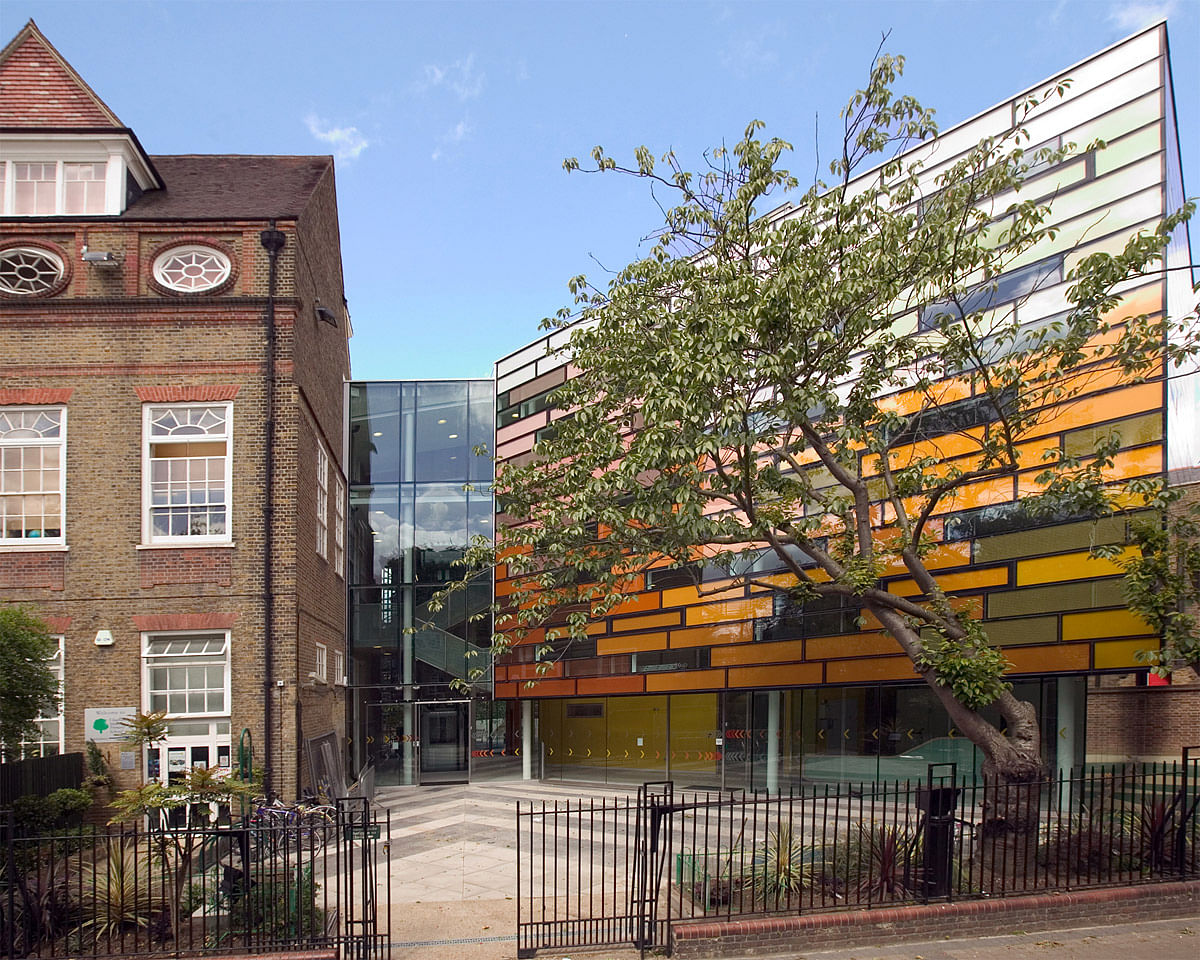
Clapham Manor Primary School, London by dRMM, Photo: Jonas Lencer

Clapham Manor Primary School, London SW4 - dRMM

This project is a freestanding addition to a 19th Century Board School, which in the words of the designers 'plugs into' the existing school building, allowing the school to work as a single entity. The form of the building is a simple rectangle but because it occupies the gap between two existing buildings it creates a surprisingly successful arrangement and creates some spaces which have been made into pocket gardens.

The facade system allows good light and views at different heights for children and adults and the use of the coloured panels in what one commentator has called 'boisterous polychromy' provides the building with a singular identity. Overall the project provides an extremely inventive and uplifting example of what the next generation of school buildings could be.
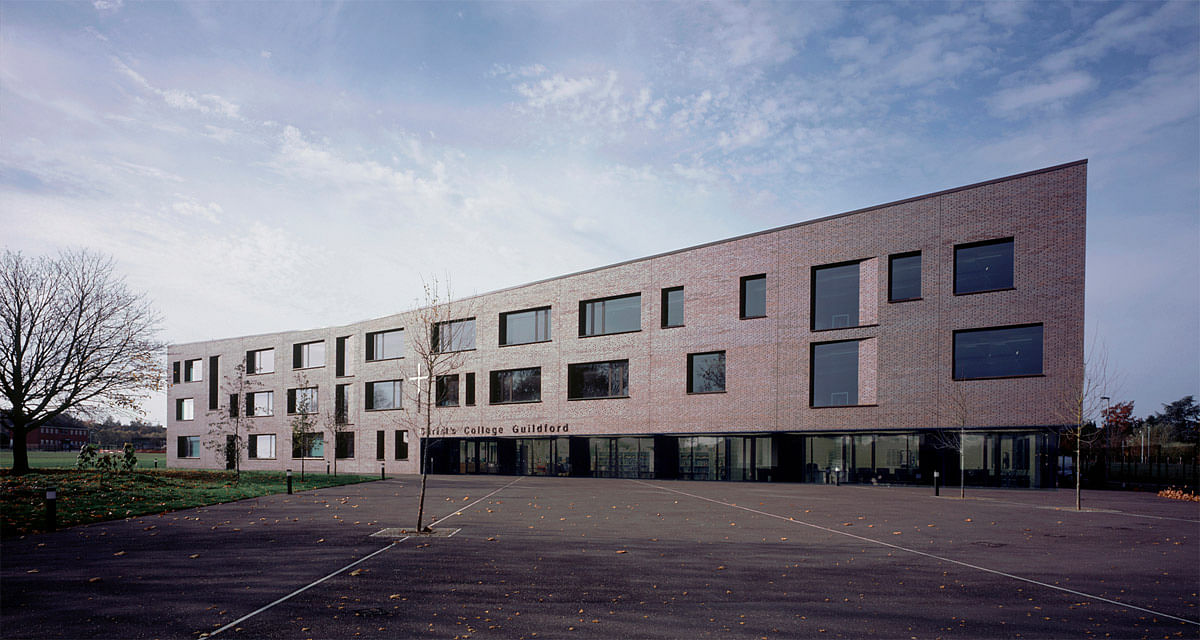
Christ's College School, Guildford by DSDHA, Photo: Helene Binet

Christ’s College School, Guildford – DSDHA

This clever design for a secondary school is a worthy companion to the adjoining special needs school by the same architects. The school building achieves a great deal on three compact levels yet has a gratifying generosity of circulation and inner courtyard spaces. The five faculties within the school are boldly identified with bright coloured doors in a predominantly grey/black/concrete series of internal finishes, which are subtle, grown–up and calming.

The building embodies an innovative natural ventilation system, which is subtly manifested on the brown brickwork of external walls as occasional patterns of gaps in the pointing. The fenestration is handsomely arranged in each façade, has deep reveals, and in places accentuates key views across Guildford.
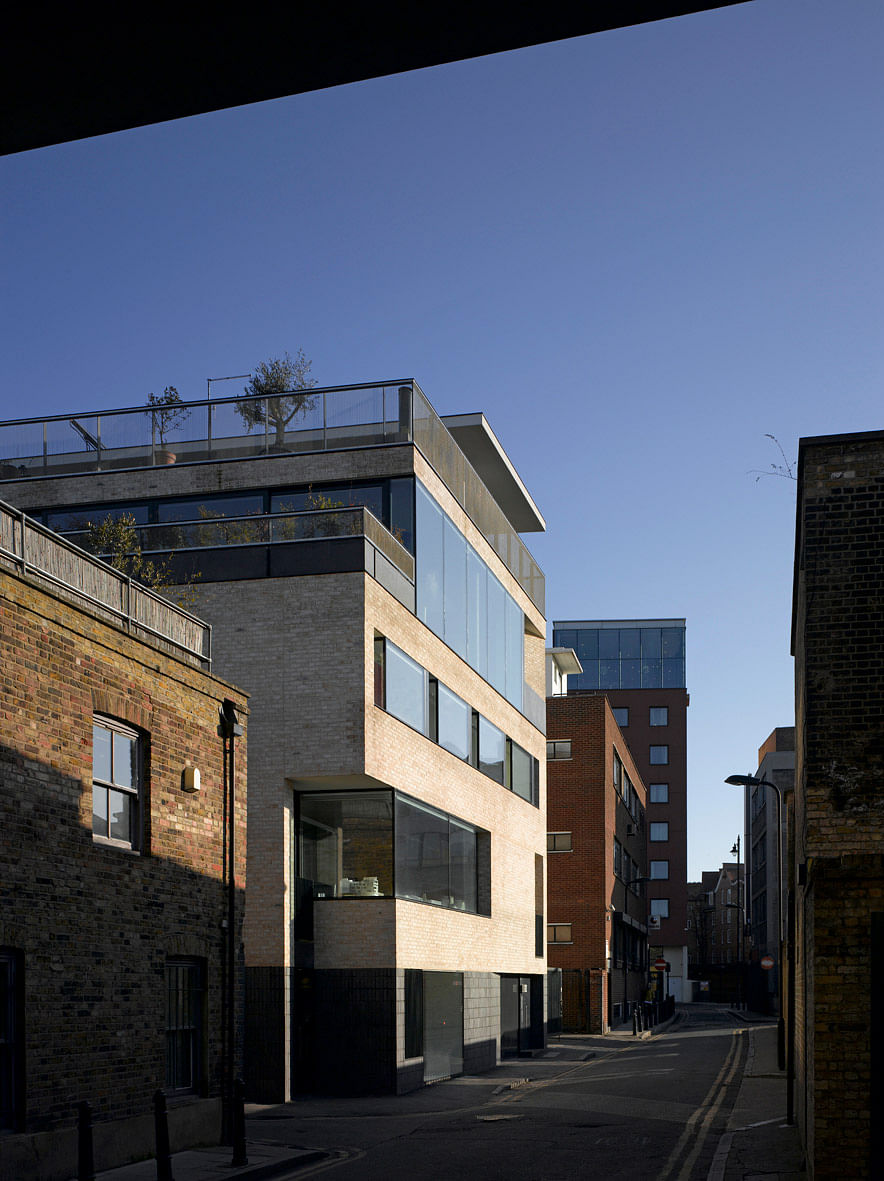
Bateman's Row, London by Theis and Khan, Photo: Nick Kane

Bateman's Row, London EC2 - Theis and Khan Architects

This is a development by the architect-client for a mix of uses including their home and office, a studio and gallery and four apartments. In section the scheme skilfully adjusts the floor heights, creating taller spaces for the gallery, the studio and the principle living space.

A dark brick base defines the back of pavement of the narrow streets and the building becomes progressively lighter towards the top, with an almost Californian quality to the living room and terraces on the top floors giving incredible views to the city.

This is a great city-making building the sort scale and mix that is both ordinary and relevant but executed with extraordinary care and judgement, the sort of building London needs a lot more of.
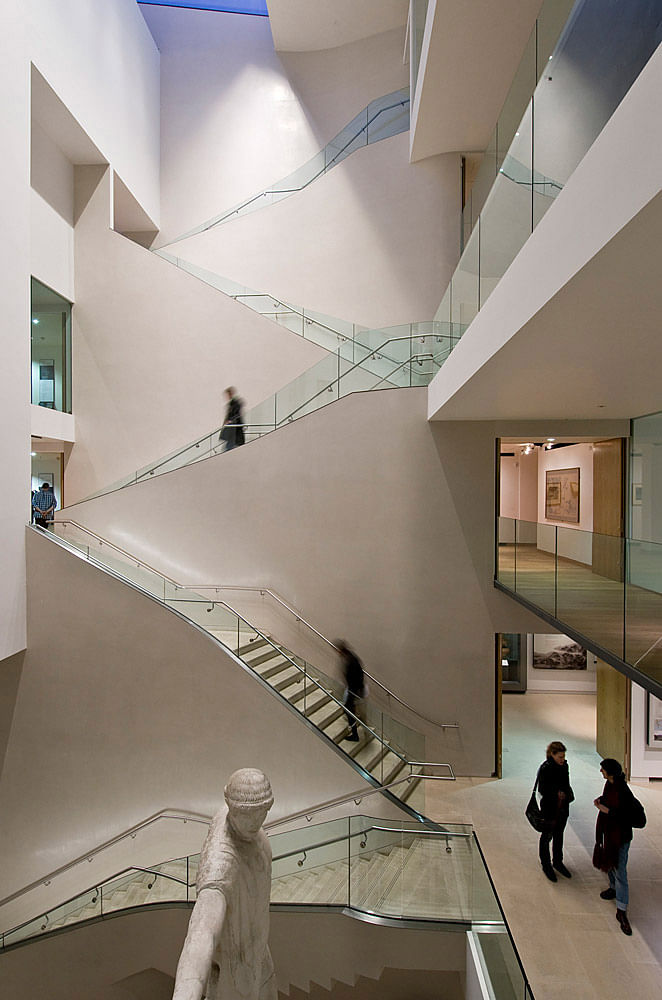
Ashmolean Museum, Oxford by Rick Mather Architects, Photo: Andy Matthews

The Ashmolean Museum, Oxford – Rick Mather Architects

The bar for this project could not have been set higher – to take Britain’s oldest museum and increase display space by 100% while retaining Charles Cockerell’s 1845, Grade I Listed building, resulting in 9000 square metres of new accommodation that remains largely invisible to the public realm - this building clears the bar by a mile to give a world class institution a worthy new home.

Entered through the Cockerell façade into a day-lit atrium, which is modest in plan yet dramatic in section, rising through six floors with a subtly curved staircase cascading down one wall, the atrium unifies the museum. The route navigates its way through 39 new galleries with a clever interleaving of double and single height spaces creating a rich spatial journey.
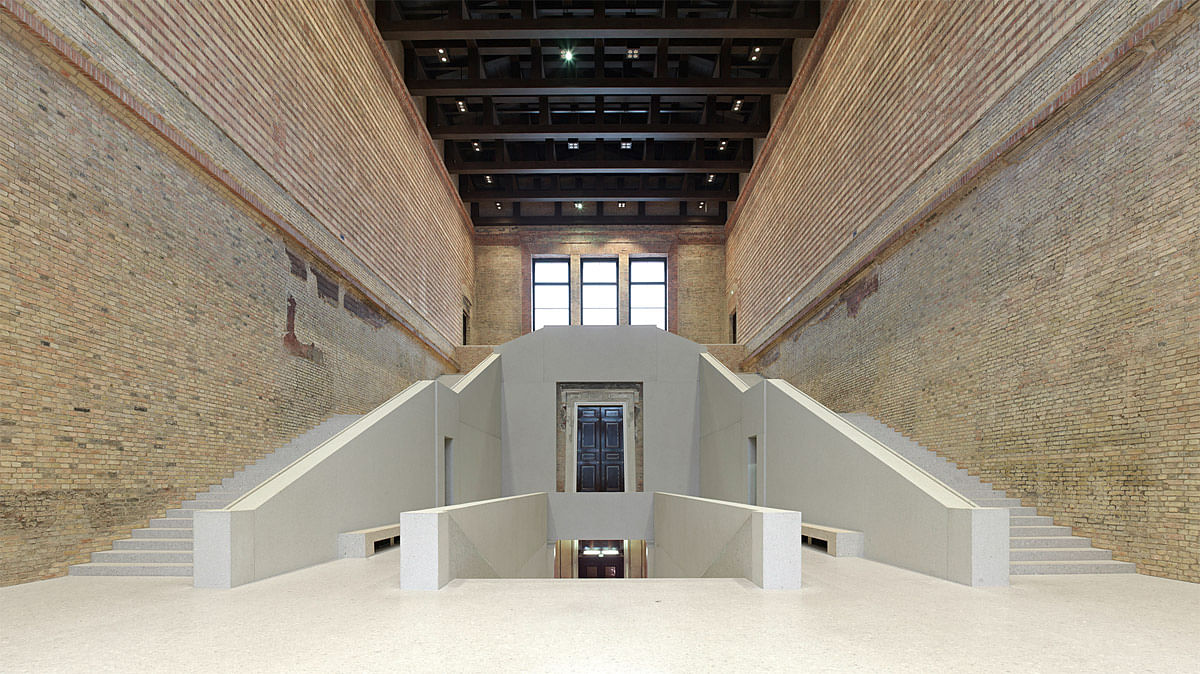
Neues Museum, Berlin by David Chipperfield Architects with Julian Harrap Architects, Photo: Joerg Von Bruchhausen

The Neues Museum – David Chipperfield Architects with Julian Harrap Architects

The Neues Museum was Prussia’s answer to Britain’s Great Exhibition of 1851. The restored museum houses Egyptian and Pre / Early History archaeological collections and is a centre for active scientific research as well as public dissemination. This duality lay at the heart of the project organisation. A unique integration of client and science, together with a close collaboration between Chipperfield’s and conservation architects Julian Harrap, has resulted in an exceptionally coherent and holistic piece of architecture.

The key architectural aim of the project was to reinstate the original volumes and to repair and restore the parts remaining after the war. The original sequence of rooms was restored by the new spaces, thereby creating continuity with the existing structure.

Ruth Reed, RIBA President, said: 'The RIBA Stirling Prize celebrates architectural excellence and this year we have a remarkable group of buildings on the shortlist. Unique in the history of the RIBA Stirling Prize, three major museum buildings make up half of the list, showing us three very different ways of building - and re-building - museums and galleries. They are the fruits of the economic boom of the last decade and sadly may represent the end of an era.

This is also the first year that two schools have been shortlisted for the prize. They represent what all schools should be: light, well-laid-out and well-equipped environments in which all students can flourish. Investment in well designed schools demonstrates to teachers and pupils how much they are valued and has measurable impact – attendance and results rise; truancy and bullying fall. With the program to improve our extremely poor school estate now much reduced – it could be some time before we see such exemplar school buildings on the Stirling shortlist again.

A commercial/private building by a young practice - a boundary-pushing take on the future of mixed-use buildings - completes the shortlist. It is one of three projects by practices that have never been shortlisted before. I look forward to the debate with my fellow judges about which project is the worthiest winner, and announcing the result in October.'

The 2010 RIBA Stirling Prize judges who will visit the six shortlisted buildings and meet for a final time on the day of the presentation to pick the winner are: Ruth Reed, RIBA President (chair); Ivan Harbour, architect, Rogers Stirk Harbour; Edward Jones, architect, Dixon Jones; Professor Lisa Jardine, historian and writer; and Mark Lawson, broadcaster.

Previous winners of the RIBA Stirling Prize include: Maggie’s Centre at Charing Cross Hospital, London by Rogers Stirk Harbour + Partners (2009); Accordia housing development by Feilden Clegg Bradley Studios/Alison Brooks Architects/Macreanor Lavington (2008); The Museum of Modern Literature, Marbach am Neckar, Germany by David Chipperfield Architects (2007).

Related

united kingdom ● uk ● stirling prize ● riba ● prize ● europe ● london ● award

Share

  • Follow

    0 Comments

  • Comment as :

RIBA Stirling Prize 2010 Shortlist Announced

Northwestern University selects 12-firm longlist to design new engineering building

New architecture and design competitions: Exploring 130 Years of American Design, Christo & Jeanne-Claude Center, 13 White Houses, and La Pyramide

Micro-architecture honored in latest Tiny House Architecture Competition

World’s most beautiful restaurants of 2026 chosen by Prix Versailles

Sponsored Post by Buildner

Design a wine tasting room in Italy! Valli Wine Tasting Room is launched!

10 can't-miss architecture & design events to see this June in London, Los Angeles, Chicago, San Francisco, Detroit, San Diego, Porto, and Barcelona

Sponsored Post by Buildner

Museum of Emotions / Edition #8 FINAL registration deadline is approaching!

Seven global projects make AR Public Awards shortlist 2026

Sign up for Bustler's Email Newsletters

Sponsored Post by Buildner

Design a slow-living restaurant in Portugal! Portugal Long Table Restaurant is launched!

World's best tall buildings honored at the CVU 2026 Award of Excellence

Sponsored Post by TWOPAGES

Final call: TWOPAGES X Design Contest 2026 submissions close June 5

Kengo Kuma & Paul Raff win Alberta national park visitor center competition with landscape-focused design

2026 Moira Gemmill and MJ Long prizes announced by W Awards

New architecture and design competitions: Kinderspace, Stewardson Keefe LeBrun Travel Grant, SMALL PROJECT BIG IMPACT, and Garden of University House, Bucharest

The Century of Gehry: New retrospective explores the late architect's work & collaborations

Next page » Loading

RIBA Stirling Prize 2010 Shortlist Announced

By Bustler Editors|

Thursday, Jul 22, 2010

Share

MAXXI, National Museum of XXI Century Arts, Rome by Zaha Hadid Architects, Photo: Iwan Baan

Related

united kingdom ● uk ● stirling prize ● riba ● prize ● europe ● london ● award

The shortlist for the prestigious £20,000 RIBA Stirling Prize 2010 in association with The Architects’ Journal and Benchmark was announced today.

Now in its fifteenth year, the RIBA Stirling Prize is awarded to the architects of the best new European building ‘built or designed in Britain’. The winner will be announced at The Roundhouse, London on Saturday, October 2, 2010. The six buildings competing for this year’s title are:

MAXXI, National Museum of XXI Art, Rome – Zaha Hadid Architects

This museum of 21st Century art, collected since the inception of the project, is a place of paths and routes. For all its structural pyrotechnics, it is rationally organised as five main suites. The whole is bravely daylit with a sinuous roof of controllable skylights, louvres and beams, whilst at the same time conforming to the very strict climate control requirements of modern galleries; the skylights both orientate and excite the visitor, but also turn them into uplifting spaces.

This is a mature piece of architecture, the distillation of years of experimentation, only a fraction of which ever got built. It is the quintessence of Zaha’s constant attempt to create a landscape, a series of cavernous spaces drawn with a free, roving line.

Clapham Manor Primary School, London by dRMM, Photo: Jonas Lencer

Clapham Manor Primary School, London SW4 - dRMM

This project is a freestanding addition to a 19th Century Board School, which in the words of the designers 'plugs into' the existing school building, allowing the school to work as a single entity. The form of the building is a simple rectangle but because it occupies the gap between two existing buildings it creates a surprisingly successful arrangement and creates some spaces which have been made into pocket gardens.

The facade system allows good light and views at different heights for children and adults and the use of the coloured panels in what one commentator has called 'boisterous polychromy' provides the building with a singular identity. Overall the project provides an extremely inventive and uplifting example of what the next generation of school buildings could be.

Christ's College School, Guildford by DSDHA, Photo: Helene Binet

Christ’s College School, Guildford – DSDHA

This clever design for a secondary school is a worthy companion to the adjoining special needs school by the same architects. The school building achieves a great deal on three compact levels yet has a gratifying generosity of circulation and inner courtyard spaces. The five faculties within the school are boldly identified with bright coloured doors in a predominantly grey/black/concrete series of internal finishes, which are subtle, grown–up and calming.

The building embodies an innovative natural ventilation system, which is subtly manifested on the brown brickwork of external walls as occasional patterns of gaps in the pointing. The fenestration is handsomely arranged in each façade, has deep reveals, and in places accentuates key views across Guildford.

Bateman's Row, London by Theis and Khan, Photo: Nick Kane

Bateman's Row, London EC2 - Theis and Khan Architects

This is a development by the architect-client for a mix of uses including their home and office, a studio and gallery and four apartments. In section the scheme skilfully adjusts the floor heights, creating taller spaces for the gallery, the studio and the principle living space.

A dark brick base defines the back of pavement of the narrow streets and the building becomes progressively lighter towards the top, with an almost Californian quality to the living room and terraces on the top floors giving incredible views to the city.

This is a great city-making building the sort scale and mix that is both ordinary and relevant but executed with extraordinary care and judgement, the sort of building London needs a lot more of.

Ashmolean Museum, Oxford by Rick Mather Architects, Photo: Andy Matthews

The Ashmolean Museum, Oxford – Rick Mather Architects

The bar for this project could not have been set higher – to take Britain’s oldest museum and increase display space by 100% while retaining Charles Cockerell’s 1845, Grade I Listed building, resulting in 9000 square metres of new accommodation that remains largely invisible to the public realm - this building clears the bar by a mile to give a world class institution a worthy new home.

Entered through the Cockerell façade into a day-lit atrium, which is modest in plan yet dramatic in section, rising through six floors with a subtly curved staircase cascading down one wall, the atrium unifies the museum. The route navigates its way through 39 new galleries with a clever interleaving of double and single height spaces creating a rich spatial journey.

Neues Museum, Berlin by David Chipperfield Architects with Julian Harrap Architects, Photo: Joerg Von Bruchhausen

The Neues Museum – David Chipperfield Architects with Julian Harrap Architects

The Neues Museum was Prussia’s answer to Britain’s Great Exhibition of 1851. The restored museum houses Egyptian and Pre / Early History archaeological collections and is a centre for active scientific research as well as public dissemination. This duality lay at the heart of the project organisation. A unique integration of client and science, together with a close collaboration between Chipperfield’s and conservation architects Julian Harrap, has resulted in an exceptionally coherent and holistic piece of architecture.

The key architectural aim of the project was to reinstate the original volumes and to repair and restore the parts remaining after the war. The original sequence of rooms was restored by the new spaces, thereby creating continuity with the existing structure.

Ruth Reed, RIBA President, said: 'The RIBA Stirling Prize celebrates architectural excellence and this year we have a remarkable group of buildings on the shortlist. Unique in the history of the RIBA Stirling Prize, three major museum buildings make up half of the list, showing us three very different ways of building - and re-building - museums and galleries. They are the fruits of the economic boom of the last decade and sadly may represent the end of an era.

This is also the first year that two schools have been shortlisted for the prize. They represent what all schools should be: light, well-laid-out and well-equipped environments in which all students can flourish. Investment in well designed schools demonstrates to teachers and pupils how much they are valued and has measurable impact – attendance and results rise; truancy and bullying fall. With the program to improve our extremely poor school estate now much reduced – it could be some time before we see such exemplar school buildings on the Stirling shortlist again.

A commercial/private building by a young practice - a boundary-pushing take on the future of mixed-use buildings - completes the shortlist. It is one of three projects by practices that have never been shortlisted before. I look forward to the debate with my fellow judges about which project is the worthiest winner, and announcing the result in October.'

The 2010 RIBA Stirling Prize judges who will visit the six shortlisted buildings and meet for a final time on the day of the presentation to pick the winner are: Ruth Reed, RIBA President (chair); Ivan Harbour, architect, Rogers Stirk Harbour; Edward Jones, architect, Dixon Jones; Professor Lisa Jardine, historian and writer; and Mark Lawson, broadcaster.

Previous winners of the RIBA Stirling Prize include: Maggie’s Centre at Charing Cross Hospital, London by Rogers Stirk Harbour + Partners (2009); Accordia housing development by Feilden Clegg Bradley Studios/Alison Brooks Architects/Macreanor Lavington (2008); The Museum of Modern Literature, Marbach am Neckar, Germany by David Chipperfield Architects (2007).

Share

  • Follow

    0 Comments

  • Comment as :

Archinect JobsArchinect Jobs

The Archinect Job Board attracts the world's top architectural design talents.

VIEW ALL JOBS POST A JOB

Project Manager - Civic/Community

DAHLIN ARCHITECTURE | PLANNING | INTERIORS

Project Manager - Civic/Community

Irvine, CA, US

Architectural Designer II

Studio AR&D Architects

Architectural Designer II

Los Angeles, CA, US

Project Architect

Lang Architecture

Project Architect

New York, NY, US

Architectural Associate/Junior Architect

Goldstone Architecture

Architectural Associate/Junior Architect

Bennington, VT, US

Marketing Coordinator / EA

Stoss Landscape Urbanism

Marketing Coordinator / EA

Boston, MA, US

Construction Administrator

Solutions Architecture Corp

Construction Administrator

Verona, NJ, US

Interior Designer | Education & Institutional Work

Berliner Architects

Interior Designer | Education & Institutional Work

Culver City, CA, US

Project Architect

Berliner Architects

Project Architect

Culver City, CA, US

Junior Architect

VanderHorn Architects

Junior Architect

Greenwich, CT, US

Senior Project Architect

Breland – Harper

Senior Project Architect

Los Angeles, CA, US

Next page » Loading