• Login / Join
  • About
  • •
  • Contact
  • •
  • Advertising
bustler logo
bustler logo
  • News
  • Competitions
  • Events
  • Bustler is powered by Archinect
  • Sign up for Bustler's Email Newsletters

  • Follow these Bustler feeds:

  • Search

    Search in

  • Submit

    What are you submitting?

    News Pitch
    Competition
    Event
  • Login / Join
  • News|Competitions|Events
  • Search
    | Submit
    | Follow
  • Search in

    What are you submitting?

    News Pitch
    Competition
    Event

    Follow these Bustler feeds:

  • About|Contact|Advertising
  • Login / Join

TEX-FAB 2.0 and REPEAT Exhibition in Houston Featuring Minimal Complexity

By Bustler Editors|

Tuesday, Mar 15, 2011
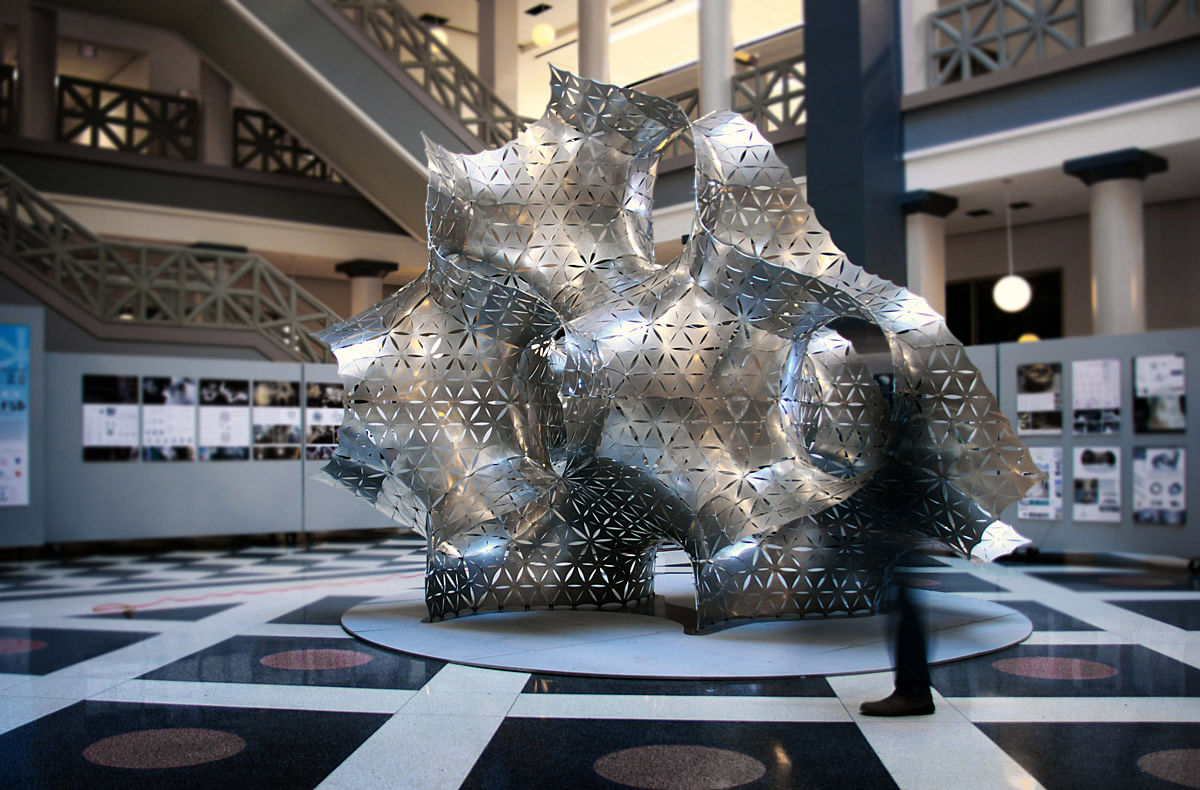
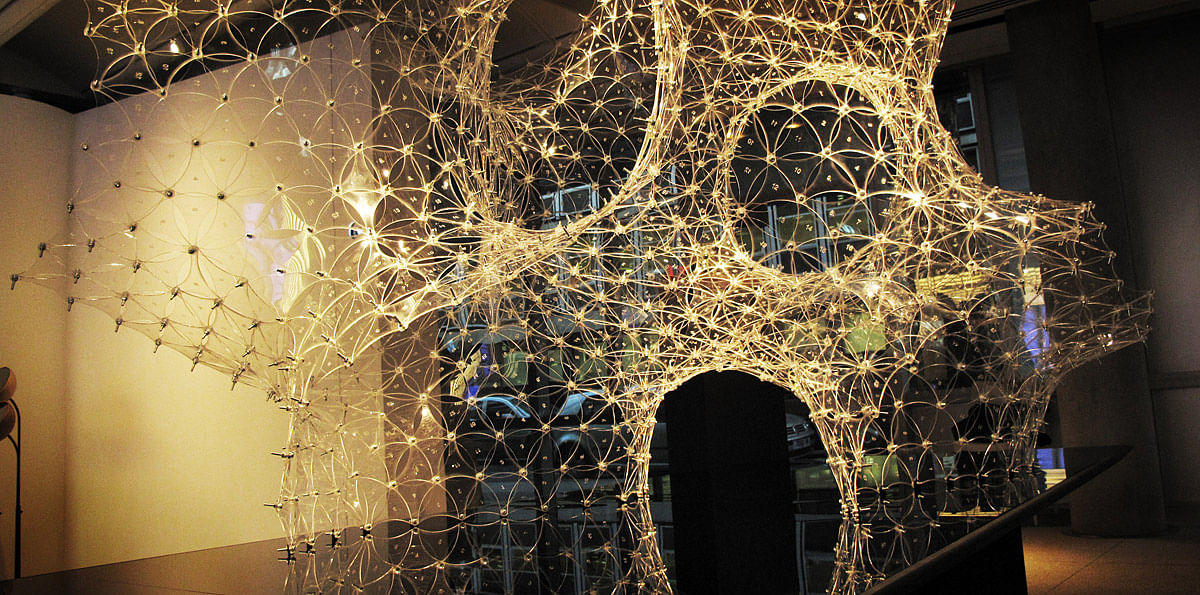
Minimal Complexity, designed by Vlad Tenu, in the atrium of the Gerald D. Hines College of Architecture at the University of Houston

Launched with the keynote lecture Complicity and Simplexity by Branko Kolarevic, Chair in Integrated Design at the University of Calgary, TEX-FAB 2.0 began its second event to great success. Well over 100 attendees from across the US, Mexico and the UK attended the Friday lecture series and weekend workshops hosted at the Gerald D. Hines College of Architecture at the University of Houston.

Minimal Complexity 2011 from Vlad Tenu on Vimeo.

Invited speakers from both the academic, professional and fabrication communities with significant accomplishments within the field included L. William Zahner, Ceo & President of ZAHNER, Patrick Hood-Daniel of BuildYourOwnCNC.com; MetaLab directors Joe Meppelink/Andrew Vrana, and Vlad Tenu designer of Minimal Complexity. A lively exhibition opening followed the lecture series with drinks and discussions.

Workshops followed on the weekend as a two-day event led by internationally recognized instructors within the field of parametric modeling provided a robust opportunity for participants to be exposed to the highest level of concentrated learning possible. TEX-FAB 2.0 workshop instructors included Marc Fornes of theverymany: Scripted Design; Chris Lasch of Aranda / Lasch: Algorithmic Design; Gil Akos and Ronnie Parsons of Studio Mode: Parametric Design.
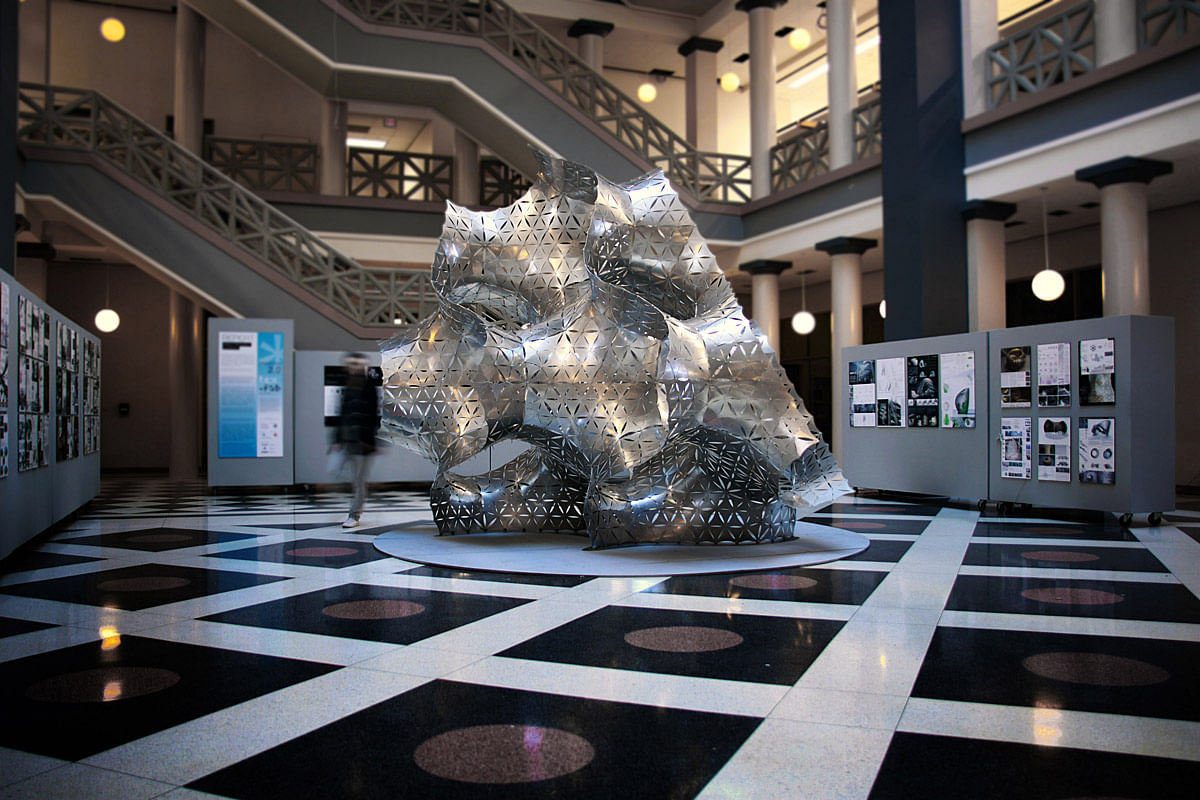
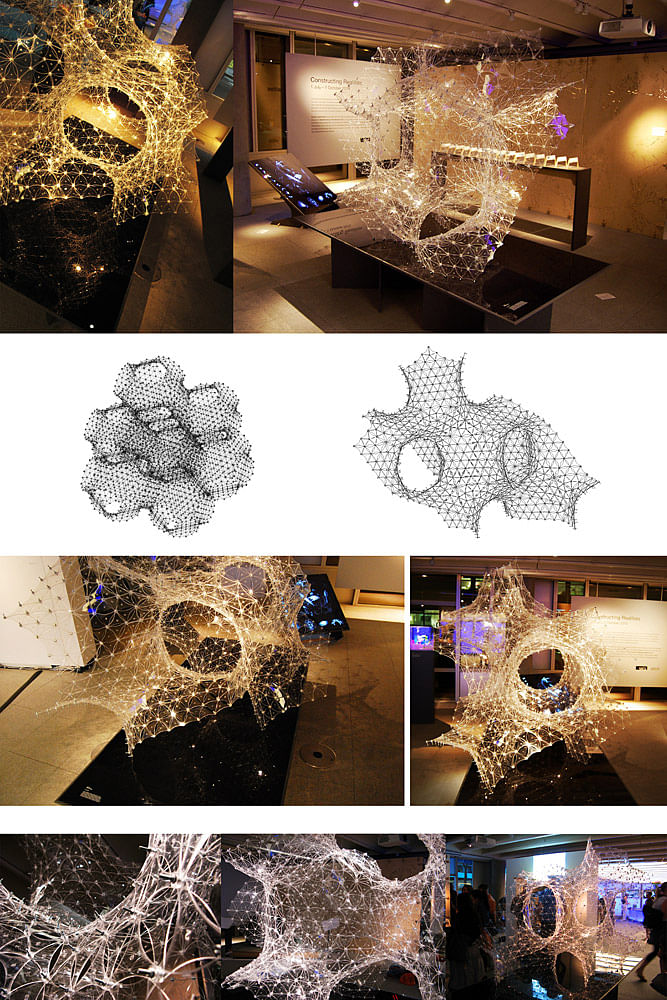
Minimal Complexity, exhibition model

Highlighted within the REPEAT Exhibition was Minimal Complexity, by Vlad Tenu. The work was selected the winner of the REPEAT: digital fabrication competition, commissioned and built in January. The competition drew 95 teams of 1-4 designers from 19 states in the US, 18 countries and 5 continents. The jury of internationally recognized academics and practitioners that included Patrik Schumacher, Marc Fornes, Chris Lasch, Lisa Iwamoto and Blair Satterfield reviewed all the entries and conferred their choice in November 2010.
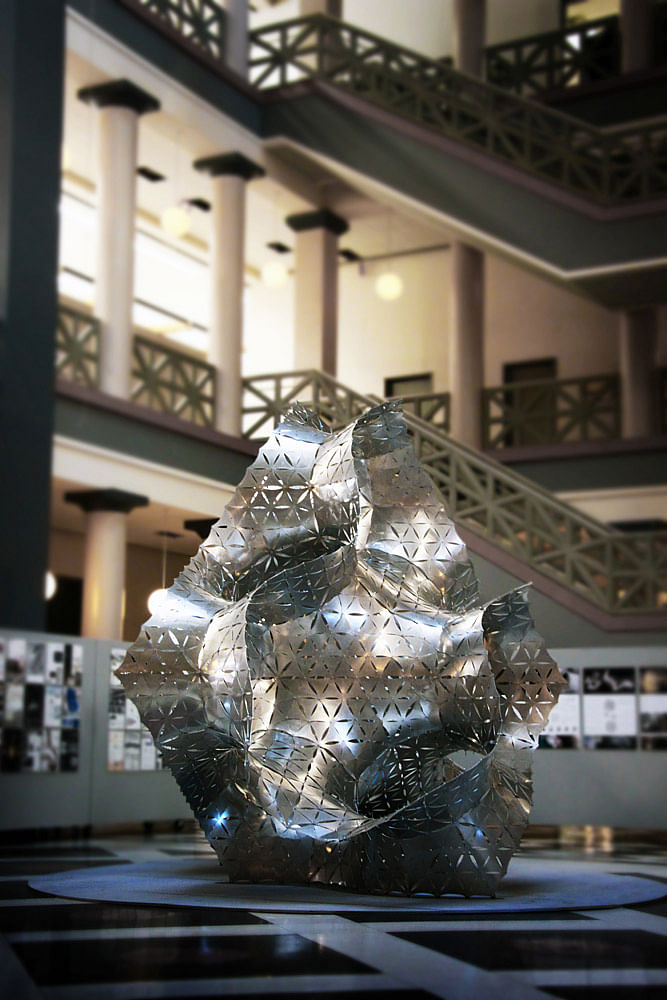
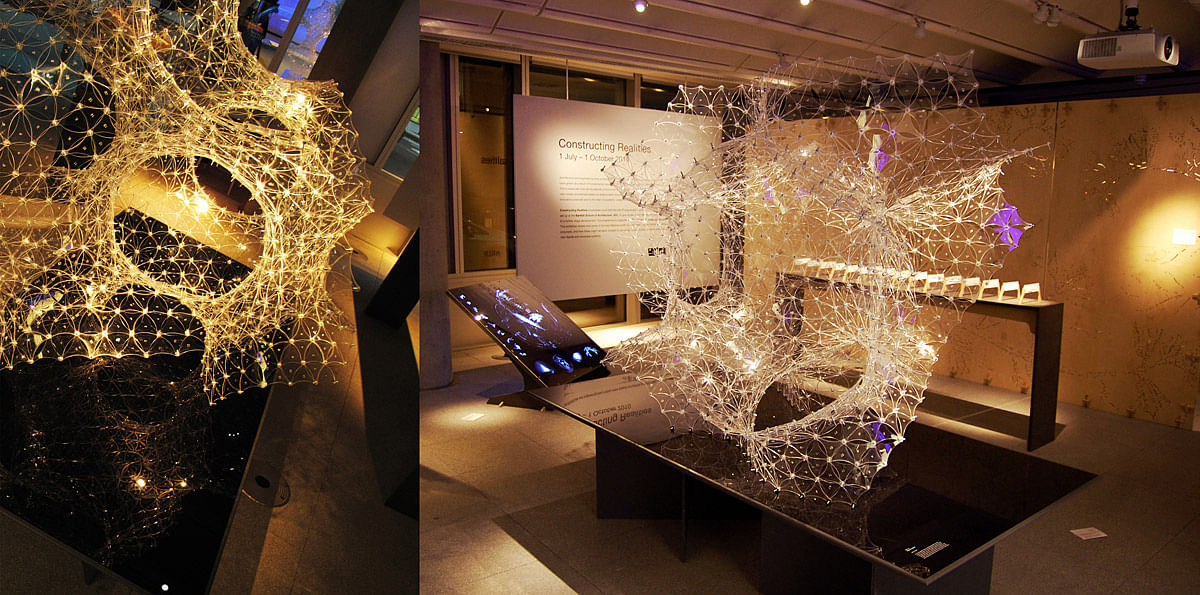
Minimal Complexity, exhibition model

TEX-FAB commissioned Minimal Complexity by sponsoring the REPEAT: digital fabrication competition and partnered with Vlad Tenu as the fabrication consultants for the realization of the project as it appears in the REPEAT traveling exhibition. TEX-FAB is a non-profit organization formed by Brad Bell, Kevin Patrick McClellan, and Andrew Vrana as a collective action, one that endeavors to combine divergent interests and capabilities, for the purpose of strengthening the regional discourse around digital fabrication and parametric design.
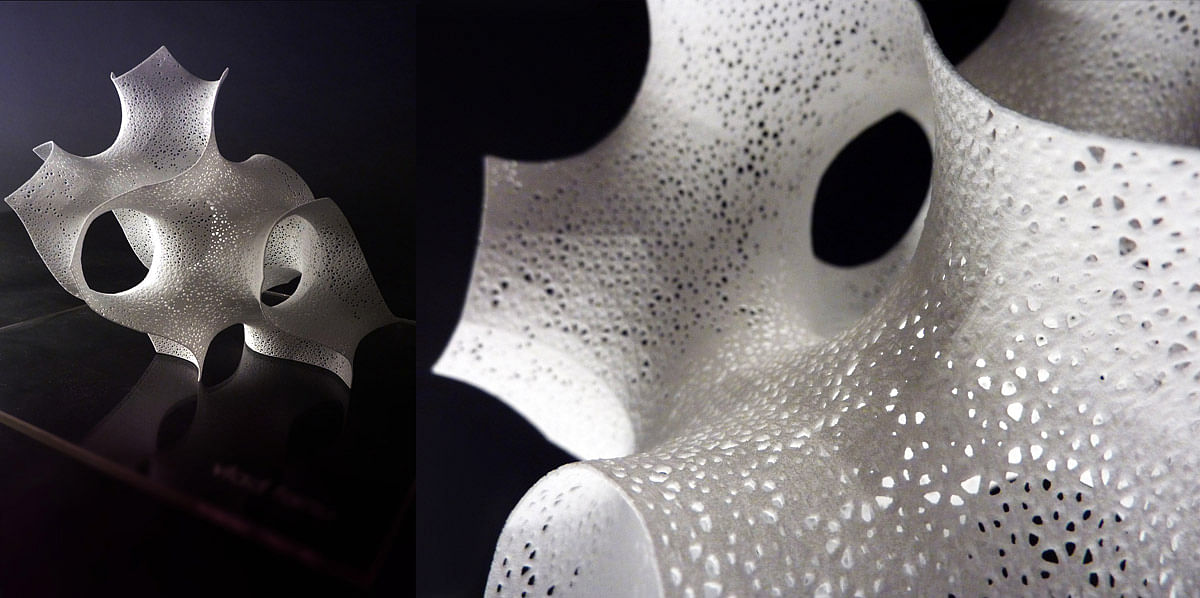
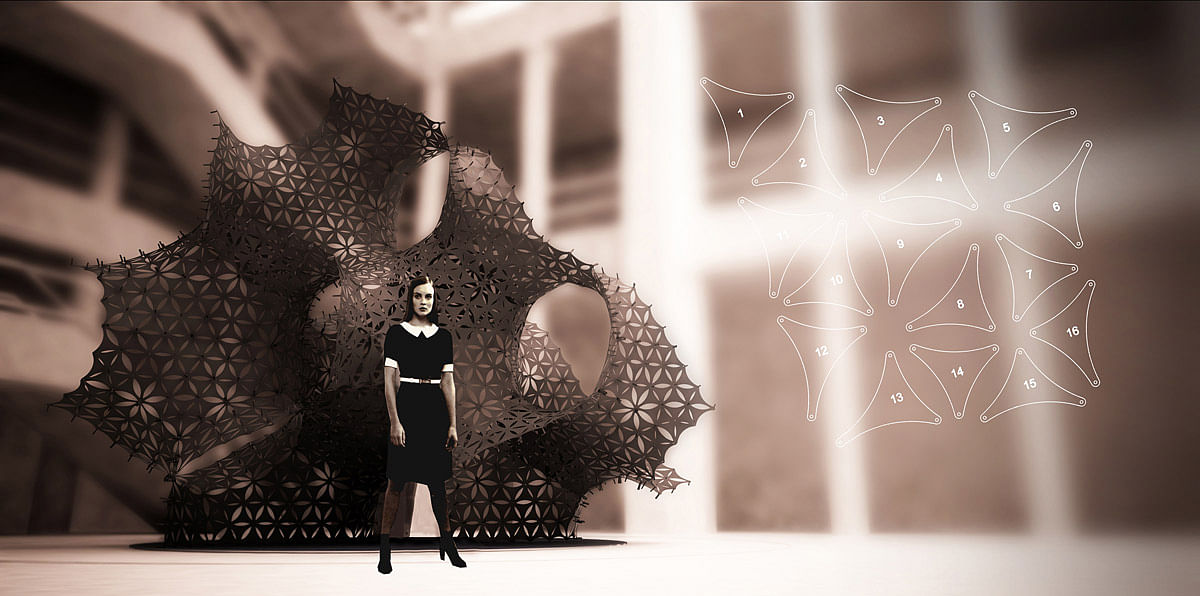
Minimal Complexity, earlier development stage

Vlad Tenu describes the proposal, resulting from ongoing research and experimentation in the development of Minimal Complexity, in the following manner:

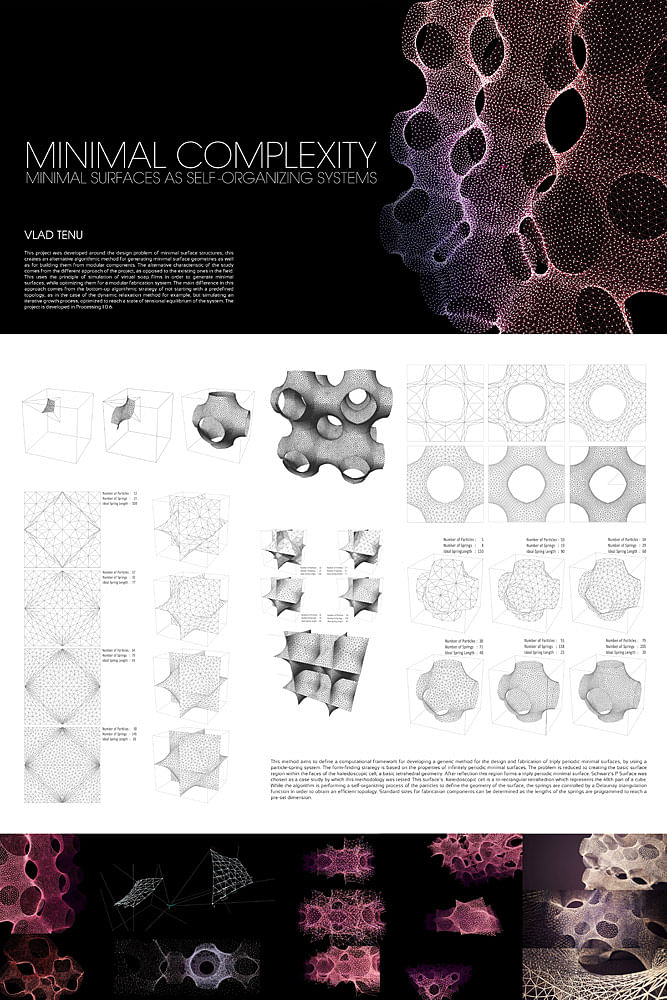
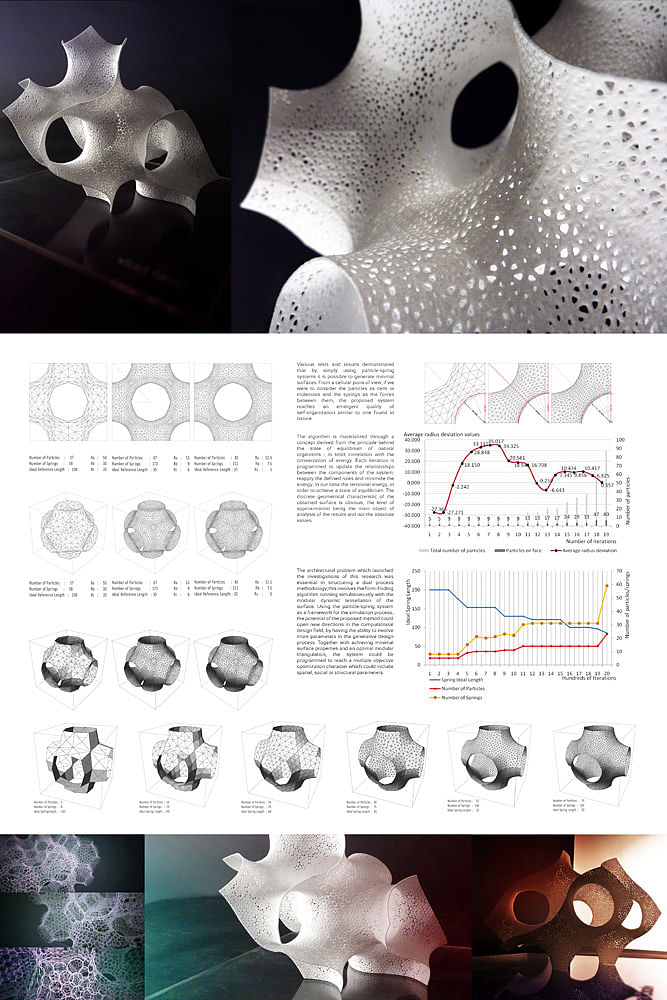
The project was developed around the design problem of minimal surface structures; this creates an alternative algorithmic method for generating minimal surface geometries as well as for building them from modular components. The alternative characteristic of the study comes from the different approach of the project, as opposed to the existing ones in the field.
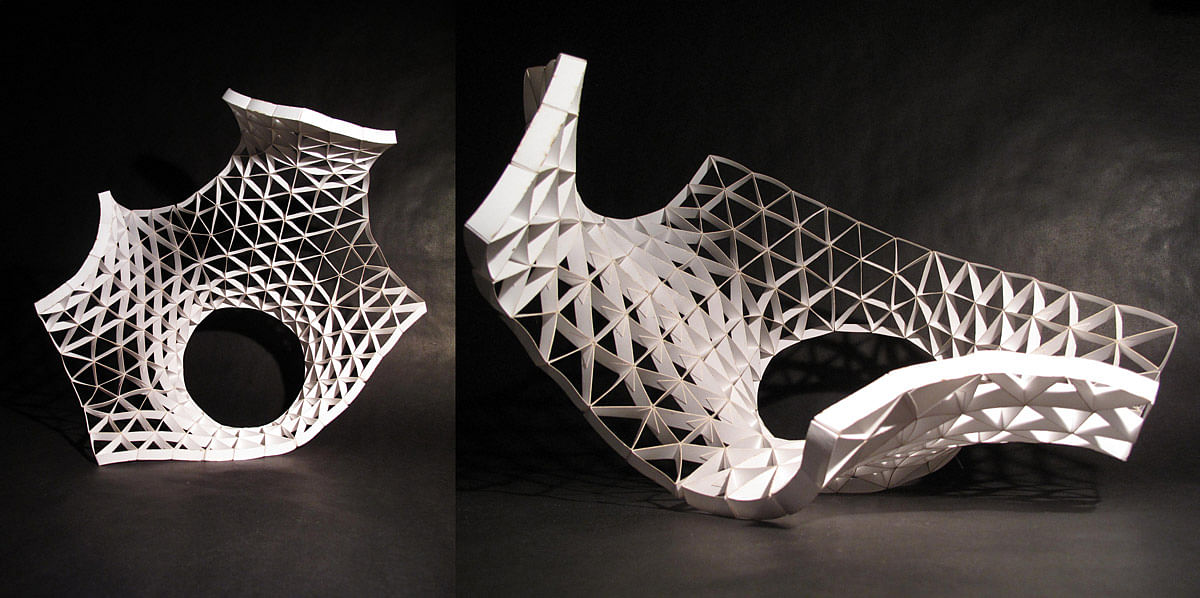
Minimal Complexity, earlier development stage

This process uses the principle of simulation of virtual soap films in order to generate minimal surfaces, while optimizing them for a modular fabrication system. The main difference in this approach comes from the bottom-up algorithmic strategy of not starting with a predefined topology, as in the case of the dynamic relaxation method for example, but simulating an iterative growth process, optimized to reach a state of tensional equilibrium of the system. The project is developed in Processing 1.0.6.
Minimal Complexity, earlier development stage

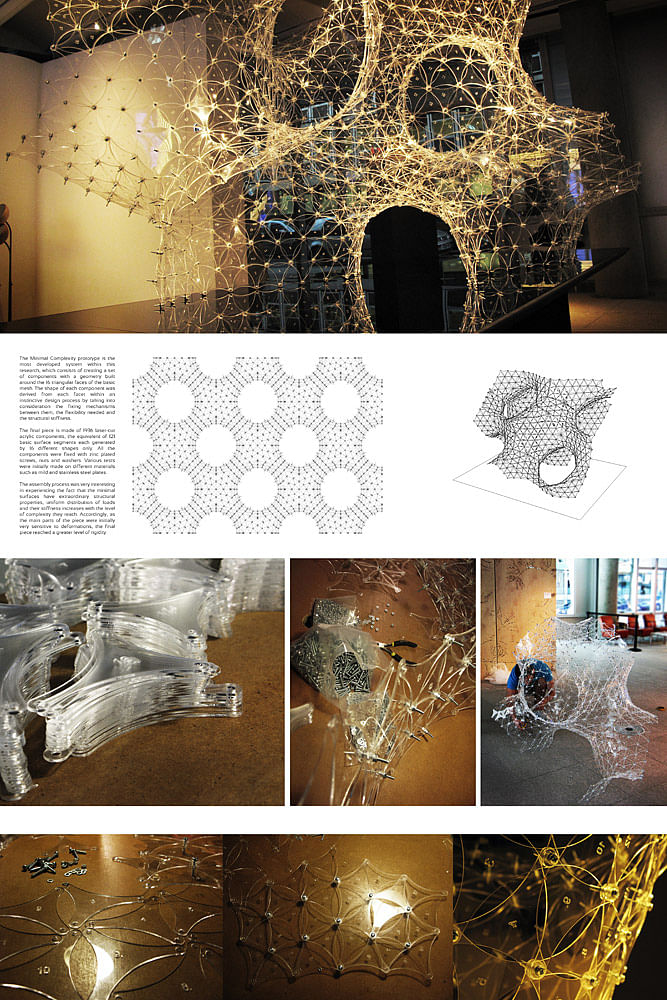
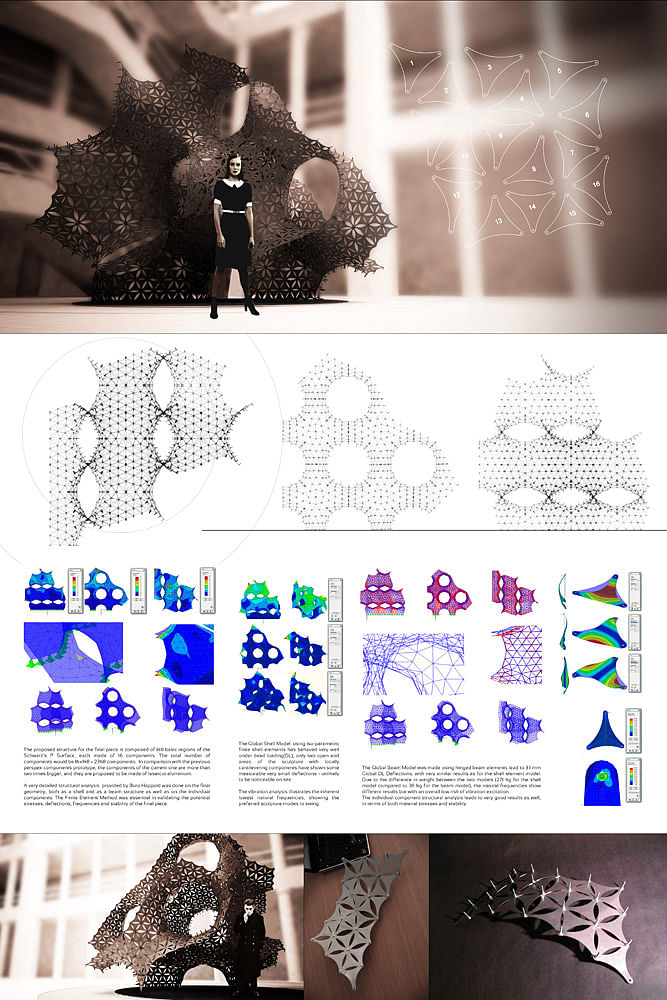
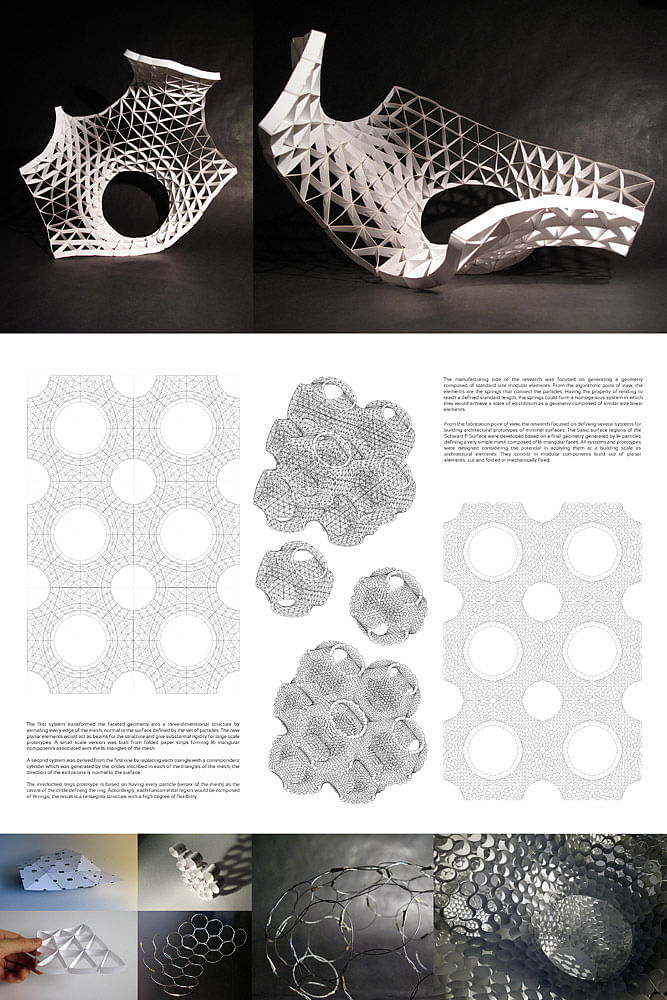
Minimal Complexity was produced after an optimization phase that began at the University of Texas at Arlington under the direction of Brad Bell and ended in Houston under the direction of Andrew Vrana at the University of Houston. Very early on in the process of developing the project for installation, Crow Corporation, the digital fabrication partner of TEX-FAB was brought in to help resolve technical issues for laser cutting. Additionally, Buro Happold’s New York office supported the project with the coordination of a detailed Finite Structural Analysis (FEA) on the geometry. The final structure composed of 148 basic quad regions of the Schwarz’s P Surface with each section being made out of 16 parts were ultimately laser cut from 10 17 14-gauge 5052 aluminum sheets which resulted in a total of 2368 parts.
Minimal Complexity, earlier development stage

The built iteration of Minimal Complexity and all the competition proposals in the form of the REPEAT Exhibition will be on view in the atrium of the Gerald D. Hines College of Architecture at the University of Houston until April 17,  2011 (date may change in favor of a possible extension).
Minimal Complexity, earlier development stage

Also check out the competition boards of Minimal Complexity in the image gallery below. All images courtesy of TEX-FAB.
Related

vlad tenu ● texas ● tex-fab ● school ● minimal complexity ● houston ● exhibition ● event

Share

  • Follow

    0 Comments

  • Comment as :

TEX-FAB 2.0 and REPEAT Exhibition in Houston Featuring Minimal Complexity

Northwestern University selects 12-firm longlist to design new engineering building

New architecture and design competitions: Exploring 130 Years of American Design, Christo & Jeanne-Claude Center, 13 White Houses, and La Pyramide

Micro-architecture honored in latest Tiny House Architecture Competition

World’s most beautiful restaurants of 2026 chosen by Prix Versailles

Sponsored Post by Buildner

Design a wine tasting room in Italy! Valli Wine Tasting Room is launched!

10 can't-miss architecture & design events to see this June in London, Los Angeles, Chicago, San Francisco, Detroit, San Diego, Porto, and Barcelona

Sponsored Post by Buildner

Museum of Emotions / Edition #8 FINAL registration deadline is approaching!

Seven global projects make AR Public Awards shortlist 2026

Sign up for Bustler's Email Newsletters

Sponsored Post by Buildner

Design a slow-living restaurant in Portugal! Portugal Long Table Restaurant is launched!

World's best tall buildings honored at the CVU 2026 Award of Excellence

Sponsored Post by TWOPAGES

Final call: TWOPAGES X Design Contest 2026 submissions close June 5

Kengo Kuma & Paul Raff win Alberta national park visitor center competition with landscape-focused design

2026 Moira Gemmill and MJ Long prizes announced by W Awards

New architecture and design competitions: Kinderspace, Stewardson Keefe LeBrun Travel Grant, SMALL PROJECT BIG IMPACT, and Garden of University House, Bucharest

The Century of Gehry: New retrospective explores the late architect's work & collaborations

Next page » Loading

TEX-FAB 2.0 and REPEAT Exhibition in Houston Featuring Minimal Complexity

By Bustler Editors|

Tuesday, Mar 15, 2011

Share

Minimal Complexity, designed by Vlad Tenu, in the atrium of the Gerald D. Hines College of Architecture at the University of Houston

Related

vlad tenu ● texas ● tex-fab ● school ● minimal complexity ● houston ● exhibition ● event

Launched with the keynote lecture Complicity and Simplexity by Branko Kolarevic, Chair in Integrated Design at the University of Calgary, TEX-FAB 2.0 began its second event to great success. Well over 100 attendees from across the US, Mexico and the UK attended the Friday lecture series and weekend workshops hosted at the Gerald D. Hines College of Architecture at the University of Houston.

Minimal Complexity 2011 from Vlad Tenu on Vimeo.

Invited speakers from both the academic, professional and fabrication communities with significant accomplishments within the field included L. William Zahner, Ceo & President of ZAHNER, Patrick Hood-Daniel of BuildYourOwnCNC.com; MetaLab directors Joe Meppelink/Andrew Vrana, and Vlad Tenu designer of Minimal Complexity. A lively exhibition opening followed the lecture series with drinks and discussions.

Workshops followed on the weekend as a two-day event led by internationally recognized instructors within the field of parametric modeling provided a robust opportunity for participants to be exposed to the highest level of concentrated learning possible. TEX-FAB 2.0 workshop instructors included Marc Fornes of theverymany: Scripted Design; Chris Lasch of Aranda / Lasch: Algorithmic Design; Gil Akos and Ronnie Parsons of Studio Mode: Parametric Design.

Minimal Complexity, exhibition model

Highlighted within the REPEAT Exhibition was Minimal Complexity, by Vlad Tenu. The work was selected the winner of the REPEAT: digital fabrication competition, commissioned and built in January. The competition drew 95 teams of 1-4 designers from 19 states in the US, 18 countries and 5 continents. The jury of internationally recognized academics and practitioners that included Patrik Schumacher, Marc Fornes, Chris Lasch, Lisa Iwamoto and Blair Satterfield reviewed all the entries and conferred their choice in November 2010.

Minimal Complexity, exhibition model

TEX-FAB commissioned Minimal Complexity by sponsoring the REPEAT: digital fabrication competition and partnered with Vlad Tenu as the fabrication consultants for the realization of the project as it appears in the REPEAT traveling exhibition. TEX-FAB is a non-profit organization formed by Brad Bell, Kevin Patrick McClellan, and Andrew Vrana as a collective action, one that endeavors to combine divergent interests and capabilities, for the purpose of strengthening the regional discourse around digital fabrication and parametric design.

Minimal Complexity, earlier development stage

Vlad Tenu describes the proposal, resulting from ongoing research and experimentation in the development of Minimal Complexity, in the following manner:

The project was developed around the design problem of minimal surface structures; this creates an alternative algorithmic method for generating minimal surface geometries as well as for building them from modular components. The alternative characteristic of the study comes from the different approach of the project, as opposed to the existing ones in the field.

Minimal Complexity, earlier development stage

This process uses the principle of simulation of virtual soap films in order to generate minimal surfaces, while optimizing them for a modular fabrication system. The main difference in this approach comes from the bottom-up algorithmic strategy of not starting with a predefined topology, as in the case of the dynamic relaxation method for example, but simulating an iterative growth process, optimized to reach a state of tensional equilibrium of the system. The project is developed in Processing 1.0.6.

Minimal Complexity, earlier development stage

Minimal Complexity was produced after an optimization phase that began at the University of Texas at Arlington under the direction of Brad Bell and ended in Houston under the direction of Andrew Vrana at the University of Houston. Very early on in the process of developing the project for installation, Crow Corporation, the digital fabrication partner of TEX-FAB was brought in to help resolve technical issues for laser cutting. Additionally, Buro Happold’s New York office supported the project with the coordination of a detailed Finite Structural Analysis (FEA) on the geometry. The final structure composed of 148 basic quad regions of the Schwarz’s P Surface with each section being made out of 16 parts were ultimately laser cut from 10 17 14-gauge 5052 aluminum sheets which resulted in a total of 2368 parts.

Minimal Complexity, earlier development stage

The built iteration of Minimal Complexity and all the competition proposals in the form of the REPEAT Exhibition will be on view in the atrium of the Gerald D. Hines College of Architecture at the University of Houston until April 17,  2011 (date may change in favor of a possible extension).

Minimal Complexity, earlier development stage

Also check out the competition boards of Minimal Complexity in the image gallery below. All images courtesy of TEX-FAB.
Share

  • Follow

    0 Comments

  • Comment as :

Archinect JobsArchinect Jobs

The Archinect Job Board attracts the world's top architectural design talents.

VIEW ALL JOBS POST A JOB

Project Architect

Berliner Architects

Project Architect

Culver City, CA, US

Intermediate Architect

NDKazalas Architecture PC

Intermediate Architect

New York, NY, US

Intermediate Designer / Architect [5+ years experience]

RO | ROCKETT DESIGN

Intermediate Designer / Architect [5+ years experience]

Sausalito, CA, US

Senior Designer / Architect

NardiHaus

Senior Designer / Architect

Pasadena, CA, US

Intermediate Architectural Designer

David Smotrich & Partners LLP

Intermediate Architectural Designer

New York, NY, US

Architectural Designer

jones | haydu

Architectural Designer

San Francisco, CA, US

 Intermediate Architect

Curtis + Ginsberg Architects LLP

Intermediate Architect

New York, NY, US

Job Captain / Project Manager

Breland – Harper

Job Captain / Project Manager

Los Angeles, CA, US

Professor/Associate Professor/Assistant Professor of Architecture

Harvard University

Professor/Associate Professor/Assistant Professor of Architecture

Cambridge, MA, US

Intermediate Designer - 3+ Years Experience (NY)

Cass Calder Smith

Intermediate Designer - 3+ Years Experience (NY)

New York, NY, US

Next page » Loading