• Login / Join
  • About
  • •
  • Contact
  • •
  • Advertising
bustler logo
bustler logo
  • News
  • Competitions
  • Events
  • Bustler is powered by Archinect
  • Sign up for Bustler's Email Newsletters

  • Follow these Bustler feeds:

  • Search

    Search in

  • Submit

    What are you submitting?

    News Pitch
    Competition
    Event
  • Login / Join
  • News|Competitions|Events
  • Search
    | Submit
    | Follow
  • Search in

    What are you submitting?

    News Pitch
    Competition
    Event

    Follow these Bustler feeds:

  • About|Contact|Advertising
  • Login / Join

Transiting Cities - Finalist Entry "Networked Ecologies: Rethinking Remediation"

By Bustler Editors|

Friday, Jan 11, 2013
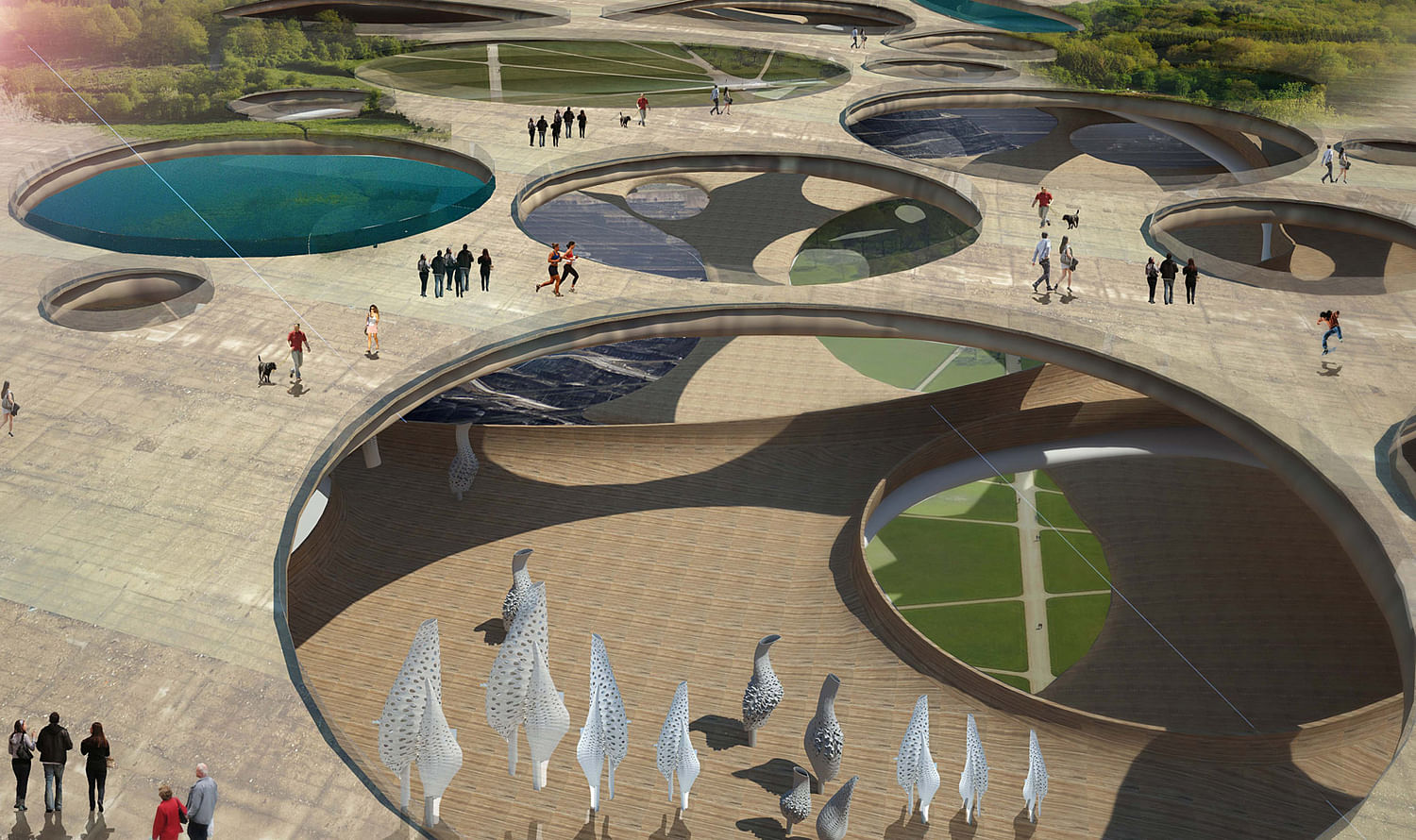
Detail from the board of the finalist entry "Networked Ecologies: Rethinking Remediation"

Last fall, the international research project and design ideas competition, "Transiting Cities - Low Carbon Futures," had invited designers and academic institutions from various fields to envision new, innovative and alternative cities of the near future by defining opportunities for transition into low carbon, prosperous, and vibrant communities.

One of the finalist entries, recognized by the jury with an honorable mention, is the concept "Networked Ecologies: Rethinking Remediation" by Arizona-based team Studio One (team members: Mona Ghandi, Carlos Sandoval, and Hassan Sazmand). To see other Transiting Cities finalist entries, click here.

Project Description from the Architects:

The research and competition outcomes are to propose, and demonstrate, a range of design strategies considered through a range of time frames – from short term to long term, temporary to permanent, and staged growth cycles - for transiting cities, such as Latrobe City in South East Victoria [Australia] that is shifting to a low carbon future.

The proposed design strategies are to address the interwoven social, economic, environmental and infrastructural attributes of the city through an integrated approach in order to construct intelligent visions for Latrobe City.

Networked Ecologies: Rethinking Remediation

The inevitable shifts in global climate and economical conditions have made us question and rethink the ability of the cities to resist and adapt to these changes. A city like Latrobe whose landscape, economy and social conditions are based primarily on coal based energy production is particularly vulnerable to the global and local changes.
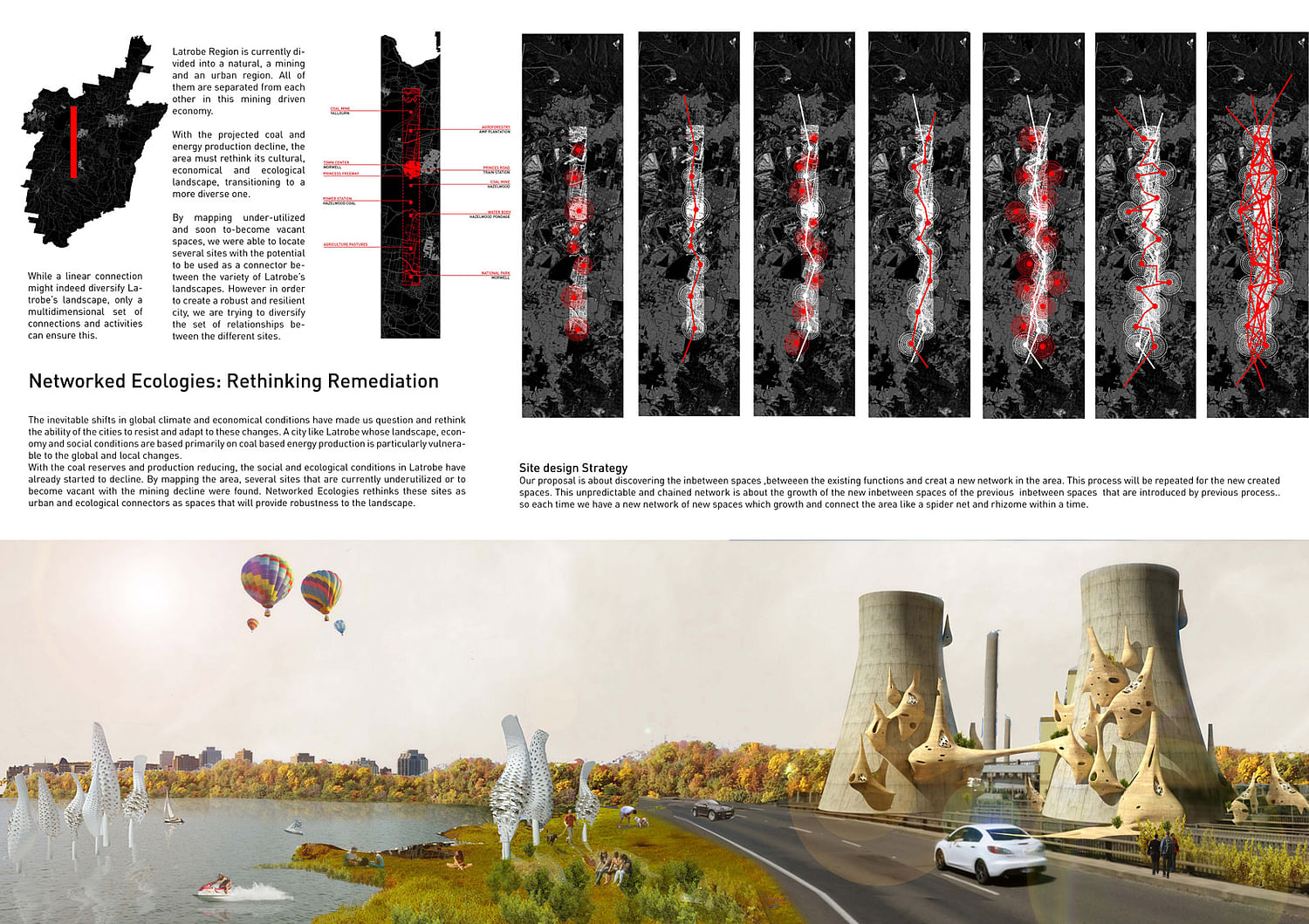
Networked Ecologies: Rethinking Remediation

With the coal reserves and production reducing, the social and ecological conditions in Latrobe have already started to decline. By mapping the area, several sites that are currently underutilized or to become vacant with the mining decline were found. Networked Ecologies rethinks these sites as urban and ecological connectors as spaces that will provide robustness to the landscape.
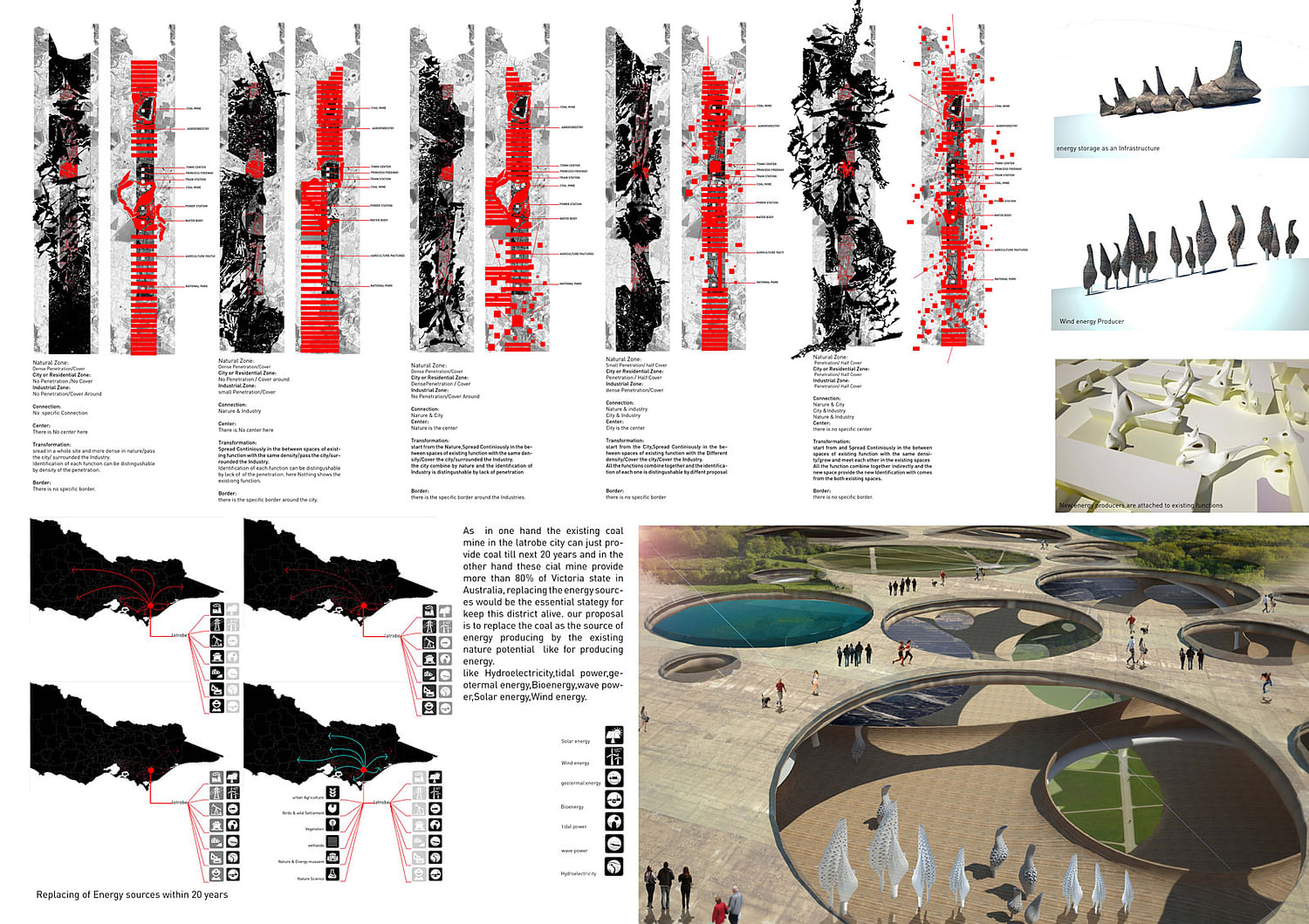
Networked Ecologies: Rethinking Remediation

Depending on the site location and conditions, a variety of programs ranging from landscape / mining remediation, to urban agriculture are defined. These “in-between” sites will grow and develop according to the specific conditions and uses, eventually creating a network of infrastructure that will provide robustness to the city.
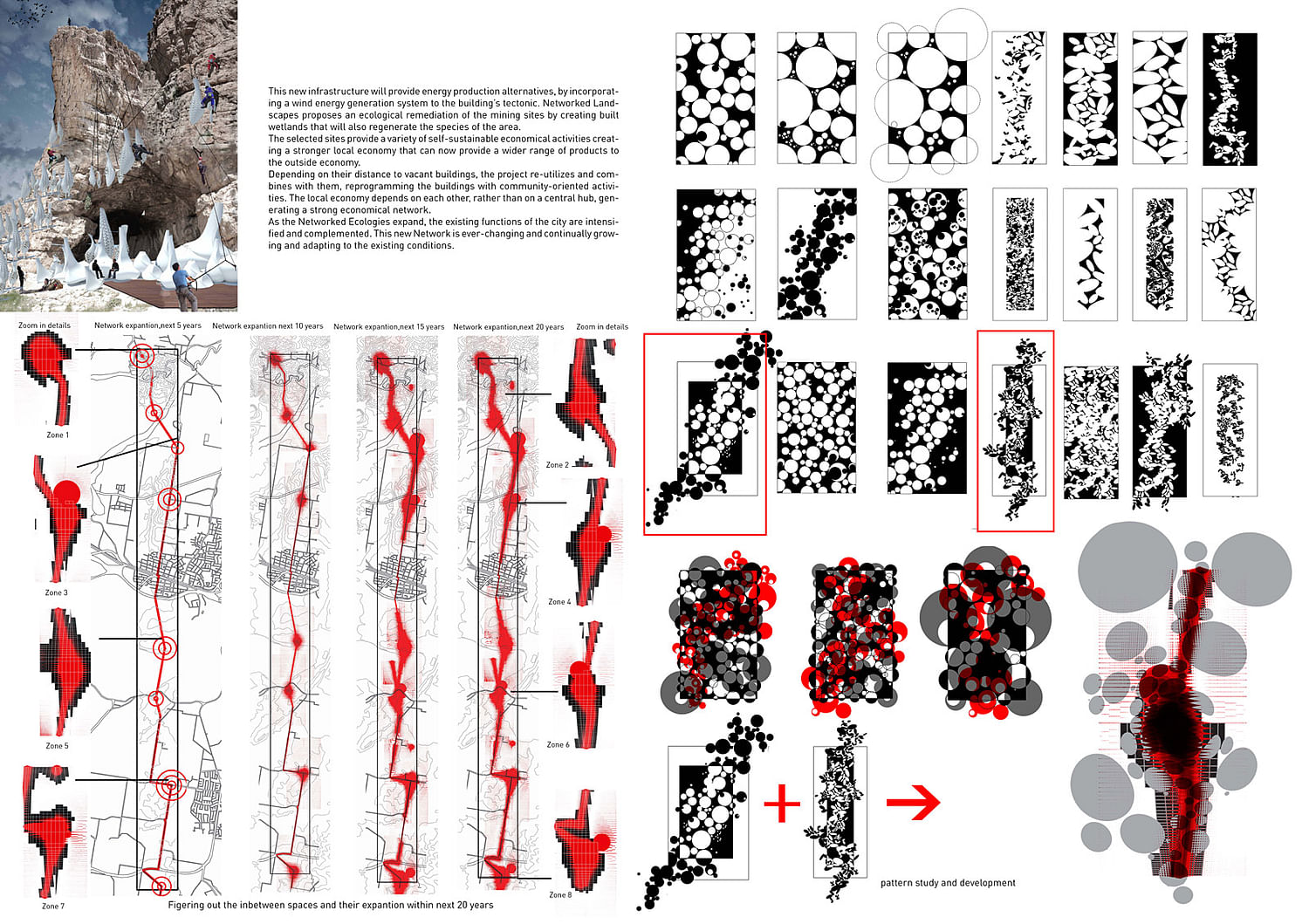
Networked Ecologies: Rethinking Remediation

This new infrastructure will provide energy production alternatives, by incorporating a wind energy generation system to the building’s tectonic. Networked Landscapes proposes an ecological remediation of the mining sites by creating built wetlands that will also regenerate the species of the area.
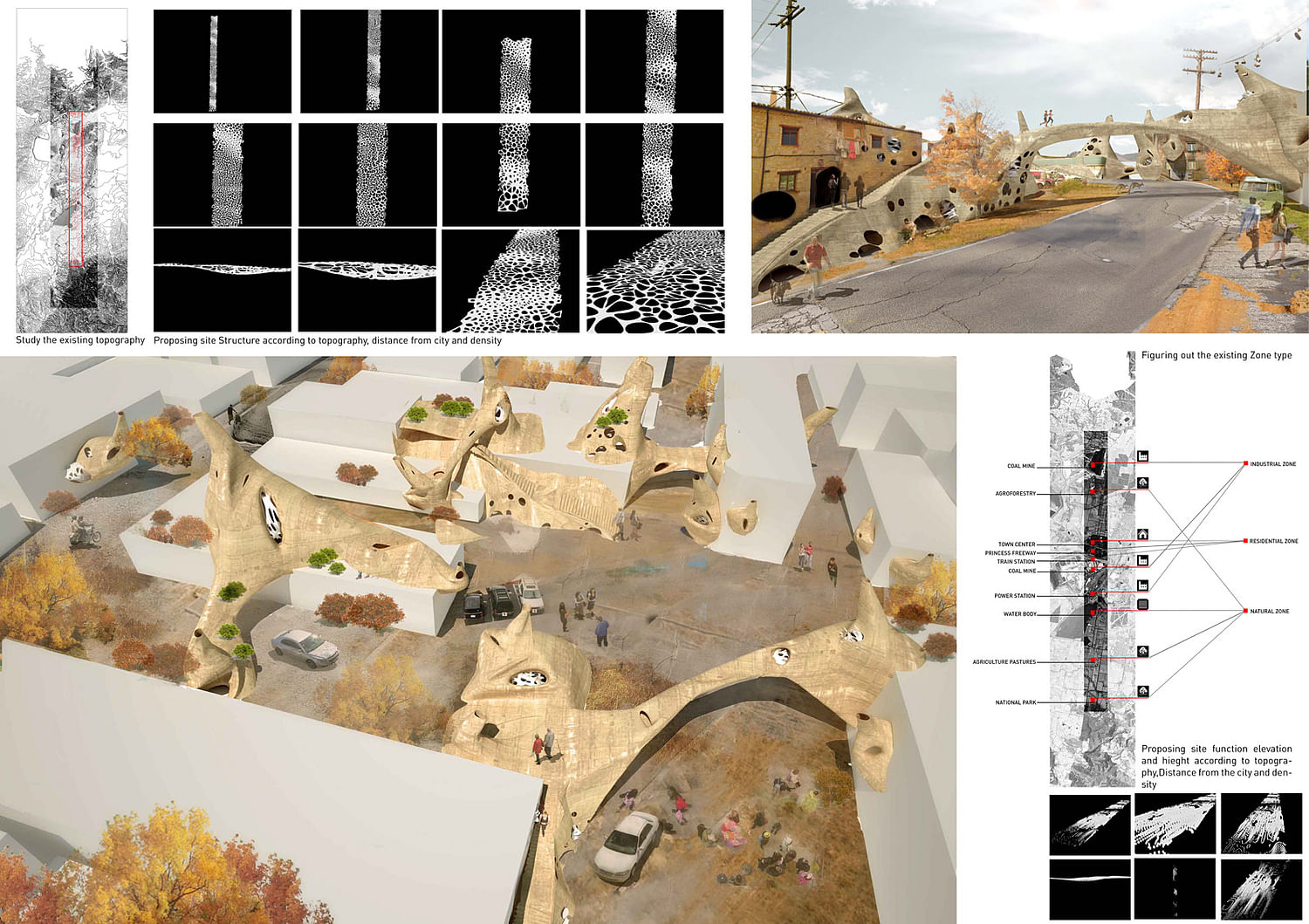
Networked Ecologies: Rethinking Remediation

The selected sites provide a variety of self-sustainable economical activities creating a stronger local economy that can now provide a wider range of products to the outside economy.
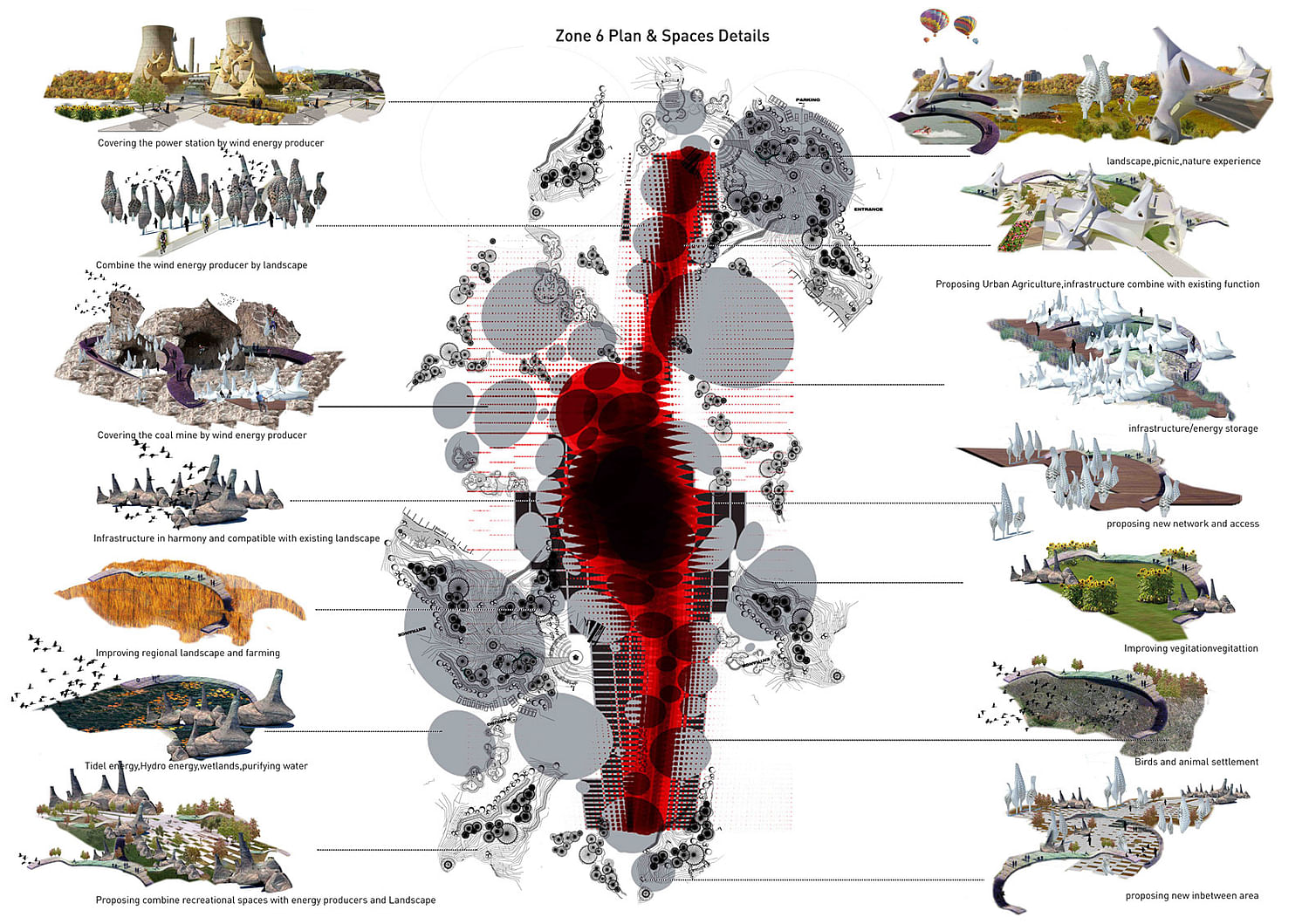
Networked Ecologies: Rethinking Remediation

Depending on their distance to vacant buildings, the project re-utilizes and combines with them, reprogramming the buildings with community-oriented activities. The local economy depends on each other, rather than on a central hub, generating a strong economical network.

As the Networked Ecologies expand, the existing functions of the city are intensified and complemented. This new Network is ever-changing and continually growing and adapting to the existing conditions.

Related

vision ● transiting cities ● sustainability ● green ● future ● city ● carbon ● australia

Share

  • Follow

    0 Comments

  • Comment as :

Transiting Cities - Finalist Entry "Networked Ecologies: Rethinking Remediation"

World’s most beautiful commercial stores of 2026 selected by Prix Versailles

Sponsored Post by Buildner

Buildner’s Unbuilt Award 2026 advance registration deadline is approaching!

Eight innovative timber projects honored at 2026 Wood in Architecture Awards

Beautiful brick architecture honored at BRICK AWARD 26

Over $500,000 awarded to architectural discourse projects by Graham Foundation

Best in urban planning recognized at AIA Regional & Urban Design Award 2026

Sponsored Post by Buildner

Re:Form - New Life for Old Spaces / Edition #3 advance registration deadline is approaching!

New architecture and design competitions: IDEAS Awards, UIA-HYP CUP International Student Competition, Vancouver Tall Challenge, and Memorial to the Sixth Extinction

Sign up for Bustler's Email Newsletters

Best small projects chosen at AIA Small Project Award 2026

10 standout sustainable projects honored at AIA COTE Top Ten Award 2026

Best residential architecture of 2026 honored at AIA Housing Award

Best new interiors of 2026 chosen at AIA Interior Architecture Awards

Best global architecture honored at RIBA International Awards 2026

World’s most beautiful airports of 2026 chosen by Prix Versailles

New architecture and design competitions: Brick in Architecture Awards, Study Architecture Student Showcase, N.Y.C. Groceries, and New York High Falls Riverfront Market

Next page » Loading

Transiting Cities - Finalist Entry "Networked Ecologies: Rethinking Remediation"

By Bustler Editors|

Friday, Jan 11, 2013

Share

Detail from the board of the finalist entry "Networked Ecologies: Rethinking Remediation"

Related

vision ● transiting cities ● sustainability ● green ● future ● city ● carbon ● australia

Last fall, the international research project and design ideas competition, "Transiting Cities - Low Carbon Futures," had invited designers and academic institutions from various fields to envision new, innovative and alternative cities of the near future by defining opportunities for transition into low carbon, prosperous, and vibrant communities.

One of the finalist entries, recognized by the jury with an honorable mention, is the concept "Networked Ecologies: Rethinking Remediation" by Arizona-based team Studio One (team members: Mona Ghandi, Carlos Sandoval, and Hassan Sazmand). To see other Transiting Cities finalist entries, click here.

Project Description from the Architects:

The research and competition outcomes are to propose, and demonstrate, a range of design strategies considered through a range of time frames – from short term to long term, temporary to permanent, and staged growth cycles - for transiting cities, such as Latrobe City in South East Victoria [Australia] that is shifting to a low carbon future.

The proposed design strategies are to address the interwoven social, economic, environmental and infrastructural attributes of the city through an integrated approach in order to construct intelligent visions for Latrobe City.

Networked Ecologies: Rethinking Remediation

The inevitable shifts in global climate and economical conditions have made us question and rethink the ability of the cities to resist and adapt to these changes. A city like Latrobe whose landscape, economy and social conditions are based primarily on coal based energy production is particularly vulnerable to the global and local changes.

Networked Ecologies: Rethinking Remediation

With the coal reserves and production reducing, the social and ecological conditions in Latrobe have already started to decline. By mapping the area, several sites that are currently underutilized or to become vacant with the mining decline were found. Networked Ecologies rethinks these sites as urban and ecological connectors as spaces that will provide robustness to the landscape.

Networked Ecologies: Rethinking Remediation

Depending on the site location and conditions, a variety of programs ranging from landscape / mining remediation, to urban agriculture are defined. These “in-between” sites will grow and develop according to the specific conditions and uses, eventually creating a network of infrastructure that will provide robustness to the city.

Networked Ecologies: Rethinking Remediation

This new infrastructure will provide energy production alternatives, by incorporating a wind energy generation system to the building’s tectonic. Networked Landscapes proposes an ecological remediation of the mining sites by creating built wetlands that will also regenerate the species of the area.

Networked Ecologies: Rethinking Remediation

The selected sites provide a variety of self-sustainable economical activities creating a stronger local economy that can now provide a wider range of products to the outside economy.

Networked Ecologies: Rethinking Remediation

Depending on their distance to vacant buildings, the project re-utilizes and combines with them, reprogramming the buildings with community-oriented activities. The local economy depends on each other, rather than on a central hub, generating a strong economical network.

As the Networked Ecologies expand, the existing functions of the city are intensified and complemented. This new Network is ever-changing and continually growing and adapting to the existing conditions.

Share

  • Follow

    0 Comments

  • Comment as :

Archinect JobsArchinect Jobs

The Archinect Job Board attracts the world's top architectural design talents.

VIEW ALL JOBS POST A JOB

Senior Architectural Designer, Commercial Interiors - Boston Office

Fogarty Finger

Senior Architectural Designer, Commercial Interiors - Boston Office

Boston, MA, US

Project Manager

Payette

Project Manager

Boston, MA, US

Project Architect at High End Boutique Townhouse Firm in BK

Steering House Design and Development

Project Architect at High End Boutique Townhouse Firm in BK

Brooklyn, NY, US

Architect

ThinkForm Architects

Architect

Hopewell, NJ, US

Architect / Project Architect - Remote (U.S. Based)

Joseph David Associates

Architect / Project Architect - Remote (U.S. Based)

Assistant Professor Architecture

California State Polytechnic University, Pomona

Assistant Professor Architecture

Pomona, CA, US

Marketing Manager

PBDW Architects

Marketing Manager

New York, NY, US

Junior Architectural Designer, Ground-Up - New York Office

Fogarty Finger

Junior Architectural Designer, Ground-Up - New York Office

New York, NY, US

Intermediate Architectural Designer, Multifamily Interiors - New York Office

Fogarty Finger

Intermediate Architectural Designer, Multifamily Interiors - New York Office

New York, NY, US

Project Manager - Planning

DAHLIN Architecture | Planning | Interiors

Project Manager - Planning

Pleasanton, CA, US

Next page » Loading