• Login / Join
  • About
  • •
  • Contact
  • •
  • Advertising
bustler logo
bustler logo
  • News
  • Competitions
  • Events
  • Bustler is powered by Archinect
  • Sign up for Bustler's Email Newsletters

  • Follow these Bustler feeds:

  • Search

    Search in

  • Submit

    What are you submitting?

    News Pitch
    Competition
    Event
  • Login / Join
  • News|Competitions|Events
  • Search
    | Submit
    | Follow
  • Search in

    What are you submitting?

    News Pitch
    Competition
    Event

    Follow these Bustler feeds:

  • About|Contact|Advertising
  • Login / Join

U.S. Pavilion at the Venice Architecture Biennale Announces Participating Projects

By Bustler Editors|

Friday, Jun 22, 2012
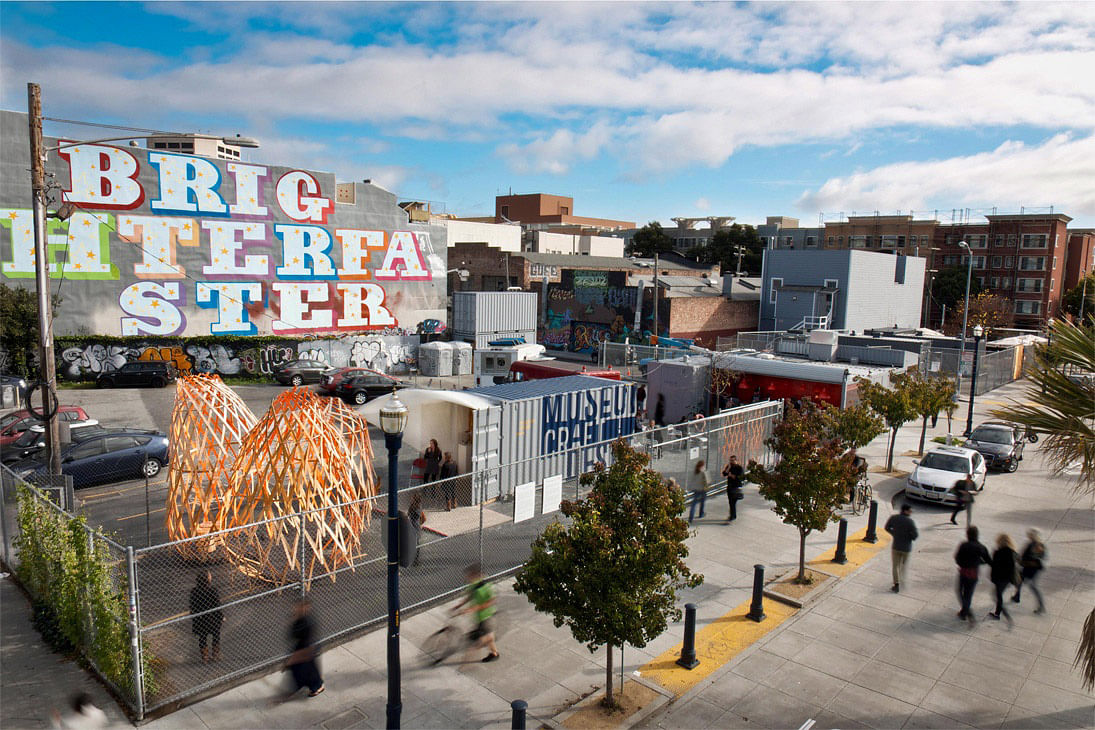
Proxy by Envelope a+d (Photo courtesy of Envelope a+d)

The U.S. Pavilion at the 13th International Architecture Exhibition of the Venice Biennale, organized by the Institute for Urban Design on behalf of the U.S. Department of State’s Bureau of Educational and Cultural Affairs, will be devoted to the theme Spontaneous Interventions: Design Actions for the Common Good. The exhibit features 124 urban interventions initiated by architects, designers, planners, artists, and everyday citizens that bring positive change to their neighborhoods and cities. The selection was narrowed down after a search process that included an open call for projects realized in U.S. cities in recent years, which yielded over 450 submissions.

Here are a few selected participating projects:

Proxy
Envelope a+d
(San Francisco, 2010)

Leasing an empty site from the city, San Francisco architect Douglas Burnham redeveloped two large lots to become a kind of urban living room, with food stands, a temporary art gallery, a beer garden, and an area for food trucks. With plans for outdoor films and a farmers’ market, Proxy has become a focal point of its community and has become an inspiration for other cities looking to maximize latent real estate.

Edible Schoolyard, P.S. 216
WORKac
(Brooklyn, 2011)

For Alice Waters’ first Edible Schoolyard in New York, architecture firm WORKac created a place where students can grow, prepare, and enjoy meals together at Brooklyn’s P.S. 216. WORKac’s marriage of agriculture and the urban environment is made up of interlinking systems that produce energy and heat, collect rainwater, process compost and waste. The project features a retractable greenhouse that extends the growing season by sliding over 1600 square feet of soil during the winter months.
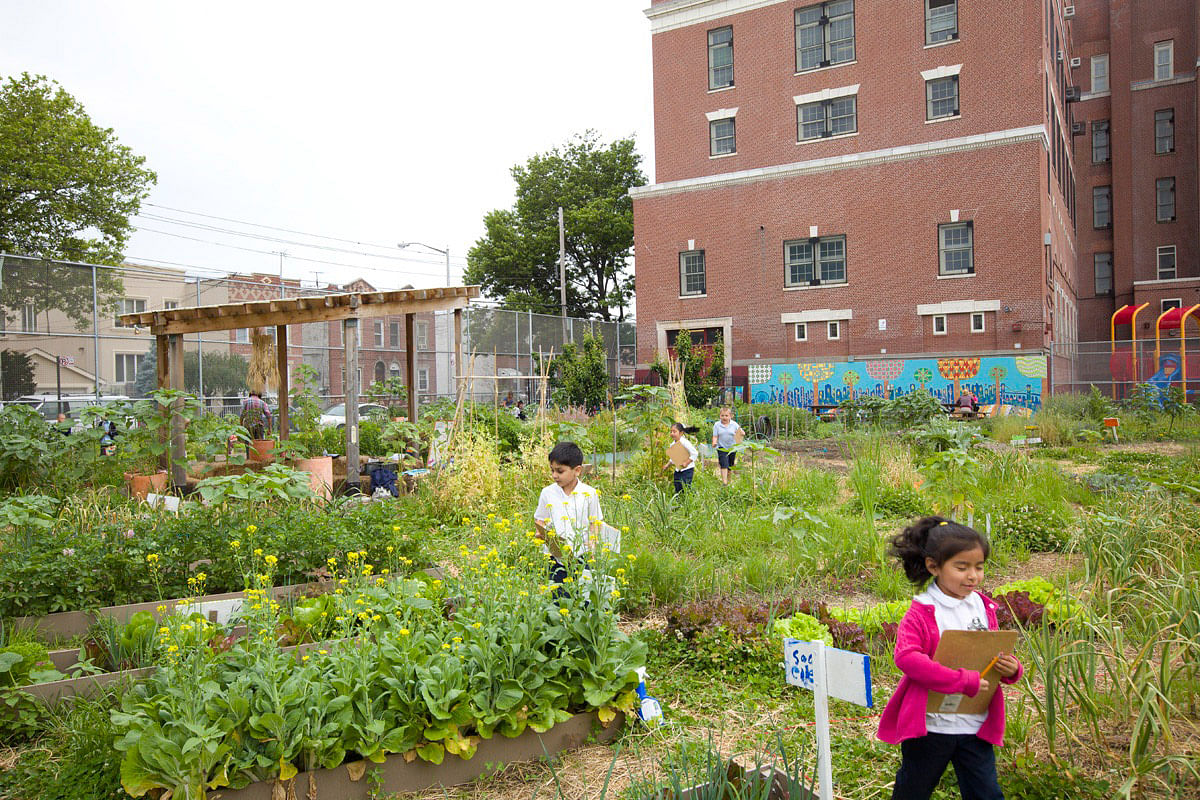
Edible Schoolyard, P.S. 216 by WORKac (Photo: Raymond Adams)

Fresh Moves Mobile Market
Architecture for Humanity & Food Desert Action
(Chicago, 2010)

Fresh Moves Mobile Market is a one-aisle grocery store built in a retrofitted Chicago Transit Authority bus purchased for $1. Architecture for Humanity partnered with the Chicago nonprofit Food Desert Action to design the bus, which brings fresh produce to the 500,000 Chicago residents living in food deserts. Fresh Moves’ website lists its hourly schedule, and not only sells produce but offers classes on cooking and healthy diets.
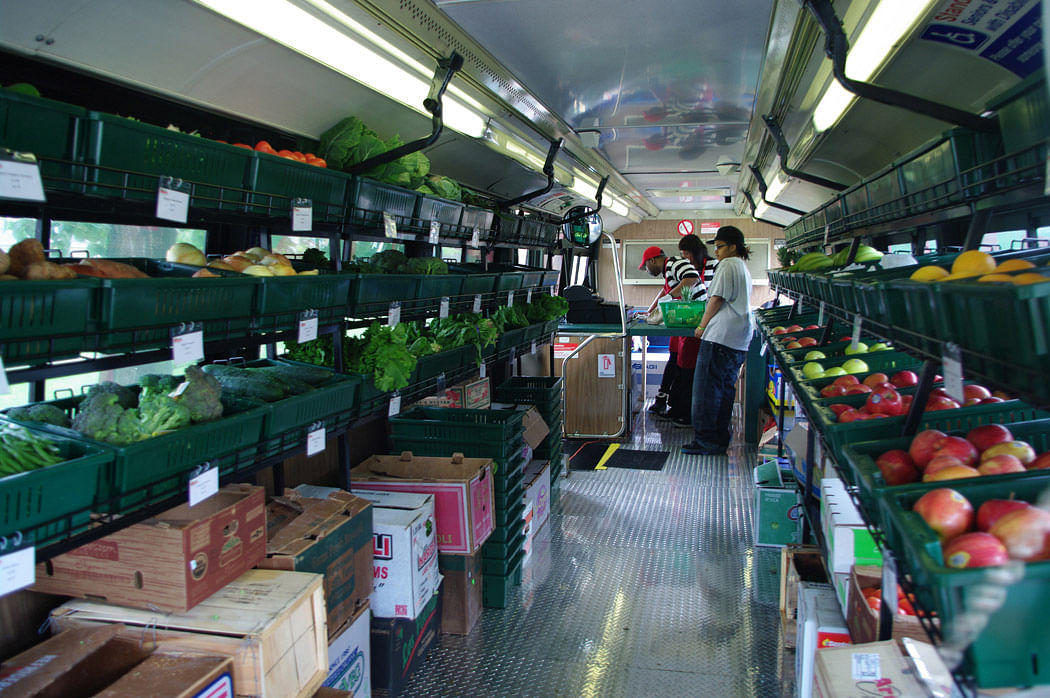
Fresh Moves Mobile Market by Architecture for Humanity & Food Desert Action (Photo courtesy of Architecture for Humanity Chicago)

Hypothetical Development Organization
Rob Walker (with contributions by Candy Chang)
(New Orleans, 2010)

The Hypothetical Development Organization creates a new form of urban storytelling. Members of this organization examine the city for compelling structures that have fallen into disuse. H.D.O. invents a hypothetical future for each selected structure, a future that isn’t necessarily bound by practicality or reality. The organization then creates convincing renderings of these imagined uses, and prints them onto large signs to be shared with the public.
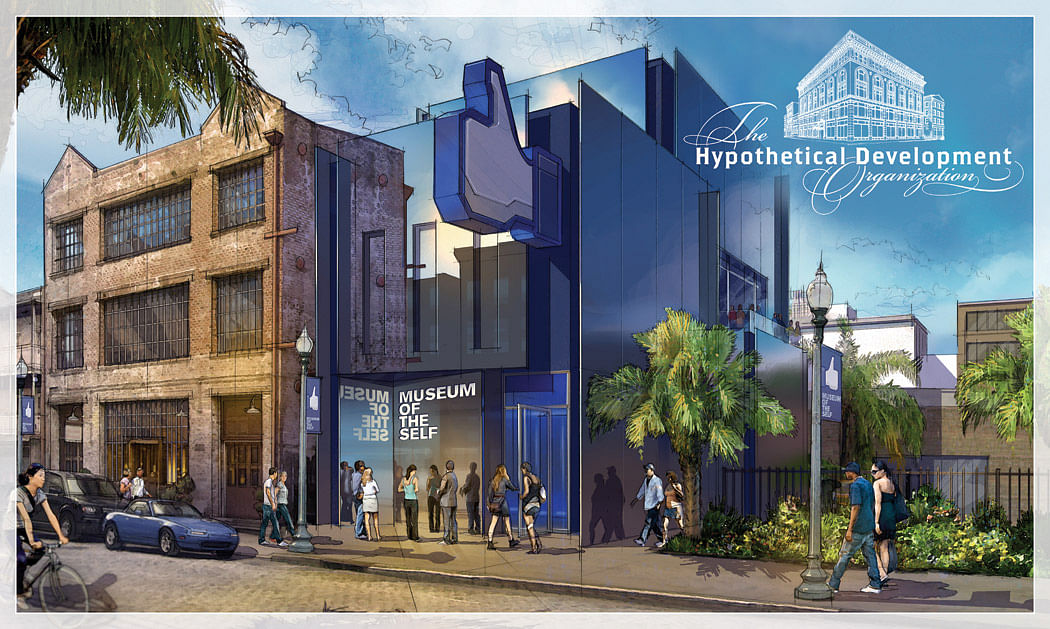
Hypothetical Development Organization by Rob Walker (with contributions by Candy Chang, rendering by Dave Pinter)

Air Casting
HabitatMap
(New York, 2010)

AirCasting is a platform for recording, mapping, and sharing environmental data using smart phone technology. Aimed at enhancing the impact of community voices on building greener cities, users can upload local measurements of sound, temperature, humidity, carbon monoxide, and nitrogen dioxide, and share their data with a worldwide community via the AirCasting Crowd- Map. It’s a project of HabitatMap, a New York nonprofit devoted to environmental health justice.
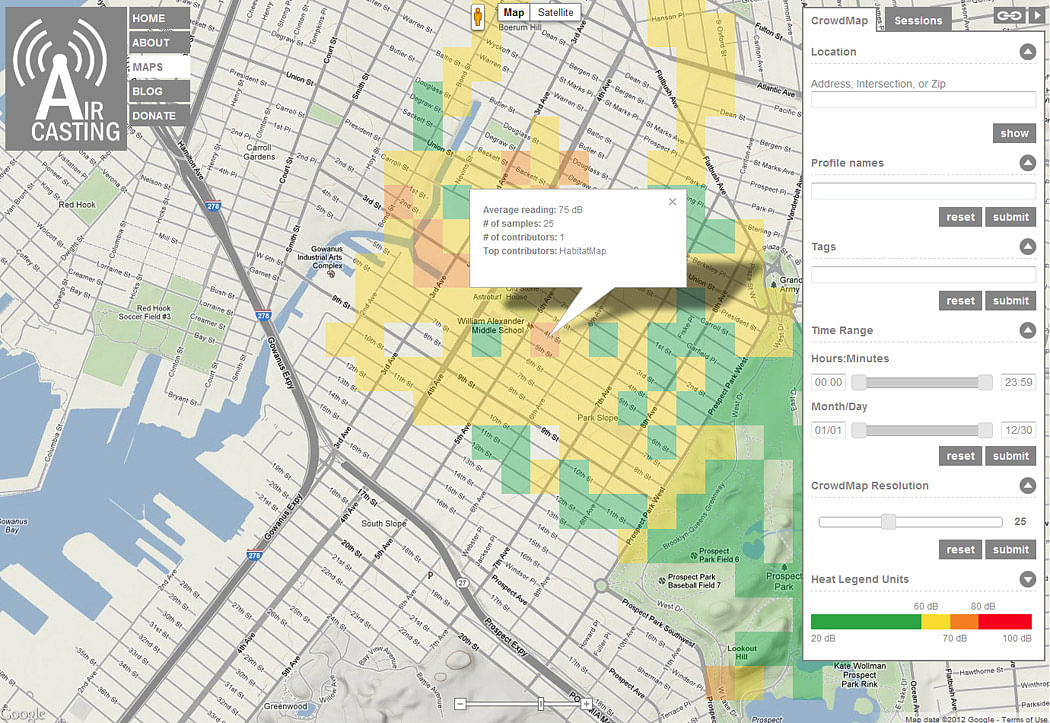
Air Casting by HabitatMap (Image courtesy of HabitatMap)

Other featured interventions are:

  • IlluminAction by UrbanoActivo (San Juan, Puerto Rico, 2011) - previously on Bustler
  • Better Block Project by Jason Roberts & Andrew Howard (Dallas, 2010; now in other US cities)
  • Local Code: Real Estates by Nicholas de Monchaux (San Francisco, New York, Los Angeles, 2009; forthcoming, Chicago)
  • Guerrilla Bike Lanes & Signage (Anonymous, Various cities)

Spontaneous Interventions captures one of the most compelling contemporary urban trends, wherein individuals are taking it upon themselves to create projects that expand the amenities, comfort, functionality, inclusiveness, safety, and sustainability of cities. From parklets to community farms, guerrilla bike lanes to urban repair squads, outdoor living rooms to pop-up markets, sharing networks, and temporary architecture, Spontaneous Interventions highlights viable citizen-led alternatives to traditional top-down urban revitalization tactics. Together, these projects offer an opportunity to examine the history of the American city, painting a critical and dynamic portrait of its most pressing issues today and a vision of its future. At heart, Spontaneous Interventions is a reflection of the country’s complex attitudes towards civic participation, social justice, and the built environment.

Spontaneous Interventions resonates on many levels with the overall theme of the Biennale, conceived by director David Chipperfield, Common Ground. The projects featured in Spontaneous Interventions are characterized by their interest in collaboration, in serving the collective needs of a community, and in improving the literal common ground— public space. The exhibition examines how urban actions that originated as radical ideas have moved ever closer to the center, evolving from subversive tactic to increasingly accepted urban strategy.

Participants include: Architecture for Humanity, Better Block Project, Candy Chang, Center for Urban Pedagogy, Chicago Loop Alliance, City Repair, COMMONstudio, Nicholas De Monchaux, DoTank, envelope A+D, Freecell, Futurefarmers, GOOD, Fritz Haeg, Hester Street Collaborative, HOK, The Hypothetical Development Organization, Interboro, Kaja Kuhl/youarethecity, Mike Lydon/Street Plans Collaborative, Macro Sea, MAS Studio, Popularise, popuphood, Public Media Institute, Rebar, Quilian Riano/#whOWNSpace, Rockwell Group, Mark Shepard, Stamen, WORKac, and many others.

About the Exhibition Design

For the first time, the U.S. Pavilion will feature an installation rather than a conventional exhibition of projects. Brooklyn design studio Freecell, founded by Lauren Crahan and John Hartmann, conceived of a lively system of banners to present an archive of 124 actionable tactics aimed at bringing immediate improvements to the urban public realm. Freecell is collaborating closely with Sausalito-based communication design studio M-A-D, led by Erik Adigard and Patricia McShane, to design an enveloping environment that puts Spontaneous Interventions in a broader historical and cultural context. Adigard, this year’s recipient of the Rome Prize in Design, has created a supergraphic that is an installation in and of itself, and serves as a bold counterpoint to the banners.

Courtyard

Brooklyn-based studio Interboro, winner of last year’s MoMA/PS1’s Young Architects Program (previously on Bustler), has designed an “outdoor living room” that will serve as the pavilion’s hangout and workshop space. The space will feature movable components that allow it to be easily reconfigured to accommodate various functions (informal conversations, lectures, workshops, and play space). During the three months of the Biennale, the Pavilion will host a lively series of programs.

Related

venice biennale ● usa ● urban ● pavilion ● italy ● intervention ● event ● europe ● design ● art ● architecture ● activism ● venice biennale 2012

Share

  • Follow

    0 Comments

  • Comment as :

U.S. Pavilion at the Venice Architecture Biennale Announces Participating Projects

World’s most beautiful airports of 2026 chosen by Prix Versailles

New architecture and design competitions: Brick in Architecture Awards, Study Architecture Student Showcase, N.Y.C. Groceries, and New York High Falls Riverfront Market

SmithGroup’s ‘pioneering’ Philip Merrill Environmental Center wins AIA Twenty-five Year Award

Sponsored Post by Buildner

Museum of Emotions / Edition #8 FINAL registration deadline is in 5 DAYS!

Here are the winners of the 2026 AIA Architecture Awards

40 emerging architects and designers under 40 from Europe honored

Northwestern University selects 12-firm longlist to design new engineering building

New architecture and design competitions: Exploring 130 Years of American Design, Christo & Jeanne-Claude Center, 13 White Houses, and La Pyramide

Sign up for Bustler's Email Newsletters

Micro-architecture honored in latest Tiny House Architecture Competition

World’s most beautiful restaurants of 2026 chosen by Prix Versailles

Sponsored Post by Buildner

Design a wine tasting room in Italy! Valli Wine Tasting Room is launched!

10 can't-miss architecture & design events to see this June in London, Los Angeles, Chicago, San Francisco, Detroit, San Diego, Porto, and Barcelona

Sponsored Post by Buildner

Museum of Emotions / Edition #8 FINAL registration deadline is approaching!

Seven global projects make AR Public Awards shortlist 2026

Sponsored Post by Buildner

Design a slow-living restaurant in Portugal! Portugal Long Table Restaurant is launched!

Next page » Loading

U.S. Pavilion at the Venice Architecture Biennale Announces Participating Projects

By Bustler Editors|

Friday, Jun 22, 2012

Share

Proxy by Envelope a+d (Photo courtesy of Envelope a+d)

Related

venice biennale ● usa ● urban ● pavilion ● italy ● intervention ● event ● europe ● design ● art ● architecture ● activism ● venice biennale 2012

The U.S. Pavilion at the 13th International Architecture Exhibition of the Venice Biennale, organized by the Institute for Urban Design on behalf of the U.S. Department of State’s Bureau of Educational and Cultural Affairs, will be devoted to the theme Spontaneous Interventions: Design Actions for the Common Good. The exhibit features 124 urban interventions initiated by architects, designers, planners, artists, and everyday citizens that bring positive change to their neighborhoods and cities. The selection was narrowed down after a search process that included an open call for projects realized in U.S. cities in recent years, which yielded over 450 submissions.

Here are a few selected participating projects:

Proxy
Envelope a+d
(San Francisco, 2010)

Leasing an empty site from the city, San Francisco architect Douglas Burnham redeveloped two large lots to become a kind of urban living room, with food stands, a temporary art gallery, a beer garden, and an area for food trucks. With plans for outdoor films and a farmers’ market, Proxy has become a focal point of its community and has become an inspiration for other cities looking to maximize latent real estate.

Edible Schoolyard, P.S. 216
WORKac
(Brooklyn, 2011)

For Alice Waters’ first Edible Schoolyard in New York, architecture firm WORKac created a place where students can grow, prepare, and enjoy meals together at Brooklyn’s P.S. 216. WORKac’s marriage of agriculture and the urban environment is made up of interlinking systems that produce energy and heat, collect rainwater, process compost and waste. The project features a retractable greenhouse that extends the growing season by sliding over 1600 square feet of soil during the winter months.

Edible Schoolyard, P.S. 216 by WORKac (Photo: Raymond Adams)

Fresh Moves Mobile Market
Architecture for Humanity & Food Desert Action
(Chicago, 2010)

Fresh Moves Mobile Market is a one-aisle grocery store built in a retrofitted Chicago Transit Authority bus purchased for $1. Architecture for Humanity partnered with the Chicago nonprofit Food Desert Action to design the bus, which brings fresh produce to the 500,000 Chicago residents living in food deserts. Fresh Moves’ website lists its hourly schedule, and not only sells produce but offers classes on cooking and healthy diets.

Fresh Moves Mobile Market by Architecture for Humanity & Food Desert Action (Photo courtesy of Architecture for Humanity Chicago)

Hypothetical Development Organization
Rob Walker (with contributions by Candy Chang)
(New Orleans, 2010)

The Hypothetical Development Organization creates a new form of urban storytelling. Members of this organization examine the city for compelling structures that have fallen into disuse. H.D.O. invents a hypothetical future for each selected structure, a future that isn’t necessarily bound by practicality or reality. The organization then creates convincing renderings of these imagined uses, and prints them onto large signs to be shared with the public.

Hypothetical Development Organization by Rob Walker (with contributions by Candy Chang, rendering by Dave Pinter)

Air Casting
HabitatMap
(New York, 2010)

AirCasting is a platform for recording, mapping, and sharing environmental data using smart phone technology. Aimed at enhancing the impact of community voices on building greener cities, users can upload local measurements of sound, temperature, humidity, carbon monoxide, and nitrogen dioxide, and share their data with a worldwide community via the AirCasting Crowd- Map. It’s a project of HabitatMap, a New York nonprofit devoted to environmental health justice.

Air Casting by HabitatMap (Image courtesy of HabitatMap)

Other featured interventions are:

  • IlluminAction by UrbanoActivo (San Juan, Puerto Rico, 2011) - previously on Bustler
  • Better Block Project by Jason Roberts & Andrew Howard (Dallas, 2010; now in other US cities)
  • Local Code: Real Estates by Nicholas de Monchaux (San Francisco, New York, Los Angeles, 2009; forthcoming, Chicago)
  • Guerrilla Bike Lanes & Signage (Anonymous, Various cities)

Spontaneous Interventions captures one of the most compelling contemporary urban trends, wherein individuals are taking it upon themselves to create projects that expand the amenities, comfort, functionality, inclusiveness, safety, and sustainability of cities. From parklets to community farms, guerrilla bike lanes to urban repair squads, outdoor living rooms to pop-up markets, sharing networks, and temporary architecture, Spontaneous Interventions highlights viable citizen-led alternatives to traditional top-down urban revitalization tactics. Together, these projects offer an opportunity to examine the history of the American city, painting a critical and dynamic portrait of its most pressing issues today and a vision of its future. At heart, Spontaneous Interventions is a reflection of the country’s complex attitudes towards civic participation, social justice, and the built environment.

Spontaneous Interventions resonates on many levels with the overall theme of the Biennale, conceived by director David Chipperfield, Common Ground. The projects featured in Spontaneous Interventions are characterized by their interest in collaboration, in serving the collective needs of a community, and in improving the literal common ground— public space. The exhibition examines how urban actions that originated as radical ideas have moved ever closer to the center, evolving from subversive tactic to increasingly accepted urban strategy.

Participants include: Architecture for Humanity, Better Block Project, Candy Chang, Center for Urban Pedagogy, Chicago Loop Alliance, City Repair, COMMONstudio, Nicholas De Monchaux, DoTank, envelope A+D, Freecell, Futurefarmers, GOOD, Fritz Haeg, Hester Street Collaborative, HOK, The Hypothetical Development Organization, Interboro, Kaja Kuhl/youarethecity, Mike Lydon/Street Plans Collaborative, Macro Sea, MAS Studio, Popularise, popuphood, Public Media Institute, Rebar, Quilian Riano/#whOWNSpace, Rockwell Group, Mark Shepard, Stamen, WORKac, and many others.

About the Exhibition Design

For the first time, the U.S. Pavilion will feature an installation rather than a conventional exhibition of projects. Brooklyn design studio Freecell, founded by Lauren Crahan and John Hartmann, conceived of a lively system of banners to present an archive of 124 actionable tactics aimed at bringing immediate improvements to the urban public realm. Freecell is collaborating closely with Sausalito-based communication design studio M-A-D, led by Erik Adigard and Patricia McShane, to design an enveloping environment that puts Spontaneous Interventions in a broader historical and cultural context. Adigard, this year’s recipient of the Rome Prize in Design, has created a supergraphic that is an installation in and of itself, and serves as a bold counterpoint to the banners.

Courtyard

Brooklyn-based studio Interboro, winner of last year’s MoMA/PS1’s Young Architects Program (previously on Bustler), has designed an “outdoor living room” that will serve as the pavilion’s hangout and workshop space. The space will feature movable components that allow it to be easily reconfigured to accommodate various functions (informal conversations, lectures, workshops, and play space). During the three months of the Biennale, the Pavilion will host a lively series of programs.

Share

  • Follow

    0 Comments

  • Comment as :

Archinect JobsArchinect Jobs

The Archinect Job Board attracts the world's top architectural design talents.

VIEW ALL JOBS POST A JOB

Intermediate Designer - 3+ Years Experience (NY)

Cass Calder Smith

Intermediate Designer - 3+ Years Experience (NY)

New York, NY, US

Architectural Project Manager - Multifamily

DAHLIN Architecture | Planning | Interiors

Architectural Project Manager - Multifamily

San Diego, CA, US

Design Director or Sr. Architect

b.hills architecture, P.C.

Design Director or Sr. Architect

Boise, ID, US

Architectural/Structural Drafter

New Beginnings Engineering

Architectural/Structural Drafter

Irvine, CA, US

Architect

OBRA Architects

Architect

New York, NY, US

Project Architect - Residential

DAHLIN Architecture | Planning | Interiors

Project Architect - Residential

Pleasanton, CA, US

Junior Architect

Elizabeth Roberts Architecture & Design

Junior Architect

Brooklyn, NY, US

Job Captain / Designer

Heather Young Architects

Job Captain / Designer

Palo Alto, CA, US

Senior Hospitality FF&E Designer

bonetti/kozerski architecture DPC

Senior Hospitality FF&E Designer

New York, NY, US

Job Captain / Project Manager

Breland – Harper

Job Captain / Project Manager

Los Angeles, CA, US

Next page » Loading