Winners of ZEROprize / Re-Skinning Awards 2010 Announced
By Bustler Editors|
Friday, Mar 26, 2010
Zerofootprint recently announced the five winners of the Re-Skinning Award 2010. The Zerofootprint Re-Skinning Award is meant to attract state-of-the-art retrofitted and re-skinned buildings that are exceptional, but do not meet the performance standards of the ZEROprize.
The objective of the Re-Skinning Award is to stimulate global interest in new building technologies, an area that the media tends to underreport, and accelerate innovation in a critical industrial sector. Through its website, the Re-Skinning Award will also provide building owners everywhere with quantitative information explaining how green, retrofitting technologies can reduce energy demand, clean our cities, and save them money.
Following are this year’s winners (for the list of finalists, click here):
Project: Aidlin Darling Architects - San Francisco (Small/Medium Commercial)
Date retrofit completed: 2009
Architects: Aidlin Darling Architects, Simon & Assoc., CB Engineers

Winner of ‘Small/Medium Commercial’ Category: Aidlin Darling Architects - San Francisco
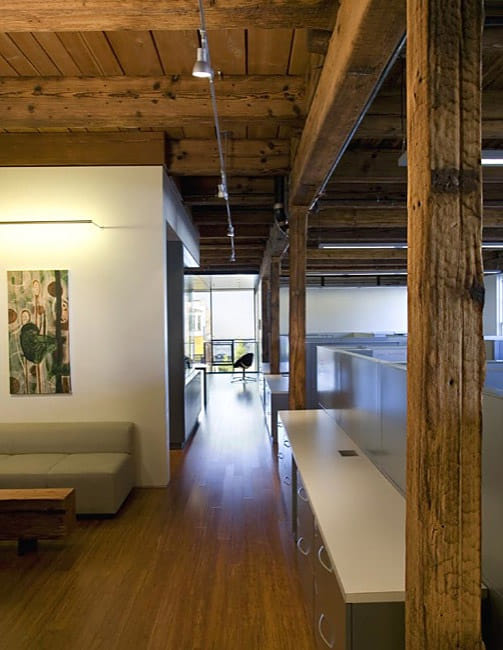

Winner of ‘Small/Medium Commercial’ Category: Aidlin Darling Architects - San Francisco
Summary: 355 Eleventh, San Francisco, is an historic and previously derelict turn-of-the-century industrial building now refurbished to be as beautiful as it is energy efficient. Part of this refurbishment is a new corrugated skin to replace the original, historically significant steel cladding. The skin is perforated with small holes designed to allow light and air to pass through new windows hidden behind it. This perforated barrier controls solar heat gain while enabling cross-ventilation of the interior. The double-skin façade becomes a screen for sunlight and air while maintaining the stoic, industrial character of the original building. Behind that screen new, operable windows allow user control of airflow. The final building received Gold-level LEED certification. See more
Project: DAHM Arch. - GESOBAU AG (Large Residential)
Date retrofit completed: 2008-2009
Architects: Oswald Mathias Ungers (1964), DAHM Architekten + Ingenieure (2008)

Winner of ‘Large Residential’ Category: DAHM Arch. - GESOBAU AG

Winner of ‘Large Residential’ Category: DAHM Arch. - GESOBAU AG
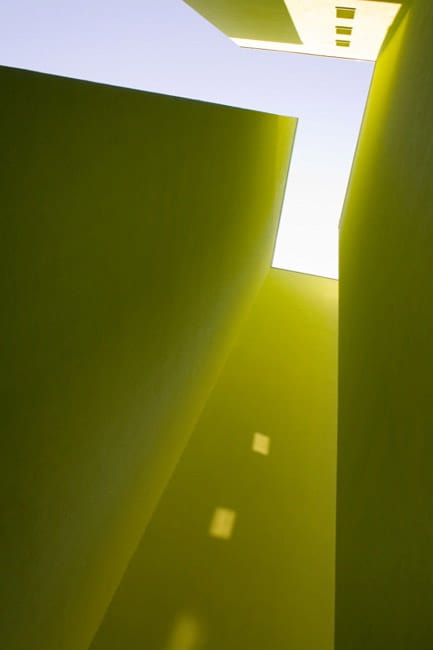
Summary: When GESOBAU AG decided to modernize the 15,000 residential units it had built in the Märkisches Viertel locality of Berlin in the 1960s, it devised a three-point plan that would be both economical and repeatable elsewhere. It would re-skin the buildings to enhance energy conservation while also converting heating and hot water systems to environmentally friendly technologies. In addition, GESOBAU instructed tenants on how to operate their apartments for optimum energy conservation using new smart technologies. The first 538 apartments—shown here—were converted in 2008 and the project is due for completion in 2015. The primary energy saving as a result of the re-skinning is 71 percent of previous loads or 316 tonnes of CO2 annually. See more
Project: LAVA - Sydney Tower (Future of Re-Skinning)
Date retrofit completed: Proposal
Architects: Laboratory for Visionary Architecture

Winner of ‘Future of Re-Skinning’ Category: LAVA - Sydney Tower

Winner of ‘Future of Re-Skinning’ Category: LAVA - Sydney Tower
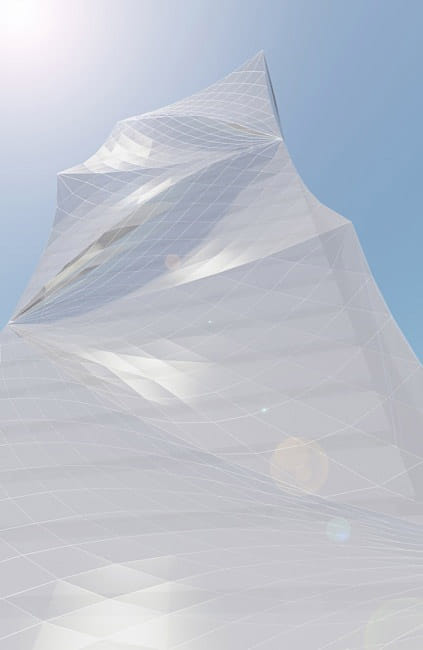
Summary: The proposal of the Laboratory for Visionary Architecture (LAVA) to re-skin the University of Technology Sydney (UTS) tower aims to transform the identity of the brutalist-style high-rise and reduce its carbon footprint. LAVA has developed a simple, cost-effective and easily constructed building skin that forms a translucent cocoon to create a micro-climate. The skin can generate energy with embedded photo-voltaic cells, collect rain water, and improve the distribution of natural daylight. It can also use available convective energy to power the building’s ventilation requirements, reducing HVAC dependency. The skin could be applied to other similar existing structures inexpensively, contributing to a low-cost, efficient way to beautify cities everywhere. See more
Project: Now House, Toronto (Small Residential)
Date retrofit completed: 2008-2009
Architects: Work Worth Doing Studio & Lorraine Gauthier

Winner of ‘Small Residential’ Category: Now House, Toronto

Winner of ‘Small Residential’ Category: Now House, Toronto

Winner of ‘Small Residential’ Category: Now House, Toronto
Summary:Now House is a process for retrofitting existing older houses to become net zero energy homes. The retrofit includes renewing or upgrading foundation walls, basement floor, roof, exterior walls, windows, electrical systems, lighting, HVAC, ventilation and water heating. The first application of the Now House process was to a 60-year-old wartime house in Toronto, which is similar in layout and footprint to a million other houses in Canada where the process could be replicated. Already the Toronto house has acted as the prototype for the retrofitting of five similar houses in Windsor, Ontario, that are owned by a social housing agency. The original Now House re-skinning and retrofit resulted in energy savings of approximately 70 percent per year for the existing bungalow. See more
Project: Sparkasse Vorderpfalz (Large Commercial)
Date retrofit completed: 2008-2009
Architects: Egon Weiß (1974), Thiemo Ebbert, imagine-envelope (2009) Arch.; Rudolf P. Evers, General Planner; Balck and Partner, Facility Engineering
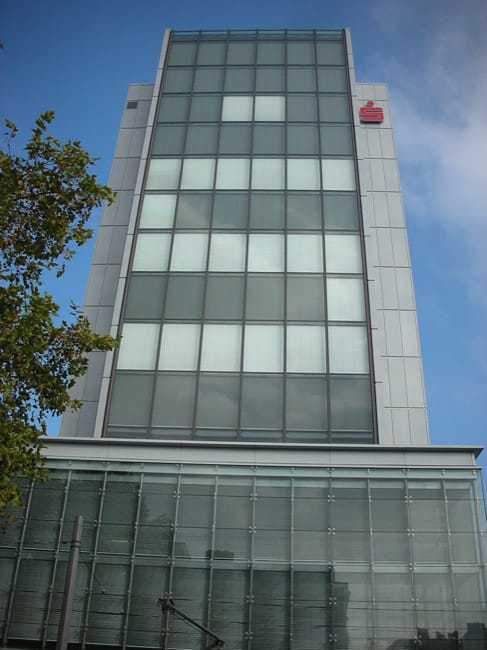

Winner of ‘Large Commercial’ Category: Sparkasse Vorderpfalz

Winner of ‘Large Commercial’ Category: Sparkasse Vorderpfalz
Summary: Sparkasse Vorderpfalz is a regional bank in Ludwigshafen, Germany, with its headquarters located on the most prominent square in the city centre. The project to refurbish the building’s façade and services had to be carried out without affecting the bank’s operations or damaging recent interior renovations. The re-skinning commenced in autumn 2006, with the improvement of the load-bearing structure and the removal of the original ventilated cladding. The base zone was remodelled and secondary glazing added to the tower, with retrofitting of the primary façade of the tower and the corners completed in July 2009. The refurbished building’s energy performance has improved by 64 percent. It has also been certified as a ‘Green Building’ by the German Energy Agency. See more

Share
0 Comments
Comment as :